

How to Choose a Broiler: Top 9 Checks
Updated November 2026. 5-minute read.
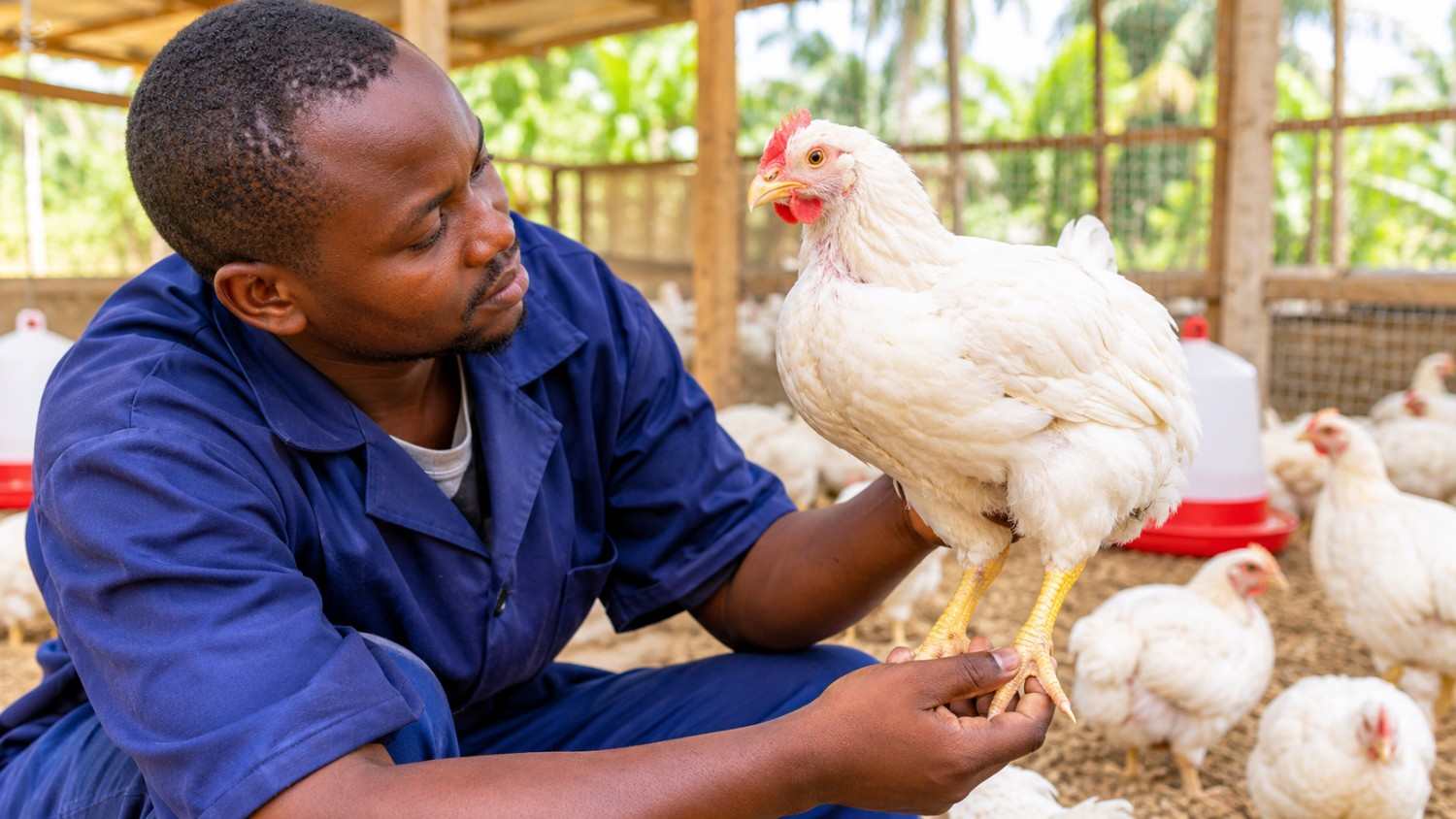
Knowing how to choose a broiler chicken can save you money and protect your family’s health. A bird that looks fine from far away can still be sick up close. This guide gives you nine quick checks you can do in under a minute, even if you have never bought a live bird before. If you live near Mikindani, you can also see today’s prices and how to order.
To choose a healthy live broiler, check nine signs: an alert stance, bright eyes, clear nostrils, a red comb, quiet breathing, clean feathers, a clean vent, strong legs, and a firm, full body. Pick birds that pass every check, and walk away from any bird that looks dull, wheezes, or limps.
Vets use the same ideas. Ohio State University Extension explains that a healthy bird looks bright, alert and active, and shows how to check each part of the body. Comparing birds on price? Our improved kienyeji chicken price guide shows what slower-growing birds cost.
Before You Start: 3 Simple Rules
- Look from a distance first. Watch how the birds stand and move before you touch one.
- Use good light. Daylight shows eyes, feathers and legs clearly.
- Check more than one bird. Chickens can hide illness, so one good sign is not enough.
The 9 Checks, From Far to Close
The checks go in the order you would do them: first from a distance, then at the face, then on the body, then in your hands. The Merck Veterinary Manual follows a similar order.
Stands tall and alert
Look for: head up, tail up, and a bird that moves when people come near.
Red flag: drooping wings, head tucked in, fluffed feathers, or a bird huddled alone.
Breathes quietly
Look for: calm, silent breathing with the beak closed.
Red flag: wheezing, rattling, gasping, an open beak, or a stretched neck.
Bright, clear eyes
Look for: round, shiny eyes that are wide open.
Red flag: cloudy, watery, swollen, crusty or half-closed eyes.
Clean nose and beak
Look for: open, dry nostrils.
Red flag: mucus, bubbles, crusts, or a swollen face.
Red comb and wattles
Look for: bright red, smooth skin. Broilers have small combs, but the color still counts.
Red flag: a pale, dull or shrunken comb, or scabs and sores.
Clean feathers and skin
Look for: smooth, tidy feathers and clean skin with no bald patches.
Red flag: dull, ruffled feathers, bruises, wounds, or tiny bugs on the skin.
Clean vent
Look for: a tidy area under the tail and normal droppings.
Red flag: droppings stuck to feathers, bloody or very watery mess, or red, swollen skin.
Strong legs and feet
Look for: standing on both legs, walking without a limp, smooth joints and clean feet.
Red flag: limping, sitting all the time, swollen joints, or sores on the feet.
Firm, full body
Look for: a plump chest, even muscle, and a strong struggle when held.
Red flag: a thin, bony bird, or one that feels very soft, very hard, or limp in your hands.
Broilers grow fast. On many farms they reach about 1.5 kg or more in 5 to 7 weeks, so their legs carry a lot of weight. A bird that is heavy but wobbly is not a bargain.
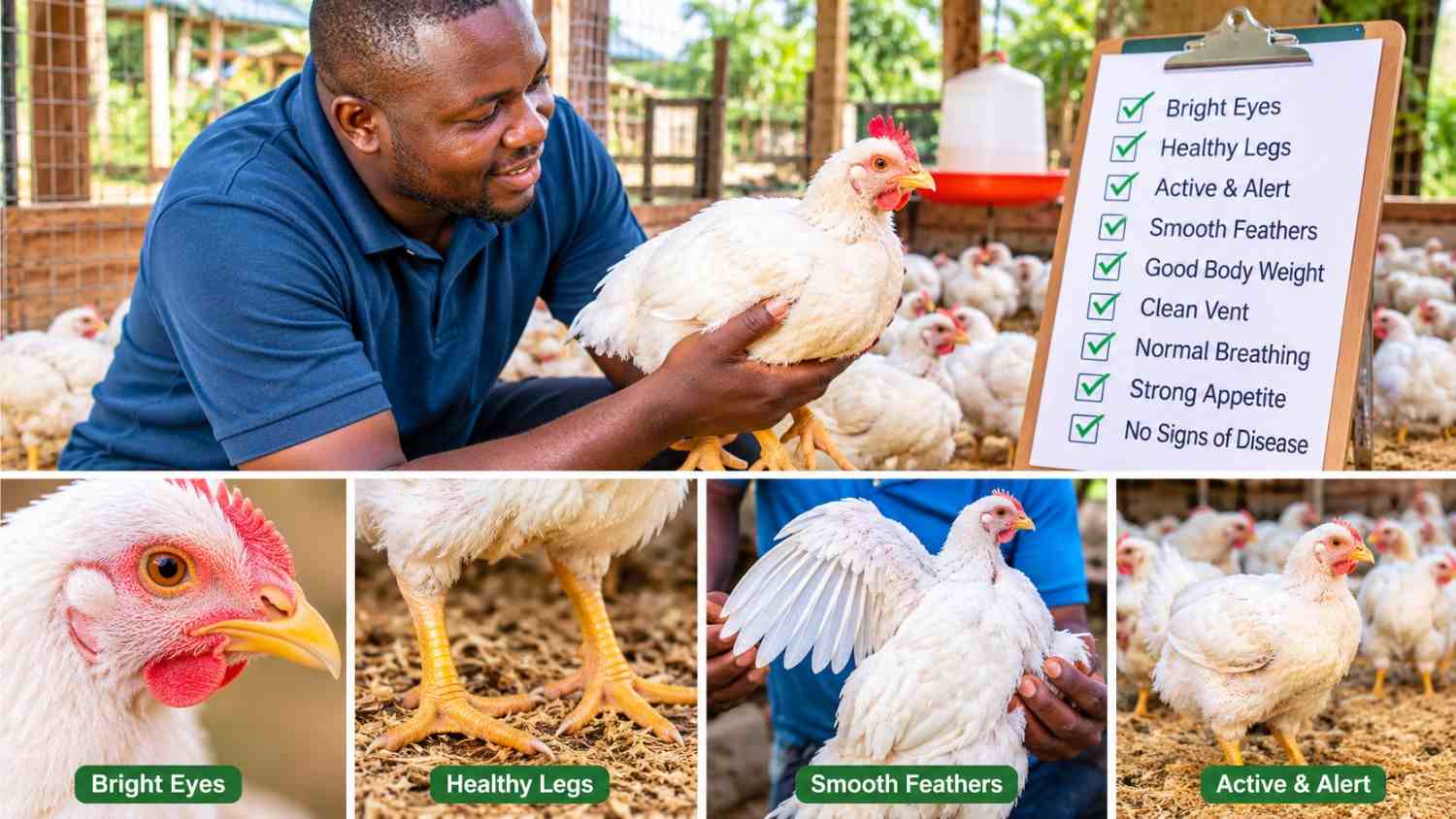
Try the 60-Second Checklist
Tick each check the bird passes
Ticked 0 of 9. Start checking.
Buying a Dressed Broiler Instead?
The price is the same, Ksh 500 per bird, live or dressed. For a dressed bird, use these signs:
- Smooth, pale skin
- No dark patches or bruises
- Firm flesh that springs back
- Fresh smell, nothing sour
- No slime or sticky film
- Kept cold
5 Questions to Ask the Seller
- How old is this batch?
- Can I see the bird weighed?
- Have any birds in this batch been sick?
- How were the birds fed and looked after?
- Can I look at more than one bird?
A good seller answers these easily. If someone avoids your questions, buy somewhere else.
After You Buy: Get Your Bird Home Safely
- Carry the bird gently, with its body supported. Do not squeeze it or carry it by the wings.
- Keep it in the shade, with air and water, until you prepare it.
- Wash your hands with soap after handling a live bird or raw meat.
- Cook the meat until the thickest part reaches 74°C (165°F). See the official safe cooking temperature chart.
Want to learn more about what a healthy flock looks like? Extension’s list of healthy bird traits is a useful second source.
What Does a Healthy Broiler Cost?
Broiler chicken, live or dressed
Ksh 500
Per bird. Message us on WhatsApp to check the next batch and your pick-up or delivery details.
Frequently Asked Questions
How do I choose a broiler chicken?
Check nine signs: an alert stance, quiet breathing, bright eyes, clear nostrils, a red comb, clean feathers, a clean vent, strong legs and a firm, full body. Buy only a bird that passes every check.
What does a healthy live broiler look like?
A healthy broiler stands tall, looks alert, breathes quietly and has bright eyes, clear nostrils and a red comb. Its feathers and vent are clean, it walks on both legs, and its body feels firm and full.
How can I tell if a broiler is sick?
Warning signs include drooping wings, wheezing, watery or cloudy eyes, mucus from the nose, a pale comb, dirty droppings stuck near the vent, limping, and a thin or weak body.
Is a heavier broiler always better?
No. Weight should match the bird’s age, and the bird should still stand and walk well. A very heavy bird that sits all day or limps may have leg trouble.
How much does a broiler cost in Mikindani?
A broiler costs Ksh 500 per bird, whether you buy it live or dressed. Message 0714701814 on WhatsApp to confirm availability.
Can I check the bird before I pay?
You should always be able to look at a bird before you pay. Take your time with the nine checks, and ask to see more than one bird.
What should I do after buying a live broiler?
Carry it gently, keep it in the shade with water, and prepare it soon. Wash your hands after handling it, and cook the meat until the thickest part reaches 74°C (165°F).
Is a dressed broiler cheaper than a live one?
No. Live and dressed broilers are both Ksh 500 each.
Ready to buy a healthy broiler?
Ksh 500 per bird, live or dressed. Send a message and we will confirm your batch.
📲 WhatsApp 0714701814 📞 Call now