Which are the fastest growing towns in Kenya?
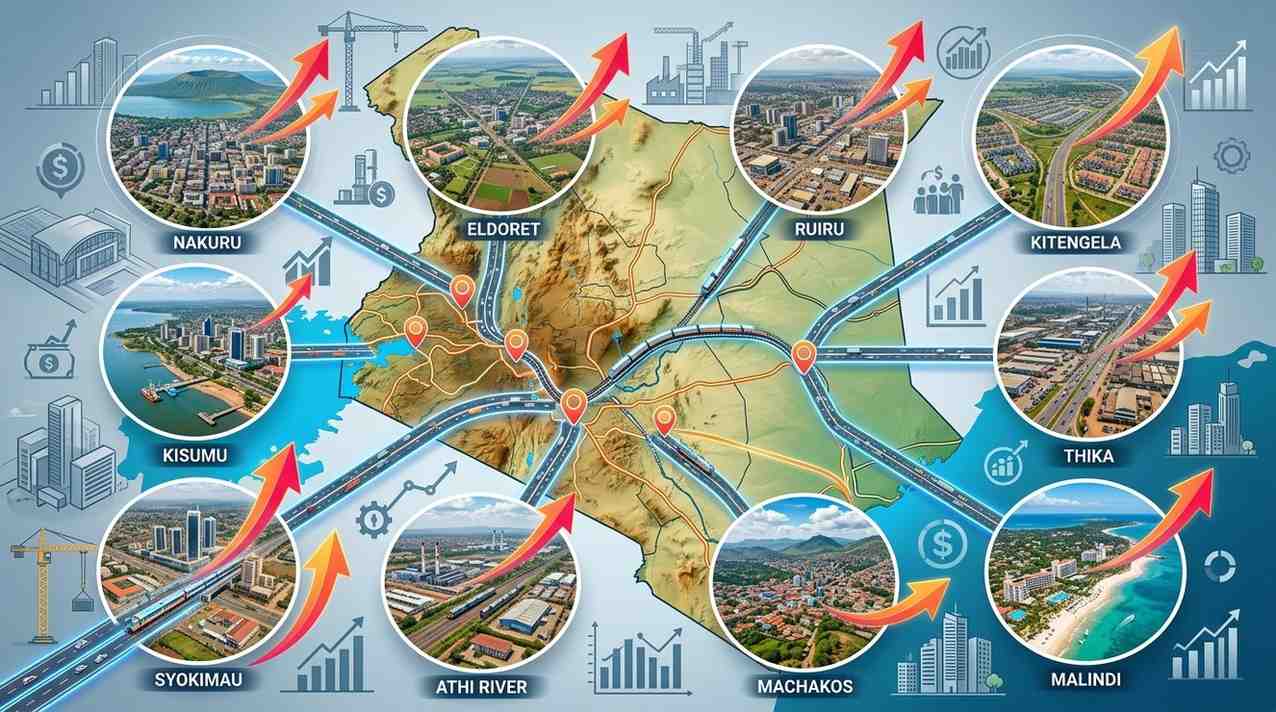
The fastest growing towns in Kenya outside Nairobi include Nakuru, Eldoret, Kitengela, Ruiru, Thika, Kisumu, Syokimau, Athi River, Machakos, and Malindi. Growth is driven by infrastructure investment, affordable housing demand, devolution, and rapid population increase — with several towns recording over 5% annual urban expansion.
Why Kenya's Urban Growth Is Happening Beyond Nairobi
The fastest growing towns in Kenya are no longer competing with Nairobi for attention — they are surpassing it in pace. Kenya National Bureau of Statistics (KNBS) data shows that Nairobi City, Kiambu, Nakuru, Narok, and Kakamega counties are projected to record the highest population increases between 2020 and 2045. Yet the real story is not in Nairobi's established suburbs, but in secondary towns across the country that are absorbing hundreds of thousands of migrants annually.
Kenya's urban population has exploded — from just 8% at independence in 1963 to over 40% today. By 2030, Kenya Vision 2030 projects that more than half the country's population will live in urban areas. That is an enormous demographic wave, and satellite towns, county capitals, and coastal hubs are bearing the brunt of it.
What is fuelling this decentralised boom? A combination of forces:
- Escalating Nairobi rents pushing middle-income workers to commuter towns
- Infrastructure investments — the Thika Superhighway, Southern Bypass, and SGR — making outlying towns accessible
- Devolution channelling development funds to county capitals
- Affordable land in towns like Eldoret (from as little as KSh 350,000 per plot in some areas)
- Universities and EPZs (Export Processing Zones) anchoring new economic activity
Below, we examine the ten most dynamic towns driving Kenya's next urban chapter — ranked not by size, but by speed and momentum of growth.
"Kenya's real estate market is shifting beyond Nairobi. Infrastructure projects like highways, bypasses, and commuter railways are opening up satellite towns for development."
— Sarabi Realty Group, 2025 Investment Report
Nakuru City — The Rift Valley's Rising Capital
Once a colonial farming outpost, Nakuru is now Kenya's fourth city — elevated to city status by President Uhuru Kenyatta on December 1, 2021. Its population of 570,674 (2019 census) has since ballooned to an estimated 809,825 as of 2026, making it among the fastest-urbanising centres in East Africa.
Nakuru benefits from a powerful trio of assets: its strategic location midway between Nairobi and western Kenya, an agricultural hinterland producing flowers, dairy, and horticulture, and a tourism economy anchored by Lake Nakuru National Park — one of Kenya's most iconic wildlife sanctuaries. Real estate developers have taken note; gated housing estates, malls, and university campuses are multiplying across the city.
Key Growth Drivers
- City status attracts elevated government investment and infrastructure funding
- Tourism from Lake Nakuru and Hell's Gate National Parks generates year-round economic activity
- Position on the Trans-Africa Highway between Nairobi and Kampala drives logistics and trade
- Growing university population from Egerton University and Nakuru campus institutions
- Expanding residential estates catering to Nairobi commuters and retirees
Eldoret — The Athletic Capital Becomes a Commercial Giant
Eldoret earned Kenya's fifth city status in August 2024 — a reflection of its remarkable trajectory from a Uasin Gishu farming town to a full-blown commercial, educational, and logistics hub. Globally famous as the birthplace of Kenya's marathon champions, Eldoret is now making headlines in boardrooms, not just starting blocks.
Cheap land (still accessible from KSh 350,000 per plot in outer zones), a booming university population from Moi University and University of Eldoret, and proximity to Uganda's border trade route make this an exceptionally strong investment destination. Large supermarket chains, modern hospitals, and multi-storey commercial buildings are reshaping the skyline.
Key Growth Drivers
- New city status unlocking major infrastructure and devolution funds
- Home to Moi University and University of Eldoret — massive student economy
- Agricultural produce hub — maize, wheat, and dairy processing plants
- MEDS (Mission for Essential Drugs) and other pharmaceutical supply chains headquartered here
- Relatively affordable property prices compared to Nairobi and Mombasa
Ruiru — Nairobi's Most Populous Satellite Town
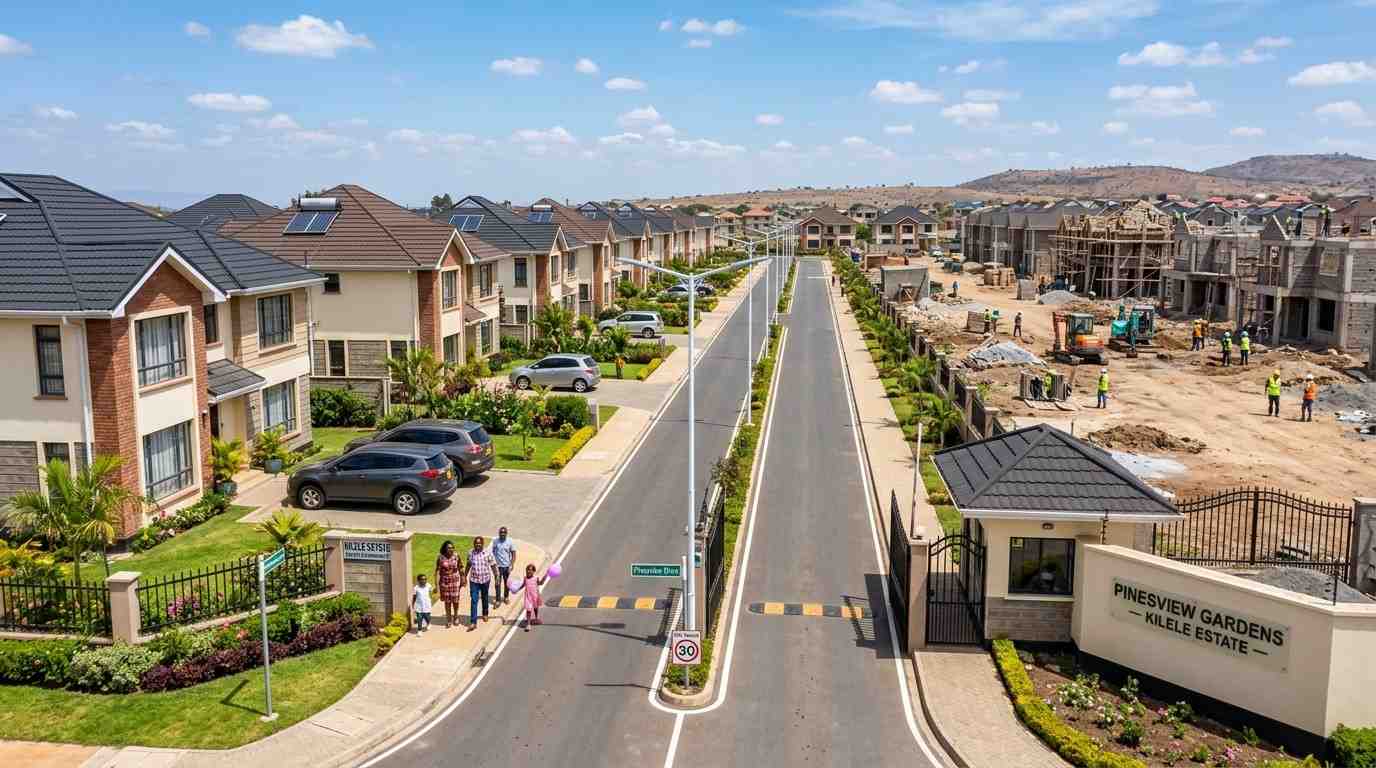
With an estimated population approaching 695,000, Ruiru is the most densely populated satellite town in Kenya and continues to grow at a dizzying rate. Located 30 km from Nairobi's CBD along the Thika Superhighway, the town has benefitted enormously from improved road infrastructure and is earmarked for inclusion in the Nairobi Mass Rapid Transit System.
According to HassConsult's Land Price Index, satellite towns like Ruiru controlled approximately 60% of property transactions in Kenya as recently as 2020 — a share that has only increased as Nairobi rents continue to climb. Universities including Kenyatta University's nearby campus have established a permanent young professional and student population.
Key Growth Drivers
- Thika Superhighway and Northern Bypass reduce commute times to Nairobi CBD
- Tatu City — a private master-planned smart city — is being developed on its outskirts
- Rental yields for single-family homes and bedsitters remain strong
- Light industrial and logistics activity expanding along the highway corridor
- Earmarked for mass rapid transit integration with Nairobi metropolitan network
Kitengela — The Town That Came from Nowhere
No town in Kenya better illustrates the speed of informal urbanisation than Kitengela. A largely unknown Kajiado village barely a decade ago, it has transformed into a thriving commercial and residential hub with over ten banks, major supermarket chains, dozens of estates, and a population that keeps multiplying. High Nairobi rents were the primary catalyst — workers relocated south and Kitengela simply responded.
The town sits on the southern Nairobi Metropolitan fringe, accessing both the Mombasa Road corridor and the Standard Gauge Railway (SGR) at nearby Athi River. Land prices, once almost free, have risen sharply — testament to investor confidence. For landlords, rental demand is consistent as new arrivals continue to stream in.
Key Growth Drivers
- Overflow of Nairobi's middle and lower-middle class seeking affordable housing
- Proximity to Athi River EPZ and industrial parks creates employment
- Access to Nairobi via Mombasa Road and public transport routes
- Commercial activity exploding — banks, supermarkets, petrol stations, schools
- Strong rental returns for buy-to-let investors
Thika — The Industrial Satellite That Never Stopped Growing
Located just 40 km from Nairobi, Thika has been a workhorse of Kenya's industrial economy for decades — home to Del Monte's pineapple plantations, Bata Shoe Company, and numerous manufacturing plants. But the completion of the Thika Superhighway turbocharged what was already a fast-growing town into one of the most connected satellite cities in East Africa.
With a population estimated at close to 490,000, Thika is a full-service town with universities, hospitals, and a diversified economy spanning manufacturing, floriculture, education, and retail. Residential development is pushing beyond the established town boundaries into Juja, Kalimoni, and Ruiru.
Key Growth Drivers
- Long-established industrial base provides stable employment and housing demand
- Thika Superhighway slashed commute times to Nairobi dramatically
- Home to Thika Technical Training Institute and several universities
- Growing residential suburbs — Makongeni, Landless, and Blue Post estates
- Agricultural processing plants for pineapple, coffee, and flowers
At a Glance: How Kenya's Fastest Growing Towns Compare
| Town | County | Est. Pop. (2026) | Key Driver | Investment Heat |
|---|---|---|---|---|
| Nakuru City | Nakuru | ~809,825 | City Status, Tourism | 🔥 Hot |
| Ruiru | Kiambu | ~695,513 | Thika Superhighway, Tatu City | 🔥 Hot |
| Eldoret | Uasin Gishu | ~675,073 | New City Status, Universities | 🔥 Hot |
| Kitengela | Kajiado | ~400,000+ | Nairobi Spillover, Affordability | 🔥 Hot |
| Thika | Kiambu | ~490,000 | Industry, Superhighway | 📈 Warm |
| Kisumu | Kisumu | ~500,000+ | Port, LAPSSET, Trade | 📈 Warm |
| Syokimau | Machakos | ~200,000+ | SGR Terminus, Airport Link | 🔥 Hot |
| Athi River | Machakos | ~150,000+ | EPZ, SGR, Industry | 📈 Warm |
| Machakos Town | Machakos | ~200,000+ | Devolution, County HQ | 🌱 Growing |
| Malindi | Kilifi | ~130,000+ | Tourism, Real Estate, Expats | 🌱 Growing |
Six More Towns Quietly Transforming Kenya
6. Kisumu — Western Kenya's Lakeside Powerhouse
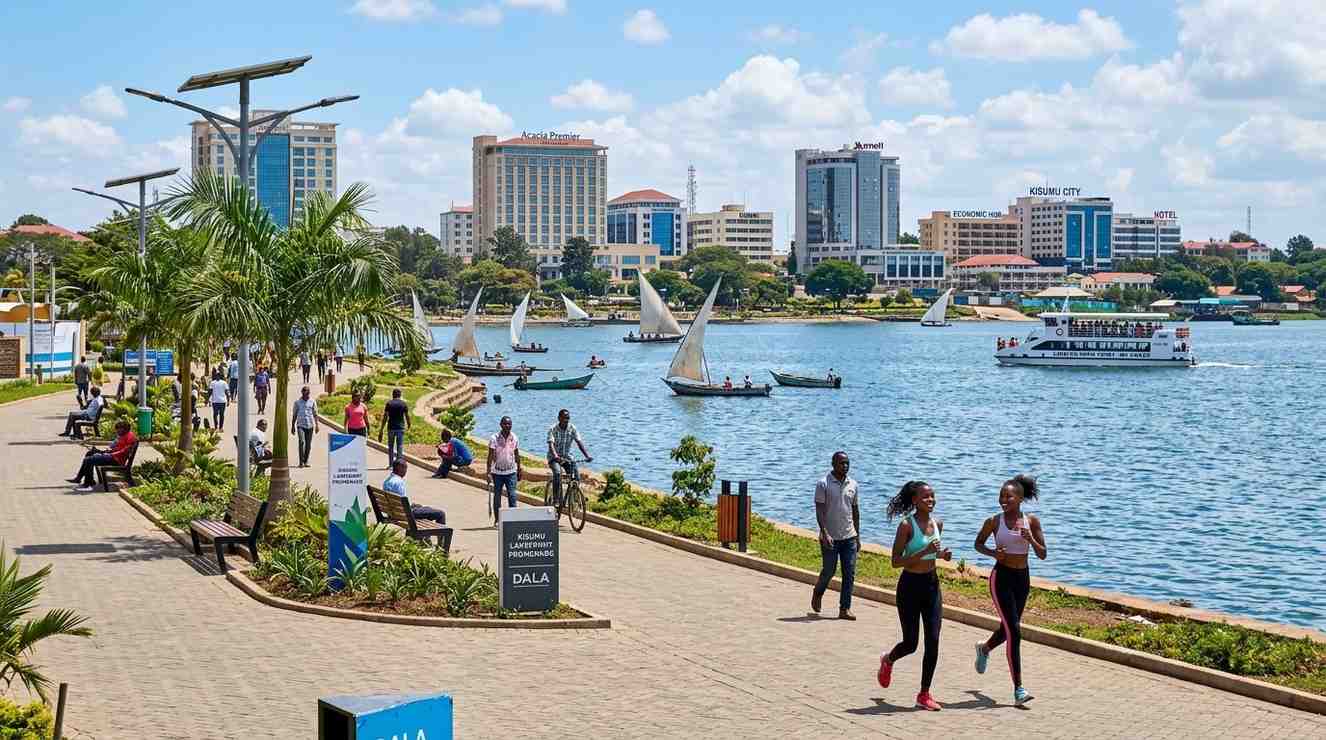
Kenya's third city and the heartland of Luo culture, Kisumu sits on the shores of Lake Victoria and serves as the commercial gateway to Kenya's western counties and the Great Lakes region. The city's population stood at 397,957 in the 2019 census, but UN-Habitat's ongoing urban expansion plans and a supported Planned City Extension project are opening the way for hundreds of thousands more residents.
The LAPSSET Corridor (Lamu Port–South Sudan–Ethiopia Transport Corridor) and regional trade agreements with Uganda, Tanzania, and Rwanda make Kisumu a strategic long-term bet. A growing congress tourism industry, port rehabilitation, and blue economy investments around the lake are adding new economic pillars.
- Lake Victoria port makes Kisumu an inland maritime trade hub for East Africa
- Kisumu International Airport supports cargo and passenger connectivity
- Blue economy investments — fishing, aquaculture, and water tourism
- Kisumu is Kenya's county 42, with rich devolution funding flowing into the region
7. Syokimau — The SGR Town That Woke Up Overnight
If one piece of infrastructure transformed a Kenyan town overnight, it was the Standard Gauge Railway (SGR) terminus at Syokimau. Residents of this Machakos County suburb can now commute to Nairobi's CBD in under 15 minutes, making it one of the most desirable commuter addresses in the country. Gated estates, apartment blocks, and commercial plazas have followed the railway tracks with remarkable speed.
Proximity to Jomo Kenyatta International Airport (JKIA) — just 5 km away — adds further value for business travellers and freight logistics firms. Property prices have risen steeply but remain below comparable Nairobi suburbs, sustaining investor appetite.
8. Athi River — The Industrial Heartland South of Nairobi
Athi River (also known as Mavoko) punches above its weight as Kenya's industrial powerhouse. Home to the Export Processing Zone (EPZ), cement manufacturers, and a growing logistics cluster, the town employs tens of thousands of workers and generates sustained demand for rental housing. The SGR passes through here, and Mombasa Road — Kenya's busiest freight artery — makes it the single most important commercial corridor outside Nairobi.
9. Machakos Town — Devolution's Star Pupil
Machakos showcases what devolution can do when a county government is motivated. The town has undergone a visual transformation — clean streets, public parks, renovated markets, and new commercial buildings — that has attracted both residents and businesses. The county government's strategy of offering incentives to investors, including free land in some cases, has accelerated growth significantly. Land prices, though rising, remain accessible for savvy investors.
10. Malindi — The Coastal Gem Diversifying Beyond Tourism
Malindi on Kenya's north coast has long been a favourite of Italian expats and European tourists, but 2025 finds it reinventing itself. New road infrastructure, an upgraded airport, and growing domestic tourism are drawing Kenyan developers into what was previously an exclusively foreign-investment market. Real estate — particularly beachfront holiday cottages and gated estates — commands premium prices, with plots near the beach fetching KSh 3 million to over KSh 20 million depending on proximity and size.
📌 Key Takeaways for Investors & Homebuyers
- Nakuru and Eldoret offer the best combination of new city infrastructure funding, population size, and relatively affordable entry-level properties.
- Kitengela and Syokimau are ideal for buy-to-let investors — consistent rental demand from young professionals and commuters.
- Ruiru and Thika are mature satellite towns with established amenities — lower risk, steady appreciation.
- Kisumu is the long-term regional bet — LAPSSET and lake economy make it a 10-year play.
- Malindi suits lifestyle buyers and holiday-rental entrepreneurs with access to the beach economy.
- Always conduct a title search via the Lands Registry and work with a qualified advocate before any land purchase in Kenya.
What This Means If You Are Buying Property or Relocating
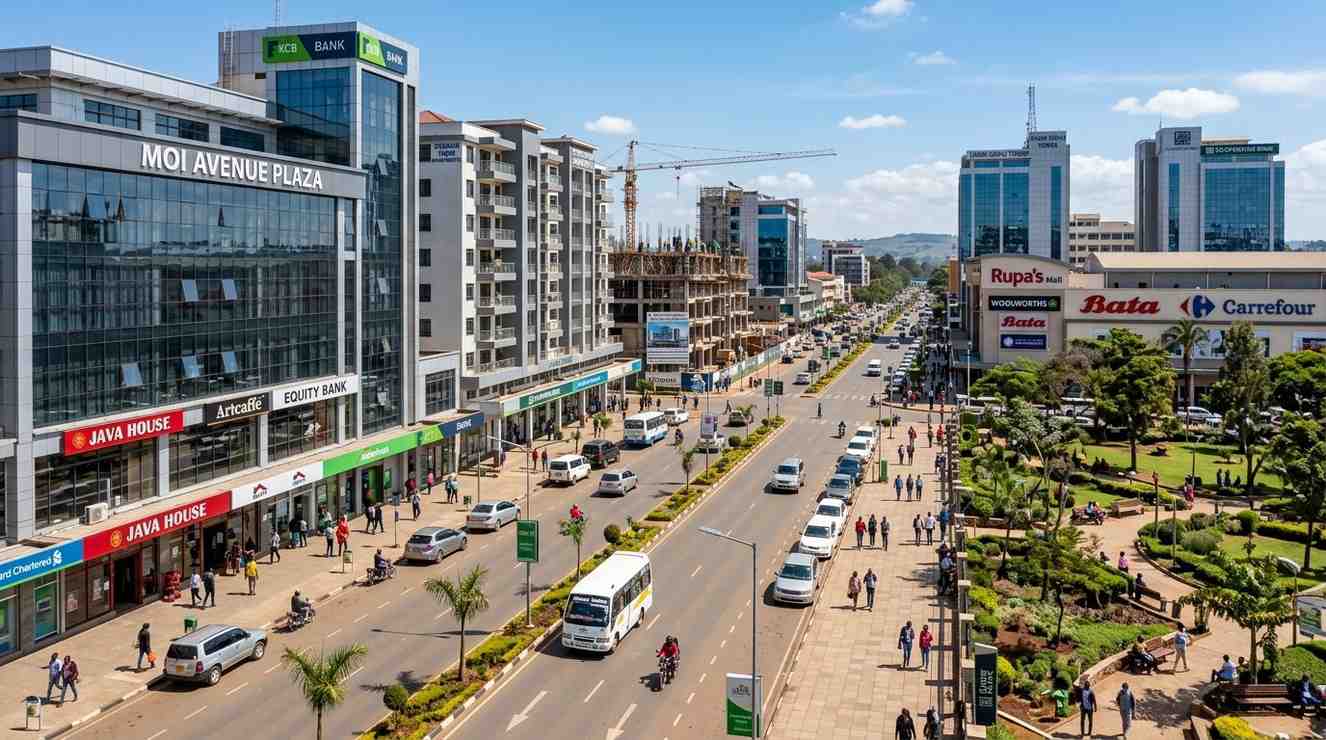
Kenya's urbanisation wave is real and it is accelerating. Whether you are a first-time homebuyer, a real estate investor, or an entrepreneur scouting locations for a business, understanding which towns are growing — and why — gives you a decisive edge.
For homebuyers, the satellite towns around Nairobi remain the sweet spot: Kitengela, Syokimau, Ruiru, and Athi River offer a quality of life that is genuinely improving, while prices remain well below Nairobi suburbs. A 3-bedroom house in Kitengela can cost between KSh 4 million and KSh 9 million — a fraction of equivalent properties in Karen or Westlands.
For investors, the secondary cities — Nakuru, Eldoret, and Kisumu — present the most compelling long-term case. These cities have the population mass, economic diversity, and government attention to sustain decade-long appreciation cycles. Rental yields in Eldoret, for instance, are among the healthiest in Kenya's secondary market.
You will also want to stay informed about vehicle transport costs if relocating away from Nairobi. Check out the New KRA Vehicle Tax Calculator (Latest CRSP) on KE Offers to estimate what importing or transferring a car might cost as you set up in a new town.
For entrepreneurs and small businesses, the commercial potential in these towns is enormous — particularly in hardware retail, logistics, healthcare, hospitality, and digital services, where demand far outstrips supply in most of these rapidly growing areas.
Risks to Watch
Not every growing town is a safe bet, and Kenya's land market has well-documented pitfalls. The Kenya Revenue Authority levies stamp duty of 4% in urban areas and 2% in rural areas on property transactions. Legal fees, valuation fees, and service charges in gated developments add further costs. More critically:
- Purchasing land without a title deed search through the Lands Registry is extremely high risk
- Many satellite towns still have limited water, sewerage, and power reliability — factor in boreholes and solar installations
- Unplanned urban growth means some areas lack schools, hospitals, and proper road networks
- Beware of fraudulent developers selling land without proper subdivision approval
- Rising land prices in satellite towns mean entry-level affordability windows are closing fast — waiting carries real cost
Frequently Asked Questions
What are the fastest growing towns in Kenya outside Nairobi?
The fastest growing towns in Kenya outside Nairobi include Nakuru City, Eldoret, Ruiru, Kitengela, Thika, Kisumu, Syokimau, Athi River, Machakos, and Malindi. These towns are driven by infrastructure investment, population migration from Nairobi, devolution funds, and affordable housing demand.
Which town outside Nairobi is best for real estate investment in 2025?
Nakuru and Eldoret offer strong long-term fundamentals as recently elevated cities with government investment flowing in. For shorter-term rental income, Kitengela, Syokimau, and Ruiru deliver consistent occupancy and yield. The best choice depends on your investment horizon and risk appetite.
How much does land cost in Kenya's fastest growing towns?
Land prices vary enormously. In Eldoret's outer zones, plots still start from around KSh 350,000. In Kitengela and Syokimau, well-located plots now range from KSh 1.5 million to over KSh 5 million. Nakuru City residential plots typically range from KSh 800,000 to KSh 4 million depending on location.
Will Kenya's satellite towns eventually merge with Nairobi?
Urban planners and the Vision 2030 Secretariat have identified a Nairobi Metropolitan Region that already includes Kiambu, Machakos, and Kajiado counties. Continuous urban development along major road and rail corridors means some satellite towns — Ruiru, Thika, Kitengela, Syokimau — may effectively form a continuous urban fabric with Nairobi within 20 years.
Is it safe to buy land in Kitengela or Athi River?
Yes — but only with proper due diligence. Always commission a title deed search at the Lands Registry, engage a licensed advocate, and verify that any development has proper planning approval from the relevant county government. Avoid buying directly from agents without verifying the vendor's ownership documents.
The Bottom Line
Kenya's urban future will not be written in Nairobi alone. The country's fastest growing towns — from Nakuru's city-status boom to Kitengela's organic explosion, from Eldoret's athletic ambition to Kisumu's blue economy promise — represent an investment and lifestyle opportunity that is genuinely significant. Understanding the dynamics behind each town's growth is the first step to making a well-informed decision, whether you are buying a home, starting a business, or building a property portfolio.
The window of entry-level affordability in the best satellite towns is narrowing. Those who moved to Kitengela a decade ago when it was "just bush" are sitting on multiples of their original investment. The question now is: which of today's emerging towns is tomorrow's Kitengela?
For more guides on navigating Kenya's market — from vehicles to electronics and real estate — explore the full library at KE Offers Guides.