
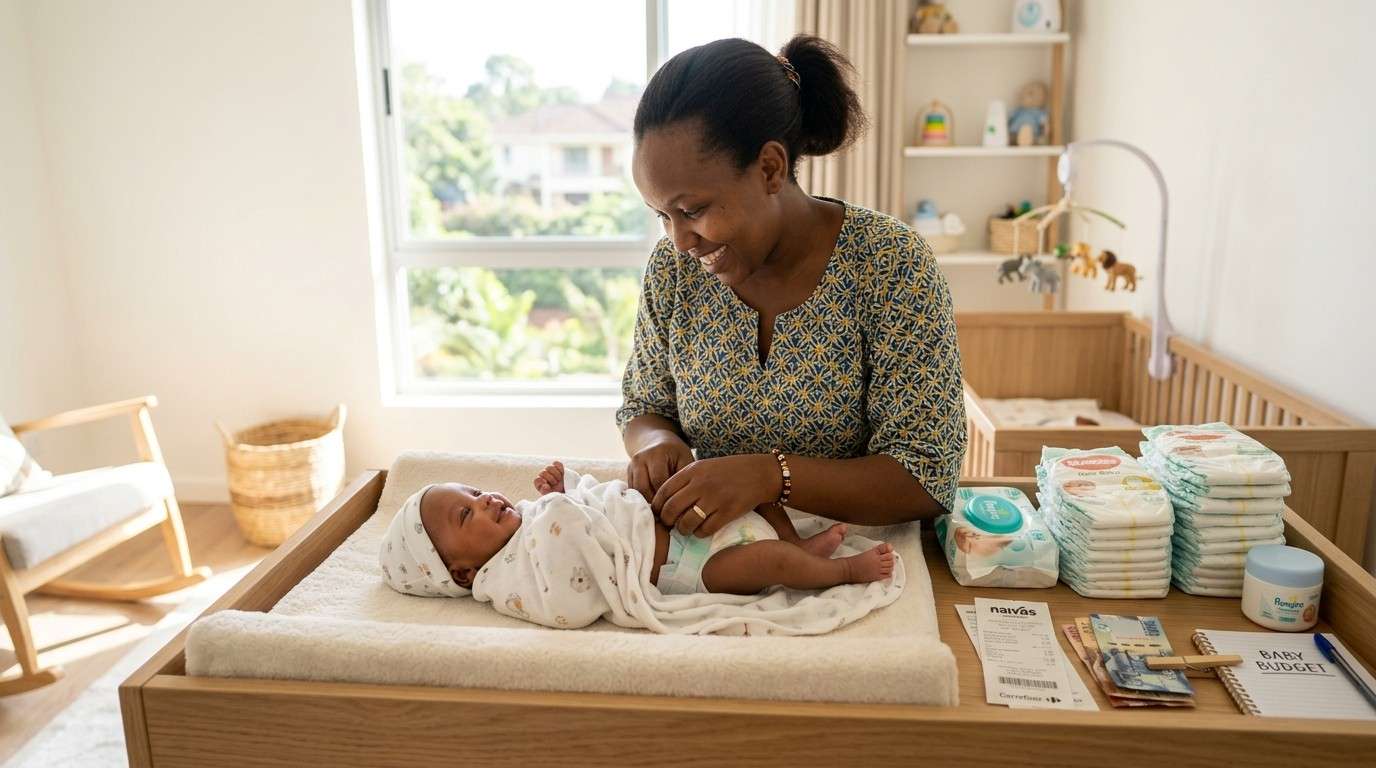
How Many Diapers a Newborn Uses Daily in Kenya — The Complete Budget Planning Guide
Diapers a newborn uses in the first weeks of life can take even the most prepared Kenyan parent by surprise — both in sheer quantity and in cost. This guide breaks down exactly how many you'll need, what they cost across popular Kenyan brands, and how to plan a monthly diaper budget that won't derail your finances.
A newborn uses 8 to 12 diapers per day in the first month of life, averaging about 10 daily changes. That equals roughly 280–360 diapers in month one. In Kenya, this translates to a monthly diaper cost of KES 1,400 to KES 6,500 depending on the brand chosen.
The Diaper Reality No One Warns You About
The number of diapers a newborn uses daily is one of the most underestimated aspects of early parenthood in Kenya. You've bought the cot, the pram, the tiny clothes (some from your trusted mutumba plug) — but have you truly budgeted for the relentless diaper cycle that begins the moment your baby arrives?
In the first few weeks, a healthy newborn feeds frequently — every 2 to 3 hours — and a feeding almost always triggers a diaper change. Their digestive systems are immature and working overtime, and it's completely normal for a baby to soil a nappy within minutes of being changed. This is biology, not bad luck.
Understanding the diaper cadence from day one allows you to stock up smartly, shop at the right stores, and avoid the 2 a.m. panic run to the nearest kiosk. Let's get into the numbers.
How Many Diapers Does a Newborn Use Per Day?
The honest answer is: more than you expect. According to Mayo Clinic, newborns typically soil 8–10 diapers per day in their first month. Some babies, particularly breastfed newborns, can exceed 12 changes a day.
Daily Diaper Usage by Age
| Baby's Age | Diapers Per Day | Diapers Per Week | Diapers Per Month |
|---|---|---|---|
| 0 – 1 Month | 8 – 12 | 56 – 84 | 240 – 360 |
| 1 – 2 Months | 8 – 10 | 56 – 70 | 240 – 300 |
| 2 – 4 Months | 6 – 8 | 42 – 56 | 180 – 240 |
| 4 – 6 Months | 6 – 8 | 42 – 56 | 180 – 240 |
| 6 – 12 Months | 5 – 6 | 35 – 42 | 150 – 180 |
| 12 – 18 Months | 4 – 5 | 28 – 35 | 120 – 150 |
| 18 – 24 Months | 3 – 4 | 21 – 28 | 90 – 120 |
💡 Expert Tip
The AAP (American Academy of Pediatrics) recommends changing diapers promptly after every feeding or every 2–3 hours, even if the nappy doesn't feel full. Leaving a baby in a wet nappy for too long increases the risk of diaper rash and infection — a painful and avoidable outcome.
Monthly Diaper Cost in Kenya: What You'll Actually Spend
Now that you know the quantities, let's translate them into Kenyan shillings. Diaper prices in Kenya vary significantly depending on the brand, pack size, and where you shop — a supermarket, a pharmacy, a wholesale mall, or an online platform will each offer different pricing.
Using an average of 300 diapers per month (roughly 10 per day) for a newborn, here's what you can expect to spend across the major brands available in Kenya:
Diaper Brand Comparison
| Brand | Tier | Price Per Diaper (KES) | Est. Monthly Cost (KES) | Availability |
|---|---|---|---|---|
| Softcare | Budget | 5 – 7 | 1,500 – 2,100 | Supermarkets, kiosks |
| KissKids | Budget | 6 – 8 | 1,800 – 2,400 | Supermarkets |
| Molfix | Budget | 7 – 9 | 2,100 – 2,700 | Supermarkets, pharmacies |
| Snuggles | Mid-Range | 10 – 13 | 3,000 – 3,900 | Supermarkets, pharmacies |
| Huggies | Mid-Range | 13 – 17 | 3,900 – 5,100 | Naivas, Carrefour, online |
| Pampers | Premium | 16 – 20 | 4,800 – 6,000 | Major supermarkets, online |
| NipNap | Premium | 15 – 19 | 4,500 – 5,700 | Carrefour, online |
Note: Prices are approximate and may vary by location and pack size. Buying in bulk packs of 60–120 typically reduces the per-unit cost by 10–20%.
Monthly Diaper Budget at a Glance (Newborn — 300 diapers/month)
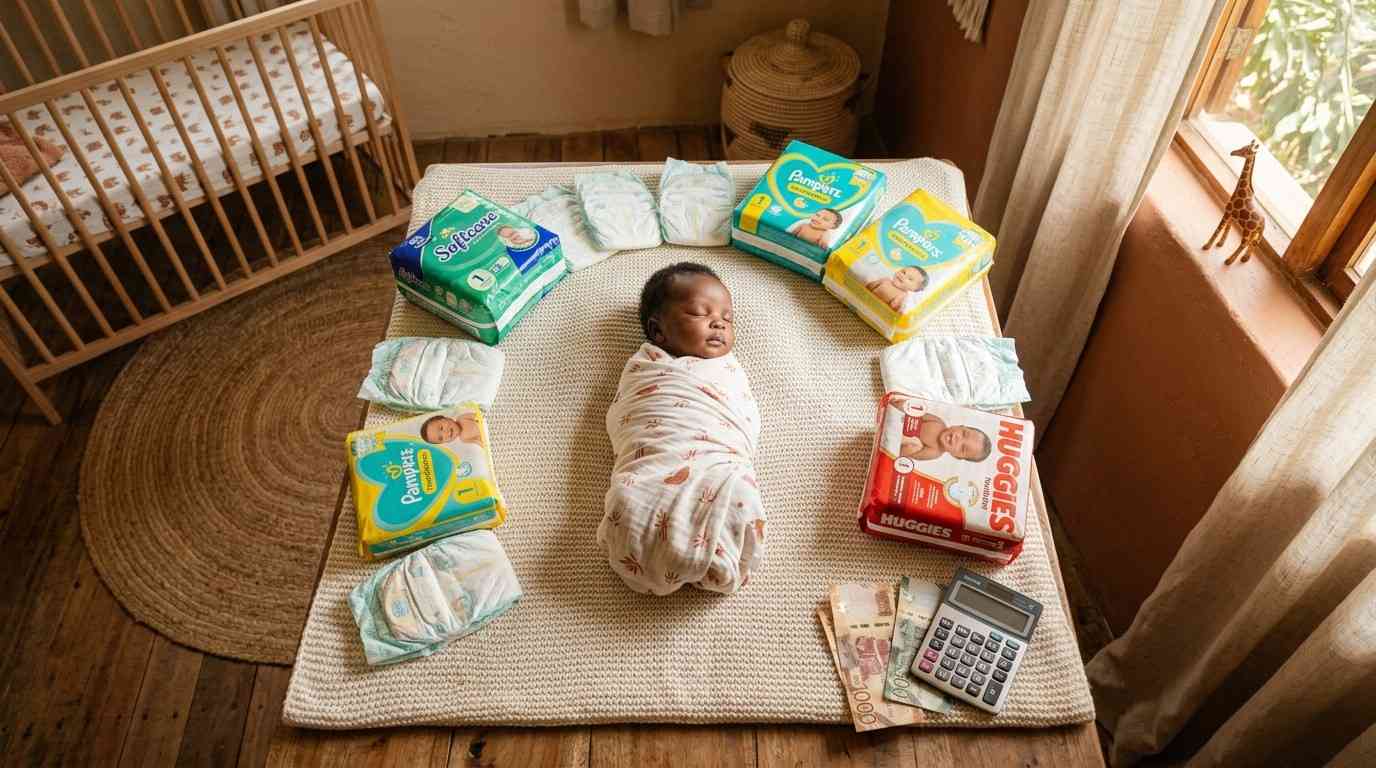
Popular diaper brands stocked in Kenyan supermarkets — from budget to premium.
Where to Buy Diapers Cheaply in Kenya
One of the smartest moves a new Kenyan parent can make is buying diapers from the right place — not just the nearest one. The price difference between a kiosk and a wholesale outlet can be as much as 30–40% per unit.
Top Options for Buying Diapers in Kenya
- Wholesale Markets (Best Value): Wholesale malls offer some of the cheapest diaper prices in Kenya. If you are in Nairobi, shopping at wholesale outlets in Eastleigh is a well-known strategy among budget-savvy parents. Check out our guide to the best malls in Eastleigh for wholesale prices — many of these stock baby products including diapers at significantly lower per-unit costs.
- Large Supermarkets (Carrefour, Naivas, Quickmart): Reliable for branded options like Pampers and Huggies. Carrefour Two Rivers and Westgate often have promotional bundles. Buying the largest available pack is usually the most economical choice.
- Online Shopping (Jumia Kenya, Jiji): Jumia Kenya regularly runs baby promotions and allows bulk purchasing with home delivery. Particularly convenient for parents who cannot easily travel to wholesale areas.
- Pharmacies (Goodlife, Portal, Haltons): Convenient and reliable for mid-range to premium brands. Not usually the cheapest option but useful for urgent needs.
- Baby-Specific Stores: Boutique baby stores in malls like The Hub Karen and Two Rivers Mall stock premium diapers, often with knowledgeable staff who can advise on fit and brand.
⚠️ Caution
Be cautious of counterfeit diapers sold by informal vendors, especially near bus termini and open markets. Substandard diapers can cause severe diaper rash, skin burns, and allergic reactions. Always verify packaging and check for manufacturer seals before purchasing.
Your First-Month Diaper Budget Plan
New parents in Kenya are often advised to stock up before delivery. However, there's a delicate balance: newborn sizes (NB/Size 0) are often outgrown in as little as 2–4 weeks, especially for larger babies. Here's a practical first-month strategy:
Pre-Baby Stocking Strategy
- Buy 1–2 packs of Newborn/Size 0 (not more — babies grow fast)
- Stock 2–3 packs of Size 1 — this is what you'll use most in month one
- Keep all receipts; some supermarkets allow unopened exchanges if your baby skips a size
- Consider asking friends or family for diapers as baby shower gifts — they are always useful
Estimated First-Month Diaper Spend
| Budget Level | Brand(s) | Month 1 Cost (KES) | Annual Estimate (KES) |
|---|---|---|---|
| Tight Budget | Softcare / KissKids | 1,500 – 2,100 | 18,000 – 25,000 |
| Moderate | Molfix / Snuggles | 2,100 – 3,900 | 25,000 – 45,000 |
| Comfortable | Huggies / Pampers | 3,900 – 6,000 | 45,000 – 70,000 |
These estimates assume decreasing usage as your baby grows. By month 3–4, your baby will likely have settled into Size 2–3 and require only 6–8 changes daily, reducing your monthly spend noticeably.
Are Cloth Diapers Worth It in Kenya?
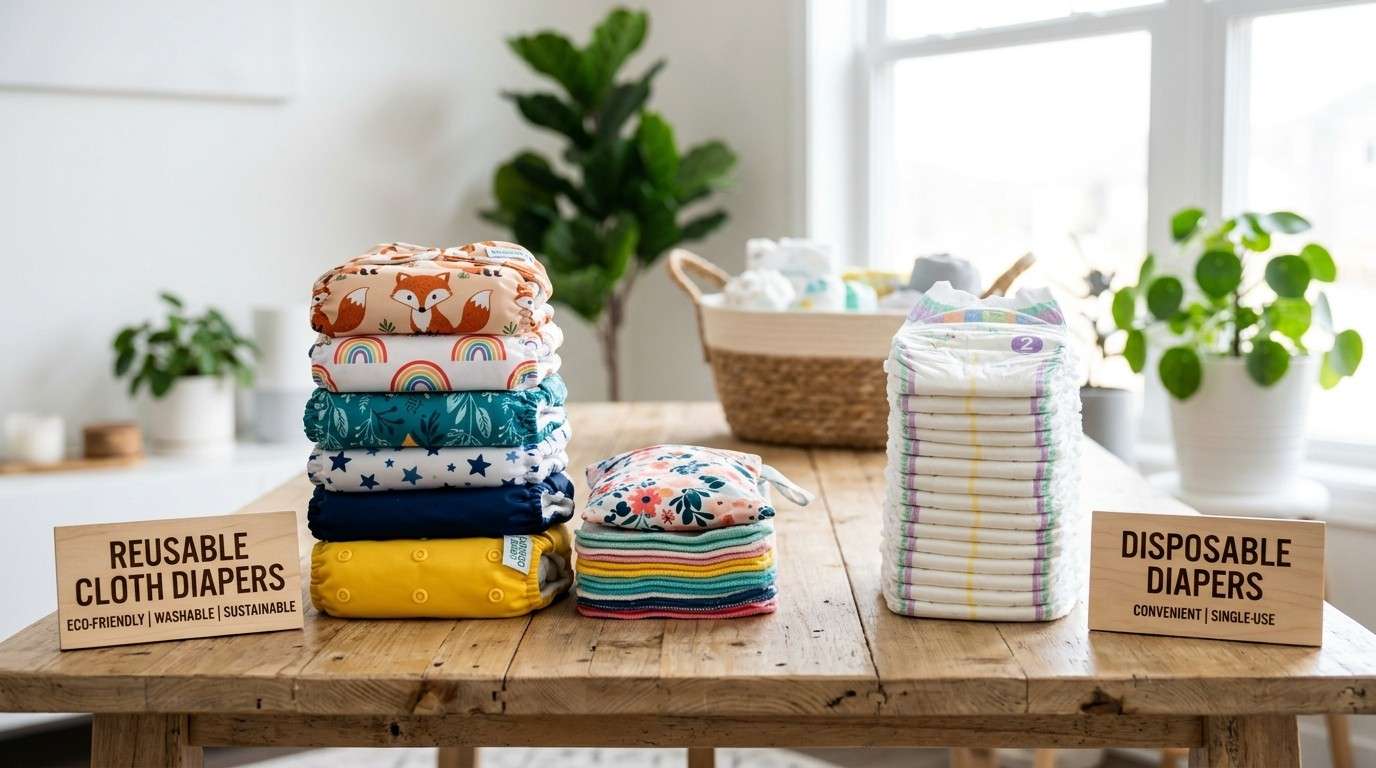
Modern cloth diapers are increasingly popular among eco-conscious Kenyan parents.
Cloth diapers — once dismissed as old-fashioned — have made a significant comeback in Kenya, particularly among environmentally conscious parents and those looking for long-term savings. Modern cloth diapers (MCDs) are a far cry from the basic squares your grandmother used; they come with adjustable snaps, waterproof covers, and excellent absorbency.
Cloth vs. Disposable: The Numbers
| Factor | Disposable Diapers | Cloth Diapers |
|---|---|---|
| Upfront Cost | Low (per pack) | High (KES 2,000–5,000 starter set) |
| Monthly Running Cost | KES 1,500 – 6,000 | KES 200–500 (water, detergent) |
| Total 2.5-Year Cost | KES 45,000 – 180,000 | KES 10,000 – 25,000 |
| Environmental Impact | High (waste) | Low (reusable) |
| Convenience | Very high | Moderate |
| Skin Friendliness | Varies by brand | Generally better |
For parents on a tight budget, a hybrid approach works well: use cloth diapers at home and disposables for outings, travel, and nights. This can slash your monthly disposable diaper spend by 50–60% while keeping convenience where it matters most.
According to a UNICEF Kenya environmental health report, disposable diapers constitute a growing portion of solid waste in Nairobi — an added reason many families are considering the switch.
10 Money-Saving Diaper Tips for Kenyan Parents
- Buy in bulk from wholesale markets Shopping at wholesale malls — especially in Eastleigh — can reduce your per-diaper cost by up to 35% compared to corner shops. See our guide to wholesale malls in Eastleigh for the best spots.
- Never buy Newborn size in large quantities Babies can outgrow NB/Size 0 in as little as 2 weeks. Purchase just 1 small pack pre-birth and wait to see what size your baby actually needs.
- Subscribe to Jumia and Kilimall deal alerts Both platforms run baby week promotions where diapers can be 15–25% off. Setting alerts ensures you never miss a deal.
- Join a baby buying group WhatsApp and Facebook parent groups in Nairobi, Mombasa, and Kisumu often run group buying initiatives where bulk orders are placed for better pricing.
- Use supermarket loyalty points Naivas, Carrefour, and Quickmart all have loyalty programs. Consistently buying diapers on these cards builds up points that translate to real savings over months.
- Try a hybrid cloth-disposable system Use cloth diapers during the day when you're home and disposables at night or when going out. This strategy alone can halve your monthly disposable spend.
- Stock up during baby showers Redirect gift requests toward diapers in Size 1–3, not just NB. These are used far longer and are one of the most practical gifts a new parent can receive.
- Track your usage for 2 weeks Keep a simple note of daily diaper changes for two weeks. This gives you an accurate personal usage rate and prevents over-buying or running out unexpectedly.
- Change promptly to avoid rash-related extra costs Diaper rash treatments — creams, antifungals, doctor visits — can add up quickly. Timely changes and using a barrier cream like Sudocrem prevent expensive rashes entirely.
- Don't forget diaper accessories in your budget Wipes, rash cream, changing mats, and disposal bags add KES 500–1,500/month to your total. Factor these in from day one.
Diapers Within the Bigger Baby Budget Picture
Diapers are a significant but not isolated cost. To truly plan for a newborn in Kenya, it helps to understand how diapers fit into the total first-year baby budget:
| Baby Expense | Monthly Estimate (KES) | First-Year Estimate (KES) |
|---|---|---|
| Diapers | 1,500 – 6,000 | 18,000 – 70,000 |
| Wipes & Creams | 500 – 1,000 | 6,000 – 12,000 |
| Formula (if not breastfeeding) | 3,000 – 8,000 | 36,000 – 96,000 |
| Clothing | 500 – 2,000 | 6,000 – 24,000 |
| Medical / Clinic Visits | 1,000 – 3,000 | 12,000 – 36,000 |
| Childcare / Nanny | 5,000 – 15,000 | 60,000 – 180,000 |
| Total (Budget) | ~12,000 | ~138,000 |
| Total (Premium) | ~35,000 | ~418,000 |
As the table shows, diapers represent roughly 10–20% of the total first-year baby cost in Kenya. This underscores the importance of making smart, intentional choices — even modest savings on diapers add up to meaningful money by baby's first birthday.
While you're planning your baby's wardrobe and outings, don't forget that looking great as a parent matters too. Check out Kenya's best options for women's shoes in Nairobi or men's shoes in Nairobi — because confident, comfortable parents raise happy babies.
How to Choose the Right Diaper Brand for Your Baby
Every baby is different. A diaper that works perfectly for your neighbour's child may cause rashes on yours. Here's a practical framework for choosing the right brand:
Key Factors to Consider
- Absorbency: Especially critical for nighttime use. Look for "overnight" or "extra absorbent" variants if your baby is a heavy wetter.
- Fit & Leg Cuffs: A well-fitting diaper prevents leaks. Double leg cuffs (common in Pampers and Huggies) significantly reduce blowouts.
- Skin Sensitivity: Babies with sensitive skin do better with fragrance-free, dermatologically tested options. Pampers Sensitive and hypoallergenic variants of Huggies Pure are worth the premium for allergy-prone babies.
- Wetness Indicator: Many newborn-size diapers in Kenya now come with a colour-change wetness indicator strip. Invaluable in the early weeks when you're still learning your baby's cues.
- Stretch Waistband: Active babies from around 3–4 months need elastic waistbands. Check the packaging — not all budget brands include this feature in smaller sizes.
✅ Pro Tip
Try sample packs of 2–3 different brands before committing to bulk purchases. Several pharmacies in Nairobi sell single-piece diapers or small trial packs. This lets you identify the best fit for your specific baby before spending thousands on a brand that doesn't work.
Frequently Asked Questions
A newborn typically uses 8 to 12 diapers per day in the first month of life. This averages about 10 daily changes, equating to roughly 70 diapers per week or 280–360 diapers in the first month.
Depending on the brand, a month of newborn diapers in Kenya costs between KES 1,500 and KES 6,000. Budget brands like Softcare start at around KES 1,500/month, while premium brands like Pampers can reach KES 5,500–6,000/month for a newborn.
The most affordable diaper brands in Kenya include Softcare, Peekabu, and Drypers. Softcare is widely available at supermarkets and kiosks and costs roughly KES 5–7 per diaper. For the cheapest per-unit price, buy in bulk from wholesale markets in Eastleigh or via Jumia Kenya.
Diaper usage naturally decreases as babies grow. By 1–2 months, most babies settle to 8–10 diapers per day. By 6 months, usage drops to 6–8 per day, and by 12 months, many babies only need 4–6 per day. Toilet training typically begins between 18–30 months.
Yes, significantly. Cloth diapers have a higher upfront cost (KES 2,000–5,000 for a starter set) but save considerably over time. A full cloth diaper stash can last the entire diapering journey and save Kenyan families up to KES 80,000 or more over 2.5 years compared to using premium disposables exclusively.
Buy no more than 1–2 packs of Newborn/Size NB before birth. Babies grow quickly and can outgrow newborn sizes in 2–3 weeks. Instead, stock up on Size 1 (for babies 4–6 kg) and have Size 2 ready. You can always send someone to buy more once you know your baby's exact needs.
Final Word: Budget Smart, Parent Confidently
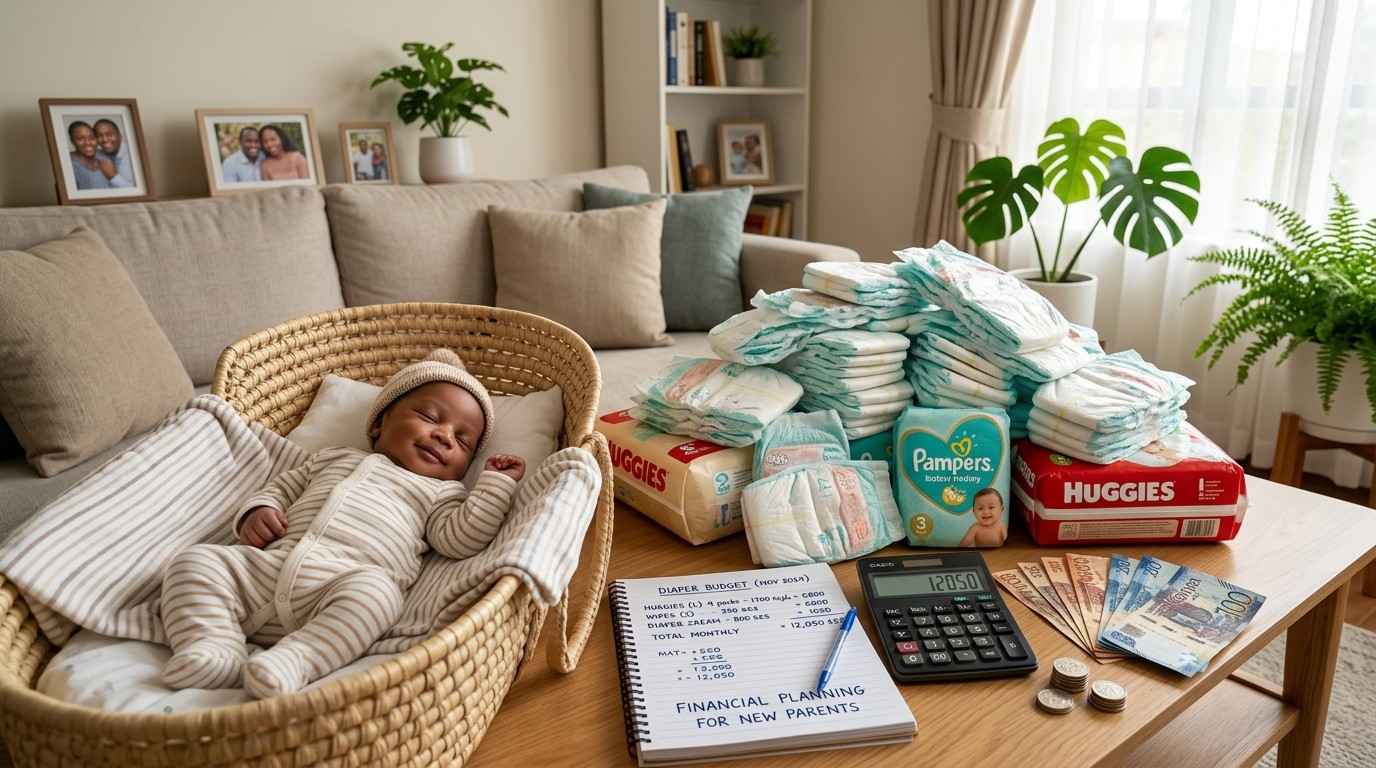
With the right plan, diaper budgeting becomes just one less thing to worry about as a new parent.
Understanding how many diapers a newborn uses daily — and translating that into a concrete Kenyan shilling budget — is one of the most practical things an expectant parent can do. The numbers are clear: plan for 8–12 changes per day in month one, budget between KES 1,500 and KES 6,000 per month, and watch that usage decrease steadily over the first year.
The most important takeaway? There is no one-size-fits-all answer. Your baby's feeding pattern, weight, brand sensitivity, and your household budget will all shape your diaper journey. Start with a small stash, test a couple of brands, and build a routine that works for your family — not what works for Instagram.
Whether you choose budget Softcare from a wholesale market in Eastleigh, a hybrid cloth-disposable approach, or premium Pampers from Carrefour — the goal is the same: a dry, comfortable, healthy baby and a financially stable parent. You've got this.