Regulations for NSE investors in Kenya are the taxes, rules, and protections that guide anyone who buys or sells shares on the Nairobi Securities Exchange. This guide explains every one of them in plain, simple words, so you can invest with confidence.
These include a 15% Capital Gains Tax on certain share profits, a 5% withholding tax on dividends for residents, close supervision by the Capital Markets Authority (CMA), strict insider trading laws, and clear investor rights covering information, voting, and dispute resolution.

Buying shares on the Nairobi Securities Exchange (NSE) is one of the smartest ways to grow your money in Kenya. But before you send a single shilling to a stockbroker, you need to understand the rules protecting you and the taxes you must pay. New investors often focus only on which stock to buy. They forget that the biggest risks of investing in the NSE also include getting the legal and tax side wrong. This guide closes that gap, one section at a time.
1. CMA's Role in Protecting Investors
The Capital Markets Authority (CMA) is the government body that watches over the entire capital market, including the NSE. Think of the CMA as a referee in a football match. It does not play the game, but it makes sure everyone follows the rules.
The CMA licenses stockbrokers, investment banks, and fund managers. It checks that listed companies tell the truth about their finances. It punishes people who cheat other investors. Without the CMA, the stock market would be a risky place full of scams and false promises.
2. How Listed Companies Are Regulated
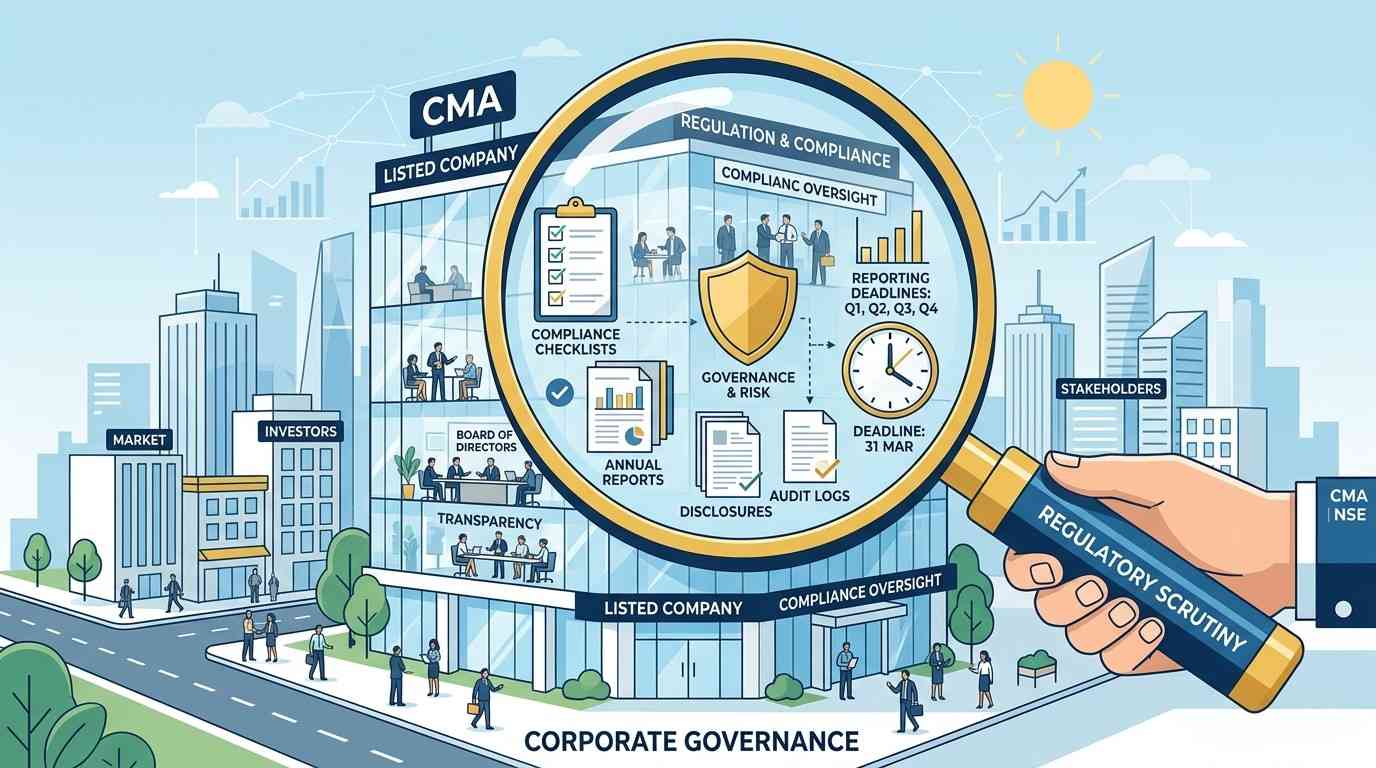
Every company on the NSE must follow strict rules before and after it lists its shares. This is called corporate governance. Listed companies must publish audited financial results every year and every half year. They must hold annual general meetings (AGMs) where shareholders can ask hard questions. They must also disclose big news quickly, such as a new CEO, a major loss, or a merger.
The NSE, the CMA, and the Companies Act, 2015 all work together to police these rules. If a company breaks them, it can be fined, suspended, or in serious cases removed from the exchange entirely.
3. Capital Gains Tax on Shares Explained
Capital Gains Tax (CGT) is a tax on the profit you make when you sell something for more than you paid for it. For shares, the standard CGT rate in Kenya is 15% of the gain.
Here is good news for everyday investors: shares traded on the NSE are treated differently from private company shares. Individual investors buying and selling listed shares through the exchange generally do not pay CGT on those trades, since the tax mainly targets private transfers and large ownership changes. Always confirm the current rule with KRA or your stockbroker, since tax laws in Kenya can change from one Finance Act to the next.
| Transaction Type | CGT Rate | Who Usually Pays |
|---|---|---|
| Listed NSE shares sold on the exchange | Generally exempt for individuals | Not applicable in most retail cases |
| Private/unlisted company share transfer | 15% | The seller |
| Property or land sale | 15% | The seller |
If you want to understand how a stock's price movement affects your potential gains before you buy, read our guide on how to analyze stocks before buying in Kenya.
4. Dividend Tax in Kenya
A dividend is a slice of profit that a company pays to its shareholders, usually once or twice a year. Dividend tax in Kenya is charged as a withholding tax, meaning it is deducted automatically before the money ever reaches you.
| Investor Type | Withholding Tax Rate |
|---|---|
| Resident individual investor | 5% |
| Non-resident investor | 10% |
This tax is final, meaning you do not need to declare the dividend again once it has been taxed. For example, if a company declares a Ksh 5 dividend per share and you are a resident, you receive Ksh 4.75 per share after the 5% withholding tax.
To see real dividend numbers from top NSE companies, check our Equity Bank dividend payout history and the Safaricom dividend payout through the years. You can also plan your after-tax income using our NSE Dividend Calculator, which already factors in withholding tax for you.
5. Insider Trading Laws in Kenya
Insider trading happens when someone uses secret company information to buy or sell shares before that information becomes public. For example, if a company director learns about huge profits before they are announced and quietly buys shares, that is insider trading.
Under the Capital Markets Act, insider trading is a serious criminal offence in Kenya. Offenders can face heavy fines, be banned from the market, or even go to prison. The CMA actively monitors unusual trading patterns to catch this kind of abuse before it spreads.
6. Investor Rights on the NSE
As an NSE investor, the law gives you real, enforceable rights. You have the right to receive accurate and timely information about any company you invest in. You have the right to vote at annual general meetings if you hold ordinary shares. You have the right to receive your dividends on time. You also have the right to complain to the CMA or the Capital Markets Tribunal if a broker or company treats you unfairly.
Understanding your rights helps you invest with confidence rather than fear. If you are still deciding where to put your money, our guide on the most popular questions on investing in Kenya answers many beginner concerns.
7. Trading Suspensions Explained
A trading suspension is when the NSE temporarily stops a company's shares from being bought or sold. This can happen for a few reasons: the company has not released required financial statements, there is a pending major announcement, or regulators suspect something is wrong with the company's disclosed information.
During a suspension, you cannot sell your shares in that company on the exchange. This is exactly why diversifying across sectors matters, a lesson covered well in our article on the biggest risks of investing in the NSE.
8. What Happens When a Company Is Delisted?
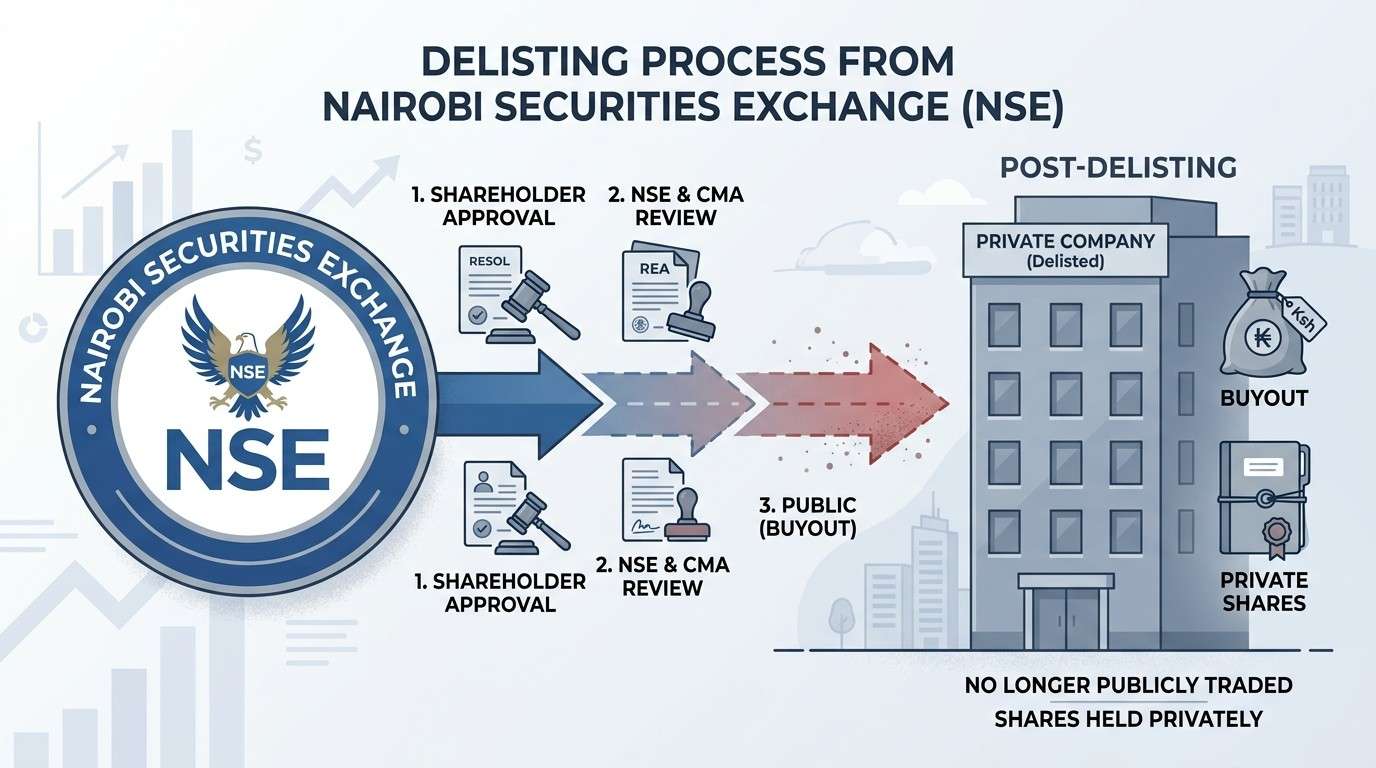
Delisting means a company's shares are permanently removed from the NSE. This can happen voluntarily, for example when a company is bought out and taken private, or involuntarily, when a company fails to meet listing rules or becomes insolvent.
If a company is delisted after a buyout, shareholders are usually offered a cash payment for their shares. If a company is delisted due to financial trouble, shareholders may struggle to sell their shares at a fair price, since there is no longer an open exchange for trading them.
9. Estate Planning for Shareholders
Estate planning means preparing what happens to your assets, including your NSE shares, after you pass away. Many Kenyan families face long, costly court battles because a shareholder never wrote a will or never told anyone which shares they owned.
Good estate planning for shareholders includes writing a clear will, naming beneficiaries, keeping your CDS (Central Depository System) account details safe, and telling a trusted family member or lawyer exactly where your investment records are kept.
10. What Happens to Shares After Death?
When a shareholder dies, their shares become part of their estate. The family or a named executor must apply for a grant of probate (if there is a will) or letters of administration (if there is no will) through the courts. Once granted, this legal document allows the CDSC (Central Depository and Settlement Corporation) to transfer the shares to the rightful heirs or allow them to be sold.
This process can take several months, so families are encouraged to start it early and seek help from a lawyer familiar with succession law in Kenya.

Ready to Start Buying Shares the Right Way?
Work with a CMA-licensed stockbroker who understands these rules inside out. Faida Investment Bank is a trusted, licensed NSE broker for Kenyan investors.
Open an Account with Faida Investment BankFrequently Asked Questions
What is Capital Gains Tax on shares in Kenya?
Capital Gains Tax on shares is charged at 15% of the profit made on sale, though listed NSE shares traded by individuals on the exchange are generally exempt in most retail cases.
How much is dividend tax in Kenya?
Dividend tax in Kenya is a withholding tax of 5% for resident individuals and 10% for non-residents, deducted automatically before you receive your payout.
What does the CMA do for NSE investors?
The CMA licenses stockbrokers, supervises listed companies, investigates market abuse, and protects investors from fraud and unfair trading practices.
What happens to my shares if I die?
Your shares become part of your estate. Beneficiaries or an administrator can claim them through a grant of probate or letters of administration, then transfer them at the CDSC.
What happens when a company is delisted from the NSE?
Trading stops permanently. Shareholders may get a buyout offer, keep private shares, or in rare cases lose most value if delisting was due to insolvency.
Learn more from official sources: Capital Markets Authority Kenya, Nairobi Securities Exchange, and Kenya Revenue Authority.