If you want to build an investment portfolio in Kenya that stands strong for the next 10, 20, or even 30 years, this guide breaks the whole process into simple, easy steps. It does not matter if you earn Ksh 20,000 or Ksh 200,000 a month. The same core rules apply to everyone. You just need to know where to place your money, how much to place in each spot, and when to make changes.
Key Takeaways
- A good beginner portfolio in Kenya holds 6 to 12 stocks across different sectors.
- Your ideal mix of stocks versus bonds depends heavily on your age and income.
- Rebalancing every 6 to 12 months keeps your risk level under control.
- Never invest money you will need within the next 12 months.
In This Guide
- What Is an Investment Portfolio?
- How Many Stocks Should You Own?
- How to Diversify Your Portfolio
- What Is Asset Allocation?
- Balancing Risk and Return
- Sample Portfolios for Beginners
- Allocation by Age
- Allocation by Income
- How Often to Rebalance
- Mistakes to Avoid
- One Stock or Many?
- Building a Dividend Portfolio
- Building a Growth Portfolio
- Conservative vs Aggressive
- Portfolio Tracking Tools
- FAQs

What Is an Investment Portfolio?
An investment portfolio is the full collection of everything you own that can grow in value or pay you money. This includes shares on the Nairobi Securities Exchange (NSE), government bonds, money market funds, unit trusts, real estate, and even a small side business. Think of a plate of food. You would not want only ugali on your plate. You want ugali, vegetables, and protein together, so if one runs low, you still have something to eat. A portfolio works the same way with money.
Before deciding what to include, it helps to compare the best investment options in Kenya side by side.
How Many Stocks Should You Own?
Most experts agree that a beginner should own between 6 and 12 stocks. Owning fewer than 5 means one bad company can badly hurt your savings. Owning more than 20 becomes hard to track, and the extra stocks add little more safety. A good starting number for a Kenyan beginner is 8 stocks spread across banking, telecom, manufacturing, energy, and agriculture.
High Risk
One bad company can wipe out your gains.
The Sweet Spot
Ideal range for most Kenyan beginners.
Very Safe
Safer, but harder to manage and research.
How to Diversify Your Portfolio in Kenya
Diversifying means not putting all your money in one place. In Kenya, this means spreading your money across different sectors of the economy, different asset types, and if possible, different countries. A well-diversified Kenyan portfolio might include telecom shares, bank shares, government bonds, a money market fund, and a small piece of land or rental property.
Some sectors do well when others struggle. Banks may slow down when interest rates rise, while telecom and consumer goods often stay steady. See the best sectors to invest in Kenya right now.
What Is Asset Allocation?
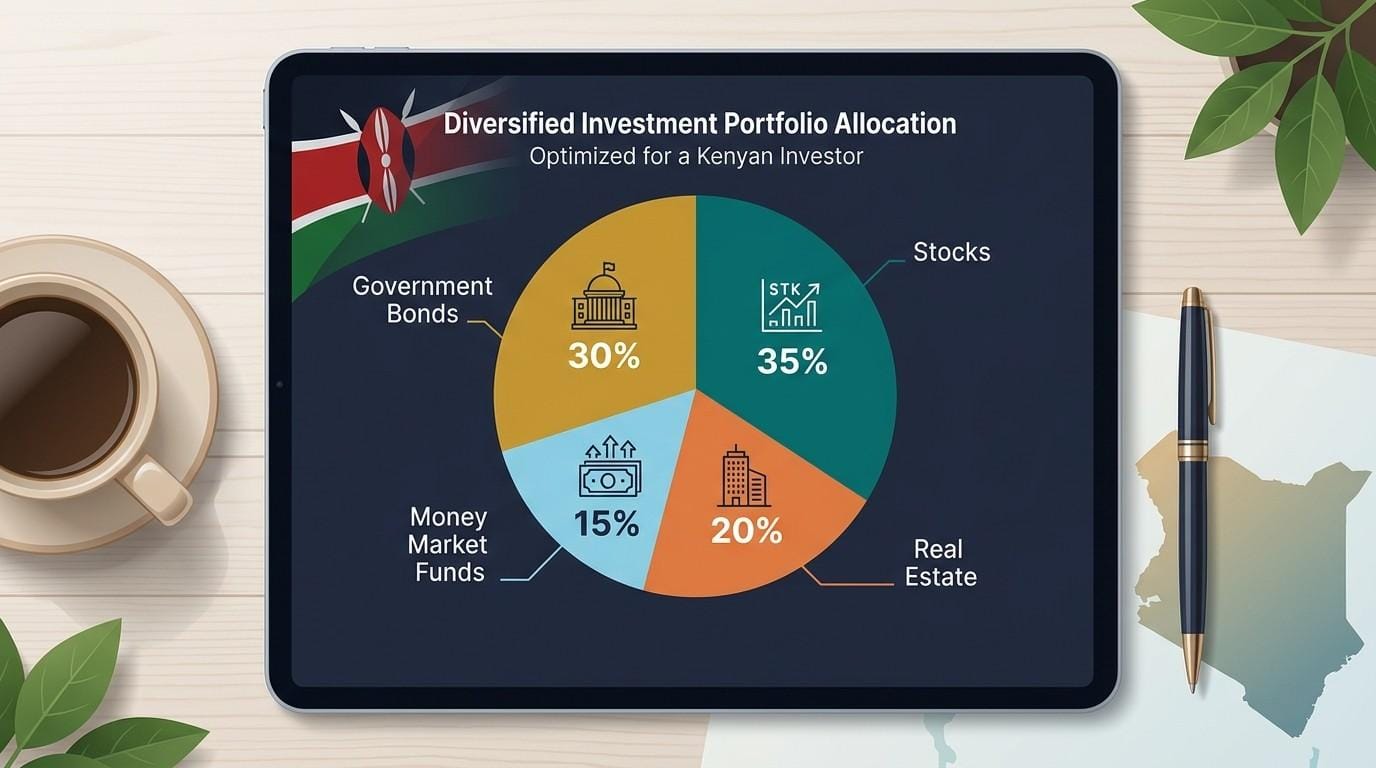
Asset allocation is your plan for how much money goes into each type of investment. It differs from diversification, which is about spreading within a type. Allocation is about the mix between types, such as stocks, bonds, cash, and property. The right mix depends on your age, your goals, and how comfortable you are watching your money move up and down.
| Asset Type | What It Does | Risk Level |
|---|---|---|
| NSE Stocks | Ownership in companies; can grow or fall quickly | High |
| Government Bonds & T-Bills | Lend money to government for fixed interest | Low |
| Money Market Funds | Pooled short-term investments; easy to withdraw | Low to Medium |
| Real Estate | Land or property that can grow in value or earn rent | Medium |
| Unit Trusts | Managed funds that mix several assets together | Medium |
How to Balance Risk and Return
Every investment carries a trade-off. Higher possible returns almost always come with higher risk. Government bonds are safe but grow slowly. NSE stocks can grow fast but can also drop fast. The goal is not to avoid risk altogether, but to take the right amount of risk for your age, income, and goals.
Before buying any stock, understand what could go wrong. Read about the biggest risks of investing in the NSE so you are not caught off guard.
Sample Investment Portfolios for Beginners
Here are three simple starter portfolios for Kenyans just getting started. These are only examples. Adjust the numbers to match your own comfort with risk.
| Portfolio Type | Stocks | Bonds/Money Market | Real Estate/Other |
|---|---|---|---|
| Cautious Beginner | 20% | 70% | 10% |
| Balanced Beginner | 50% | 40% | 10% |
| Bold Beginner | 70% | 20% | 10% |
Portfolio Allocation by Age
A simple rule many investors use is: subtract your age from 100. The answer is roughly the percentage you should keep in stocks, with the rest in safer assets like bonds and money market funds. This is a guide, not a strict rule, but it works well for most Kenyans.
| Age Group | Suggested Stocks | Suggested Bonds/Cash |
|---|---|---|
| 20s to early 30s | 70% to 80% | 20% to 30% |
| Late 30s to 40s | 55% to 65% | 35% to 45% |
| 50s | 40% to 50% | 50% to 60% |
| 60 and above | 20% to 30% | 70% to 80% |
Portfolio Allocation Based on Income
Your income level also shapes how you should build your portfolio. If your income is low but stable, like a teacher's salary, you may need more of your money in safe, liquid assets. If your income is high or comes from a business, you may afford more stock market risk since you have more room to recover from a loss.
- Low, stable income: Focus on money market funds first, then add a small stock position slowly.
- Middle income: A balanced mix of around 50% stocks and 50% safer assets works well.
- High or variable income: Can afford more stocks, but should still keep a separate emergency fund.
How Often Should You Rebalance Your Portfolio?
Rebalancing means adjusting your portfolio back to your original target mix after the market shifts things around. If stocks grow fast, they may become a bigger share of your portfolio than planned, adding more risk than intended. Most Kenyan investors should review their portfolio every 3 months and fully rebalance once or twice a year.
Mistakes to Avoid When Building a Portfolio
- Putting all your money into one stock because a friend recommended it.
- Investing money you need within the next few months.
- Checking your portfolio daily and reacting to small price moves.
- Ignoring fees and charges from brokers and fund managers.
- Believing you need a lot of money to start investing.
Many of these mistakes come from wrong beliefs about money. Clear up the confusion with these investing myths that cost Kenyans money.
Should You Invest in One Stock or Many?
You should almost always choose many stocks over one. Buying only one stock means your entire future depends on one company's decisions, management, and market conditions. If that company struggles, your whole portfolio suffers. Spreading your money across several companies in different industries protects you from this single point of failure.
Before buying any single company's shares, learn how to analyze stocks before buying in Kenya so your choices rest on facts, not guesses.
How to Build a Dividend Portfolio
A dividend portfolio focuses on companies that regularly pay out part of their profits to shareholders. This suits investors who want steady cash income, such as retirees or people building side income. In Kenya, companies known for reliable dividends include Safaricom, Equity Bank, KCB, and several other blue-chip firms on the NSE.
To build a solid dividend portfolio, study a company's dividend history over several years, not just the most recent payout. The Safaricom dividend payout history and the Equity Bank dividend payout history are good starting examples of consistent payers.
How to Build a Growth Portfolio
A growth portfolio focuses on companies expected to grow their profits quickly, even if they pay small or no dividends. These companies usually reinvest earnings back into the business to expand faster. Growth investing carries higher risk but can offer higher rewards over the long run, making it more suitable for younger investors with more time to recover from market dips.
When picking growth stocks, focus on companies in expanding sectors like technology, telecom, and manufacturing, and always check the company's recent earnings trend before buying.
Conservative vs Aggressive Investment Portfolios
| Feature | Conservative Portfolio | Aggressive Portfolio |
|---|---|---|
| Main Focus | Protecting your money | Growing your money fast |
| Typical Stock Weight | 10% to 30% | 70% to 90% |
| Best For | Retirees, short-term goals | Young investors, long-term goals |
| Volatility | Low | High |
| Expected Long-Term Growth | Lower but steady | Higher but bumpy |
Neither approach is wrong. The right choice depends on your age, goals, and how well you sleep when prices fall. Many investors settle for a balanced middle ground between these two extremes.
Portfolio Tracking Tools for Kenyan Investors
Once your portfolio is built, tracking it regularly helps you catch problems early and stay disciplined. You do not need expensive software. A simple spreadsheet, your broker's online portal, or a free calculator can do the job well.
KE Offers built a free NSE Dividend Calculator that tracks dividend payouts across major Kenyan companies, including withholding tax for resident and non-resident investors.
Ready to Start Buying Shares?
If you are interested in buying shares or stocks on the NSE, work with a licensed and trusted broker.
Get Started with Faida Investment BankFor questions that still trouble many first-time investors, our questions on investing in Kenya guide answers the most common ones in simple language.
Frequently Asked Questions
How much money do I need to build an investment portfolio in Kenya?
You can start with as little as Ksh 500 in a money market fund, or around Ksh 3,000 to buy shares through a licensed broker. Starting early matters more than starting big.
How many stocks should a beginner own in Kenya?
Between 6 and 12 stocks across different sectors gives good diversification without becoming too hard to manage.
How often should I rebalance my portfolio?
Review every 3 months and rebalance fully once or twice a year, or whenever an asset drifts 10% away from its target.
Should I buy one stock or many stocks?
Always buy many stocks across different sectors. A single stock puts your entire savings at the mercy of one company.
Is it better to invest in dividend stocks or growth stocks in Kenya?
It depends on your goal. Dividend stocks pay steady cash, while growth stocks aim for higher long-term price gains. Many Kenyan investors hold both.
Building an investment portfolio in Kenya does not need to be complicated. Start with a clear goal, spread your money across a few different assets, match your risk level to your age and income, and check your progress every few months. Small, steady steps taken today grow into real wealth over the years ahead.