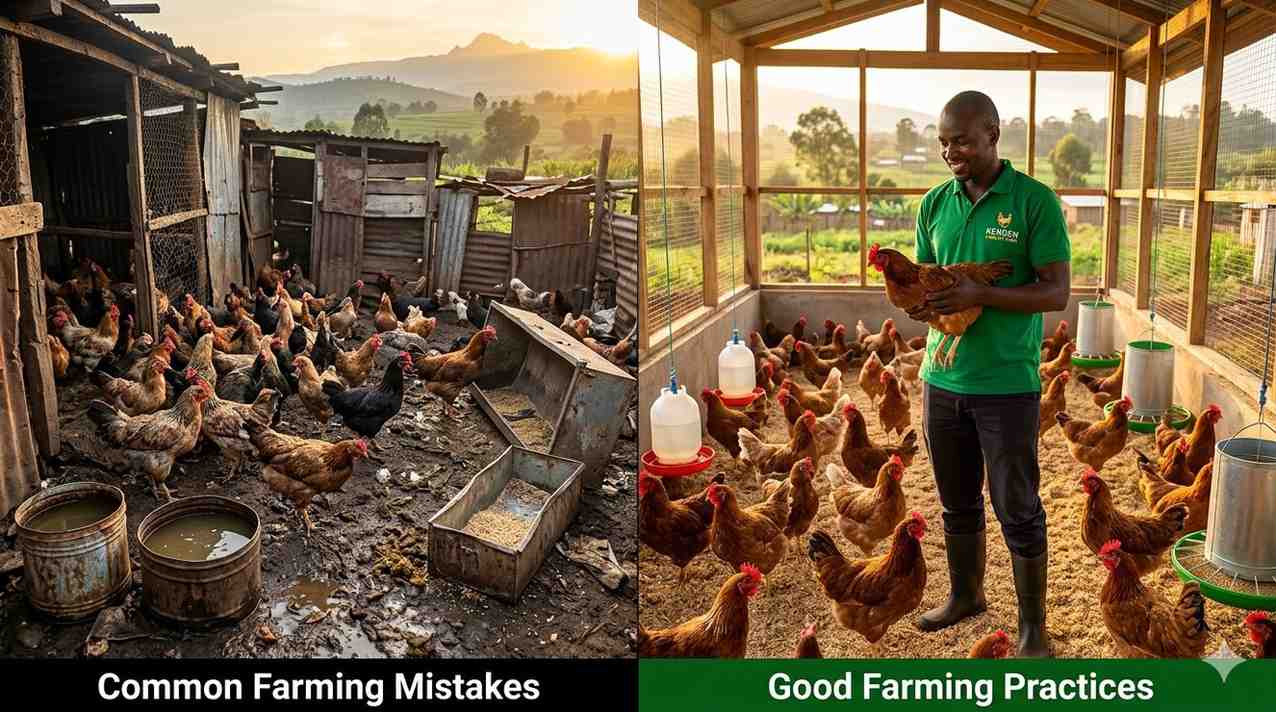
The most common mistakes Kienyeji chicken farmers make include skipping vaccinations, overcrowding coops, feeding poor-quality feed, ignoring record keeping, and selling at the wrong time of year. Fixing these errors can increase flock survival by up to 40% and boost farm income significantly.
Why Kienyeji Farming Fails for So Many Kenyans
Mistakes Kienyeji chicken farmers make are so common that most farmers don't even know they're making them — until they count their losses at the end of the year. Kienyeji chickens (Kenya's beloved indigenous breed) are tough, tasty, and in very high demand across the country. A good Kienyeji hen sells for anywhere between KSh 700 and KSh 1,500, and a tray of indigenous eggs can fetch up to KSh 600 in Nairobi. The business opportunity is real.
Yet thousands of Kenyan farmers lose money every season. Chicks die from diseases that could have been prevented. Hens stop laying eggs because they aren't fed well. Farmers sell their birds cheaply because they didn't plan their calendar. The good news? Almost all of these problems are fixable — and they don't require a big budget.
Whether you keep 20 chickens in your backyard or you run a commercial Kienyeji farm, this guide will walk you through the 10 most damaging mistakes — and give you practical, affordable fixes for each one. Let's get into it.
Skipping Vaccinations
This is the number one killer of Kienyeji chickens in Kenya. Newcastle Disease (locally known as mdondo) can wipe out an entire flock in just 2–3 days. Farmers who skip the vaccine because it costs "a few shillings" often end up losing birds worth tens of thousands of shillings.
The Food and Agriculture Organization (FAO) recommends that even small, backyard flocks receive core vaccines. Newcastle Disease vaccine in Kenya costs as little as KSh 5–20 per bird at most agro-vet shops. That's a tiny price compared to replacing a dead flock.
Beyond Newcastle, Kienyeji chickens also need protection against Marek's Disease (given on the day of hatching), Fowl Pox, and Gumboro (Infectious Bursal Disease). Ask your nearest agro-vet or Kenya Veterinary Board registered vet for a proper vaccination schedule.
Draw up a vaccination calendar and stick to it. Newcastle vaccine at Day 7, Day 21, then every 3 months. Budget KSh 20 per bird per round. Total cost for 50 birds per round: just KSh 1,000 — versus losing a KSh 50,000 flock.
Feeding Poor-Quality or Wrong Feed
Many farmers believe Kienyeji chickens will "find their own food" by scratching around the compound. While free-range foraging is great, it is never enough on its own — especially for laying hens and growing chicks.
Chicks that don't get proper chick starter mash in their first 8 weeks grow slowly and have weak immune systems. Laying hens without calcium-rich layer mash produce fewer eggs, and the shells are thin and break easily. Some farmers feed their birds leftover ugali or plain maize — this provides energy but has no protein, vitamins, or minerals that chickens need.
A 50 kg bag of quality chick starter costs about KSh 2,800–KSh 3,200. Layer mash costs roughly KSh 2,600–KSh 3,000 per 50 kg. These might seem expensive, but poor feeding costs you far more in slow growth and lost eggs.
Use commercial chick starter for the first 8 weeks, grower mash from weeks 8–20, and layer mash from week 20 onwards for hens. Supplement with kitchen greens, termites, and insects — but let commercial feed be the base. Buy from licensed agrovet dealers to avoid fake or expired products.
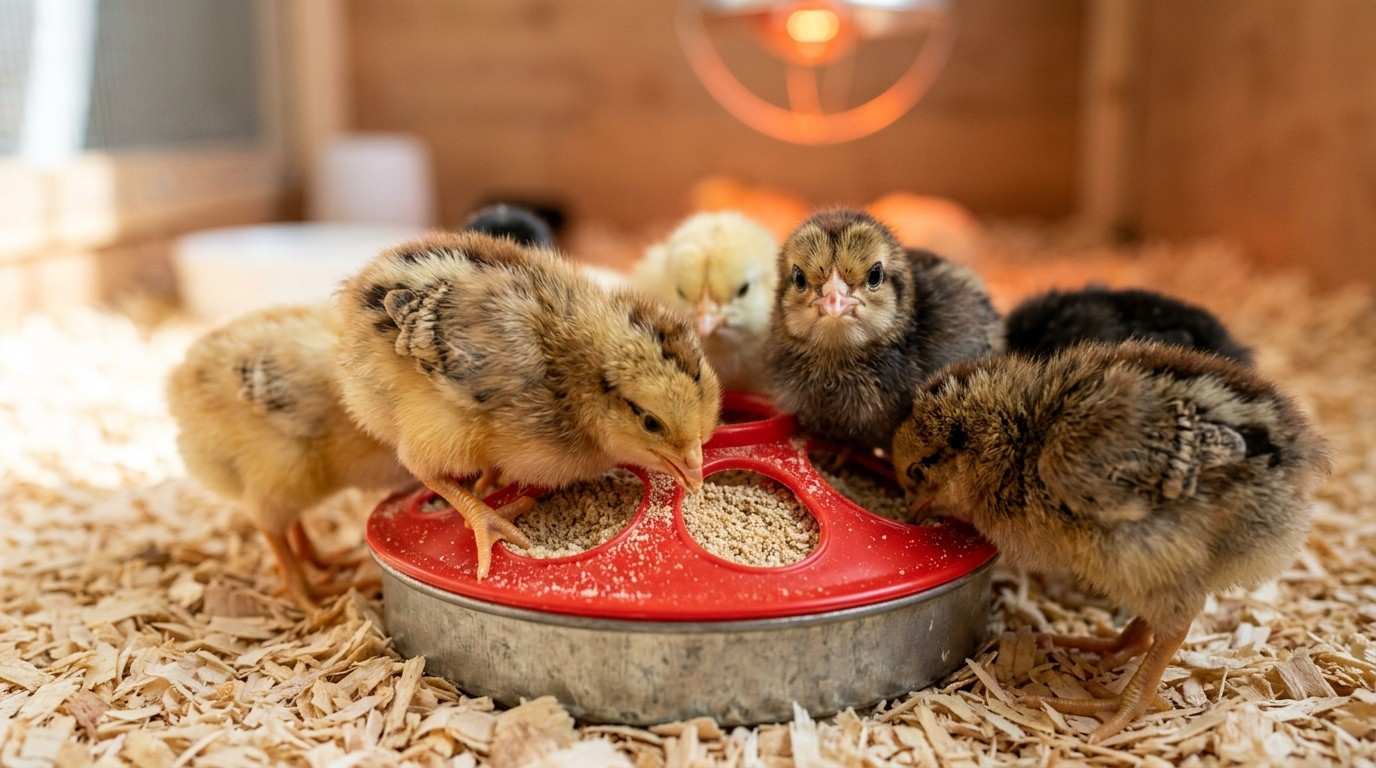
Proper feeding from day one is one of the most important investments in your flock's success.
Overcrowding the Chicken House
It can be tempting to pack as many birds as possible into one coop to save space and cost. But overcrowding is a silent disaster. When birds are too close together, diseases spread faster, stress levels rise, and pecking (where chickens attack each other) becomes a big problem.
The standard rule is 3–4 Kienyeji birds per square metre of floor space. So a 10 m² coop should house a maximum of 40 birds. Going beyond this leads to poor air circulation, built-up ammonia from droppings, respiratory problems, and even death.
Measure your coop and count your birds before you buy new chicks. If space is limited, sell or process some birds before restocking. A well-spaced flock of 50 birds will earn you more than a crowded, sickly flock of 100.
Providing Dirty or Insufficient Water
Water is not just something chickens drink — it is the single most important nutrient for egg production. A hen's egg is made up of about 65% water. If a laying hen goes even a few hours without clean water, her egg production drops sharply and may not recover for days.
Many farmers use shared, dirty water containers that are rarely cleaned. Contaminated water is a major source of diseases like Salmonella and E. coli infections. Others use small containers that run dry by midday, especially in hot areas like the Coast or Rift Valley.
Provide one litre of clean, fresh water per bird per day (more in hot weather). Use nipple drinkers or covered containers to keep water clean. Wash all containers with soap and water at least twice a week. Position drinkers in the shade so water stays cool.
Pro Tip: Add Apple Cider Vinegar (1 tablespoon per 4 litres of water) to your drinkers once a week. It improves gut health, reduces harmful bacteria in the water, and boosts egg production — and it only costs about KSh 200 per month for a flock of 50.
Keeping No Farm Records
This mistake doesn't kill chickens directly — but it kills profits just as surely. Farmers who don't keep records have no idea how much they spend, how much they earn, or which birds are performing well. Without data, every decision is a guess.
A simple record book (or even a WhatsApp note) tracking daily egg collection, feed purchases, and bird deaths is enough to tell you whether your farm is making or losing money. KE Offers' Guides section covers money management tools that Kenyan small businesses can use at low cost.
Start a simple record book today. Write down: date, number of eggs collected, feed type and amount, any bird deaths, and any money spent or earned. After 30 days, you'll have a clear picture of your farm's health. Use a free app like Google Sheets if you prefer digital records.
Buying Chicks From Unknown or Unverified Sources
Not all "Kienyeji" chicks are what they appear. Some sellers pass off cross-breeds or even exotic breed chicks as pure Kienyeji birds. Others sell chicks that were not properly vaccinated or that came from unhealthy parent flocks.
Buying chicks from the wrong source means you could get birds that grow slowly, produce poorly, or carry hidden diseases that spread to your whole flock. This is especially risky when buying from roadside markets where the source is unknown.
Buy chicks only from government-certified hatcheries or trusted breeders with a track record. Ask for proof of the vaccination history. In Kenya, the Kenya Livestock Research Organisation (KALRO) recommends buying from certified Kienyeji breeding farms. Expect to pay KSh 100–KSh 180 per chick from a quality source — it's worth it.
Poor Coop Design — Too Hot, Too Dark, Too Wet
The coop is your chickens' home 24 hours a day. A bad coop is a slow death trap. Common design mistakes include roofs with no ventilation (leading to extreme heat), floors that stay wet and muddy (leading to footrot and respiratory disease), and windows that face the wrong direction (allowing cold winds to blow in at night).
In Kenya's hot regions like Mombasa, Kilifi, or Machakos, poorly ventilated coops can reach temperatures that stop hens from laying. In highland areas like Nyahururu or Eldoret, uninsulated coops get too cold for chicks at night.
Build your coop so the long side faces east-west (for good natural light without direct harsh sun). Include high ventilation gaps near the roof to release hot air. Use a raised wire or wooden floor to keep droppings from accumulating. Add a brooder lamp for chicks in cold areas. A good coop for 50 birds can be built for as little as KSh 15,000–KSh 25,000 using local materials.
Mixing Birds of Different Ages
It feels harmless — you have new chicks, so you put them in the same pen as your older birds. But this is one of the most dangerous things you can do on a Kienyeji farm. Older birds carry diseases they are immune to, but which can kill younger, more vulnerable chicks. The practice is called "all-in, all-out" separation, and most experienced farmers in Kenya swear by it.
Additionally, older, bigger birds will bully younger ones away from feeders and water, causing the younger birds to grow slowly and become weak — even if they survive the diseases.
Always keep different age groups in separate pens. If you have one coop, use wire dividers to create sections. Before introducing new chicks to a coop where older birds have lived, clean and disinfect the coop thoroughly — or better yet, leave it empty for 2 weeks (this is called "fallowing") to break the disease cycle.
Having No Market Plan — Selling at the Wrong Time
Many Kienyeji farmers raise good birds and then panic-sell them cheaply when they need money urgently, or they miss peak market periods when prices are highest. In Kenya, demand for Kienyeji chicken spikes sharply during Christmas, Easter, Eid, and school holidays. Farmers who time their flock to be ready during these periods earn 30–50% more per bird.
Selling without a plan also means selling to the first buyer who comes to your gate — usually a middleman who will offer you the lowest possible price and resell your birds at double the price in town.
Plan your stocking calendar backwards from peak seasons. If you want birds ready for Christmas (December 25), start your chicks in early August — Kienyeji chickens take about 4–5 months to reach a good table weight. Build relationships with hotels, restaurants, and supermarkets in your area who will buy directly from you at better prices than middlemen offer.
Relying Only on Meat Sales — Ignoring Eggs, Manure & Chick Sales
Many Kienyeji farmers see their birds only as meat birds. But a well-managed Kienyeji farm has multiple income streams, and ignoring them is leaving real money on the table.
A good Kienyeji hen lays 180–220 eggs per year — compared to 120–140 for traditional village chickens. A tray of 30 indigenous eggs sells for KSh 400–KSh 600 in urban markets. Kienyeji chicken manure is excellent organic fertiliser — farmers sell a bag for KSh 300–KSh 500. And selling fertile eggs or day-old chicks to other farmers can be highly profitable, especially for breeds with good reputations.
Identify all your farm's possible income streams: eggs, live birds, processed meat, day-old chicks, fertile eggs, and manure. Allocate some of your hens as dedicated layers. Collect and package manure to sell to vegetable and flower farmers nearby. Post your products on social media marketplaces and WhatsApp groups to reach more buyers without middlemen.
The Real Cost of These Mistakes (vs. The Fix)
Here is a simple comparison of what each mistake costs you, and what the fix costs — so you can see clearly where the money goes.
| Mistake | Estimated Loss (50 birds) | Cost of Fix |
|---|---|---|
| No Newcastle vaccine → flock wipeout | KSh 35,000–70,000 | KSh 1,000 per round |
| Wrong feed → slow growth (extra 6 weeks) | KSh 4,800 in extra feed | KSh 3,000 (quality mash) |
| No water system → 30% drop in eggs | KSh 3,600/month in lost egg revenue | KSh 800 (nipple drinkers) |
| No market plan → selling 30% below peak price | KSh 10,500 per batch | KSh 0 (just planning!) |
| Overcrowding → disease outbreak | KSh 12,000+ in treatment & deaths | KSh 5,000 (expand coop space) |
🌿 Key Takeaways
- Vaccination is the single most important investment — Newcastle Disease alone can wipe out your entire flock in days.
- Commercial layer mash and chick starter are not luxuries; they are requirements for healthy birds and good egg production.
- Clean water, every day, in clean containers — no exceptions. It directly controls how many eggs your hens lay.
- Keep a simple record book. You cannot grow what you cannot measure.
- Buy chicks only from verified, certified sources. Cheap chicks from unknown sellers are expensive in the long run.
- Time your flock to be ready for Christmas, Easter, and school holidays — that's when prices peak by 30–50%.
- Diversify your income: eggs, manure, chick sales, and direct market supply will grow your profits faster than meat alone.
More Helpful Resources From KE Offers
If you found this guide helpful, you might also enjoy these related reads from the KE Offers blog:
- 📍 Mombasa County: Guide for Residents, Tourists & Investors — a great read if you're farming or investing on the Coast.
- 📍 What Makes Kiambu County Kenya's Economic Powerhouse? — understand the business opportunities around Nairobi's food belt.
- 📍 Browse All KE Offers Guides — practical Kenyan guides on money, farming, tech, and daily life.
For authoritative farming guidance, also check out the FAO's global poultry production resource and KALRO (Kenya Agricultural and Livestock Research Organisation) — Kenya's top body for livestock research and farmer training.
Frequently Asked Questions
What are the most common mistakes Kienyeji chicken farmers make?
The most common mistakes include skipping vaccinations (especially against Newcastle Disease), feeding poor-quality or wrong-type feed, overcrowding the coop, providing dirty or insufficient water, keeping no farm records, buying chicks from unverified sources, poor coop design, mixing different age groups, having no market plan, and relying only on meat sales. Each of these mistakes has an affordable, practical fix.
How much does it cost to vaccinate Kienyeji chickens in Kenya?
Vaccinating Kienyeji chickens against Newcastle Disease costs about KSh 5–KSh 20 per bird in Kenya, depending on whether you hire a vet or buy vaccines from an agro-vet shop to administer yourself. For a flock of 50 birds, a single vaccination round costs approximately KSh 250–KSh 1,000 — a tiny price compared to losing your entire flock.
How many Kienyeji chickens can I keep per square metre?
The recommended stocking density is 3–4 Kienyeji chickens per square metre of floor space. So a 10 m² coop should hold a maximum of 40 birds. Going beyond this causes stress, increased disease spread, poor ventilation, aggressive pecking, and reduced egg production. If you want more birds, build a bigger or second coop.
Why are my Kienyeji chickens not laying eggs?
The most common reasons are poor nutrition (hens need quality layer mash with calcium), insufficient or dirty water, stress from overcrowding or predators, disease (especially worms or respiratory infections), lack of adequate light (hens need 14–16 hours of light per day), or the hen may be broody (sitting on eggs and trying to hatch them). Check all these factors one by one.
What is the best market for Kienyeji chicken in Kenya?
The best markets are hotels, restaurants, and fast-food businesses that serve local foods, supermarkets with organic or fresh sections, and urban consumers who seek authentic indigenous chicken. Direct sales via social media (Facebook, WhatsApp groups, Instagram) cut out middlemen and give you 30–50% more per bird. Peak selling periods are Christmas, Easter, Eid celebrations, and school holiday weekends.
How long does it take Kienyeji chickens to mature?
Kienyeji chickens raised on good feed take about 4–6 months to reach a good table weight of 1.5–2.5 kg. Purely free-range birds raised on poor nutrition can take 8–12 months to reach the same weight. Proper feeding significantly shortens the time to market, increasing your annual profits because you can run more batches per year.
Disclaimer: This article is written for general educational purposes. Costs and prices mentioned are approximate estimates based on Kenyan market data as of June 2026 and may vary by region and season. Always consult a licensed veterinarian or Kenya Veterinary Board-registered professional for medical decisions about your flock.