What Is Improved Kienyeji Chicken?
Kienyeji chicken prices are one of the most searched farming topics in Kenya today — and for very good reason. These birds are at the heart of a food and farming revolution happening in backyards and large farms all across the country.
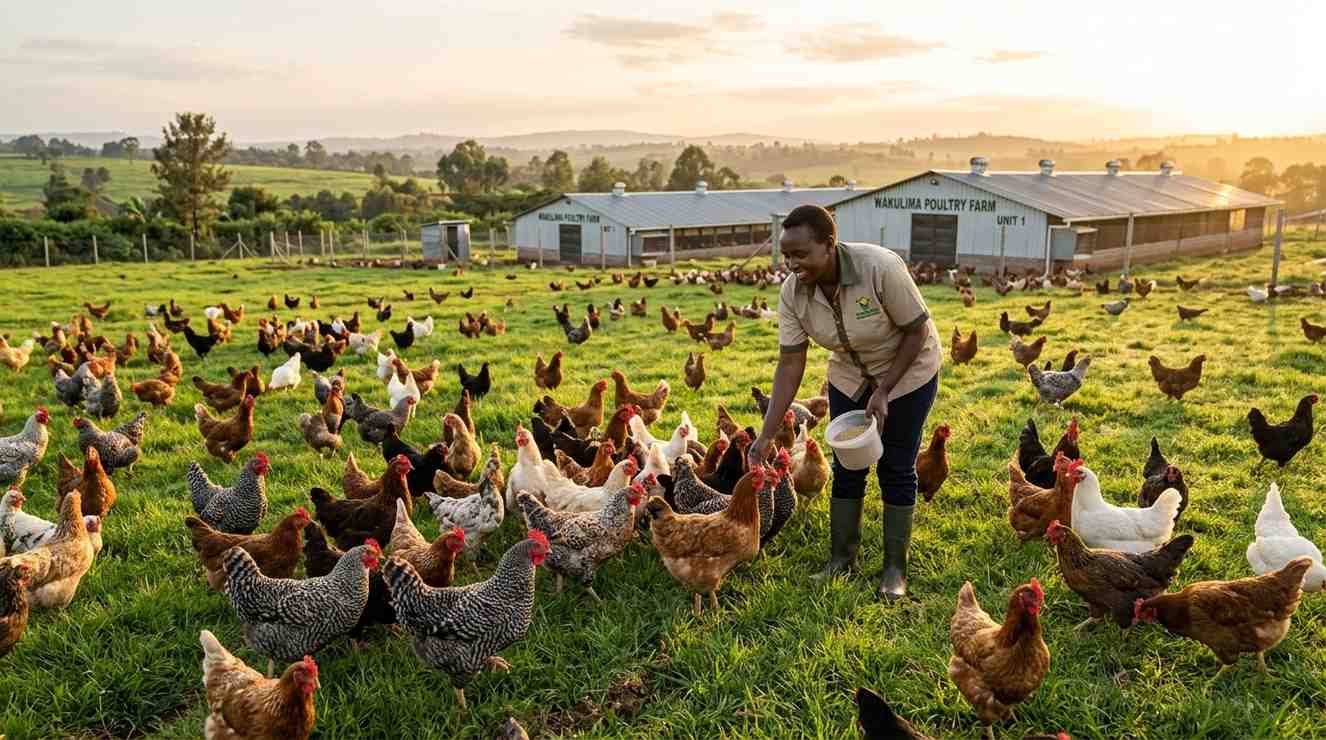
The word kienyeji is a Swahili word that means "local" or "indigenous." Traditional kienyeji chickens are the free-range birds you see walking around villages. They are tough, disease-resistant, and deeply loved for their rich taste. However, they grow slowly and do not produce many eggs.
Improved kienyeji chickens are a smarter version of the traditional breed. Scientists and farmers worked together to cross local Kenyan chickens with faster-growing, higher-producing breeds from overseas. The result? A bird that still tastes amazing like the local chicken — but grows two to three times faster and lays far more eggs. Popular improved breeds include the Kenbro, Kuroiler, and Sasso.
These birds are considered dual-purpose — meaning farmers can sell them both for meat and eggs. That flexibility, combined with their premium taste, has made improved kienyeji one of the hottest farming opportunities in Kenya right now.
Price Breakdown by Age & Stage
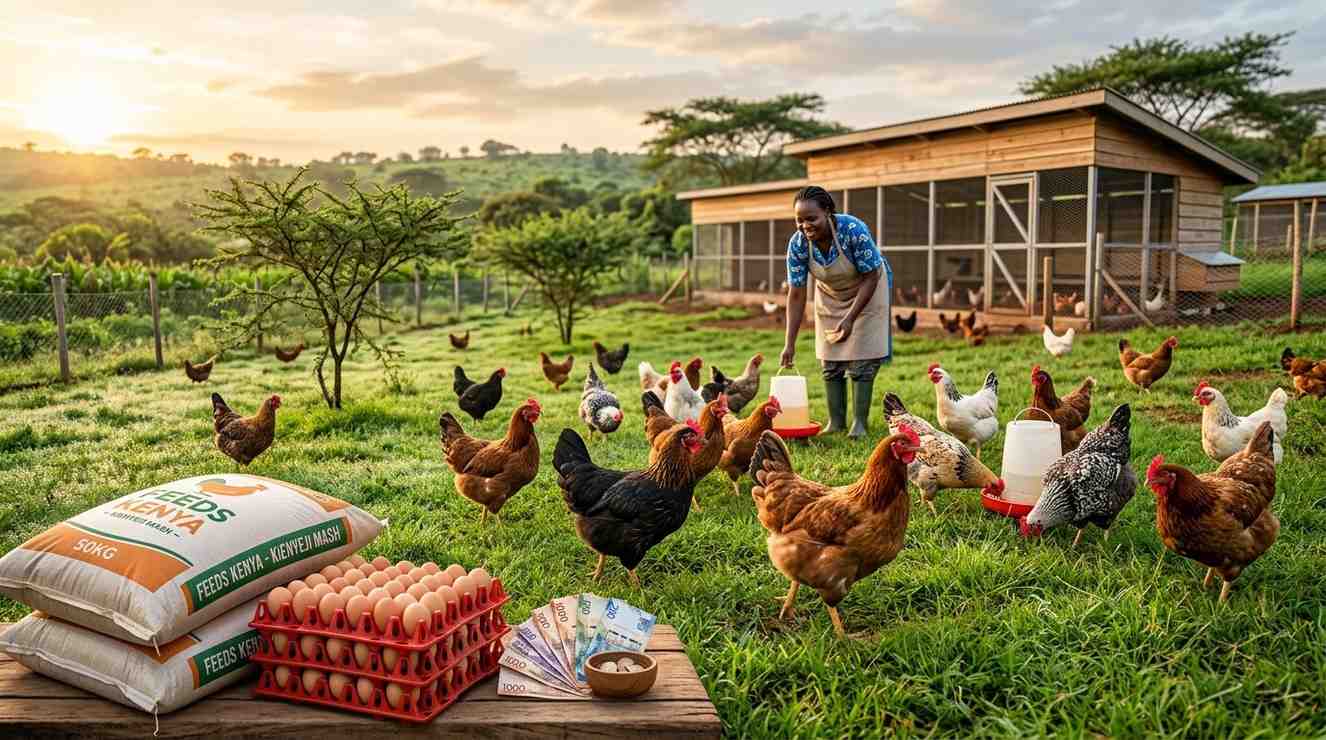
The price of an improved kienyeji chicken changes a lot depending on how old it is. Here is a clear breakdown of what you can expect to pay at different stages of growth:
| Growth Stage | Age | Price Range (KSh) | Notes |
|---|---|---|---|
| Day-old chick (DOC) | 0–3 days | KSh 100 – 180 | Vaccinated; price depends on breed & hatchery |
| Starter chick | 3–4 weeks | KSh 250 – 350 | Already vaccinated; less risk for the buyer |
| Grower | 5–8 weeks | KSh 400 – 550 | Feeding on growers mash; good disease resistance |
| Mature hen (layer) | 4–5 months | KSh 750 – 900 | Sasso hens weigh 1.5–2 kg at this stage |
| Mature cock (meat) | 4–5 months | KSh 800 – 1,050 | Cocks grow heavier; 2–2.5 kg common |
| Premium mature bird | 5+ months | KSh 1,000 – 1,200 | Hotels, restaurants & direct consumer sales |
| Per kilogram (live) | Mature | KSh 500 / kg | Farm-gate live weight price |
| Per kilogram (dressed) | Processed | KSh 600 – 700 / kg | Urban markets, supermarkets |
Pro Tip: Buy at the Right Stage
Day-old chicks are the cheapest to buy, but they need the most care. If you are a beginner, buying 3–4 week old chicks costs a little more but saves you from the hardest and riskiest period of raising chicks.
Breed Comparison & Prices
Not all improved kienyeji chickens are the same. The three most popular breeds in Kenya each have their own strengths, personality, and price tag. Here is a side-by-side look:
| Breed | Type | DOC Price (KSh) | Mature Bird (KSh) | Best For |
|---|---|---|---|---|
| Kenbro | Dual Purpose | KSh 100 – 130 | KSh 750 – 1,000 | Beginners; great for meat & eggs |
| Kuroiler | Dual Purpose | KSh 100 – 145 | KSh 800 – 1,100 | Fast growth; rural free-range systems |
| Sasso | Meat Focus | KSh 120 – 180 | KSh 800 – 1,200 | Hotels, premium consumers; deep flavour |
| KARI Improved | Dual Purpose | Contact KARI | KSh 700 – 950 | Research-backed; good disease resistance |
The Sasso is the most expensive breed — and for good reason. It grows the largest and has a very rich flavour that hotels and high-end restaurants are willing to pay more for. The Kenbro, developed by Kenya's own Kenya Agricultural Research Institute (KARI), is the most popular starter breed because it is well-adapted to Kenyan conditions.
How Much Does It Cost to Raise 100 Birds?
Before you can understand the selling price, you need to understand the cost of producing the chicken. Here is a realistic cost breakdown for raising 100 improved kienyeji chicks from day one until they are ready to lay eggs (about 4–5 months):
* Break-even per bird ≈ KSh 613. Structure/housing costs are not included. Assumes zero mortality. Actual costs vary by region and season.
Cut Feed Costs With Foraging
Improved kienyeji breeds are excellent foragers. If you allow them to free-range during the day, they can find insects, worms, and green plants — naturally reducing your feed bill by 20–30%. This also improves their flavour and the colour of their egg yolks.
What the Market Pays – Selling Prices
Knowing what buyers are willing to pay is just as important as knowing your costs. Here is what you can realistically earn when selling improved kienyeji chicken at different points in the supply chain:
Selling Live Birds at the Farm Gate
Most small farmers sell mature birds directly to buyers at the farm. A healthy improved kienyeji hen weighing 1.5–2 kg typically fetches KSh 750–900. Mature cocks, which grow heavier at 2–2.5 kg, command KSh 800–1,050. Birds sold per kilogram bring in roughly KSh 500/kg live weight.
Selling to Hotels and Restaurants
Hotels and upscale restaurants pay a premium price for improved kienyeji chicken because their customers love the taste. You can often sell dressed (cleaned and processed) birds for KSh 600–700 per kilogram — a significant jump from farm-gate prices. Building direct relationships with restaurant chefs or hotel procurement managers can boost your income considerably.
Selling Eggs
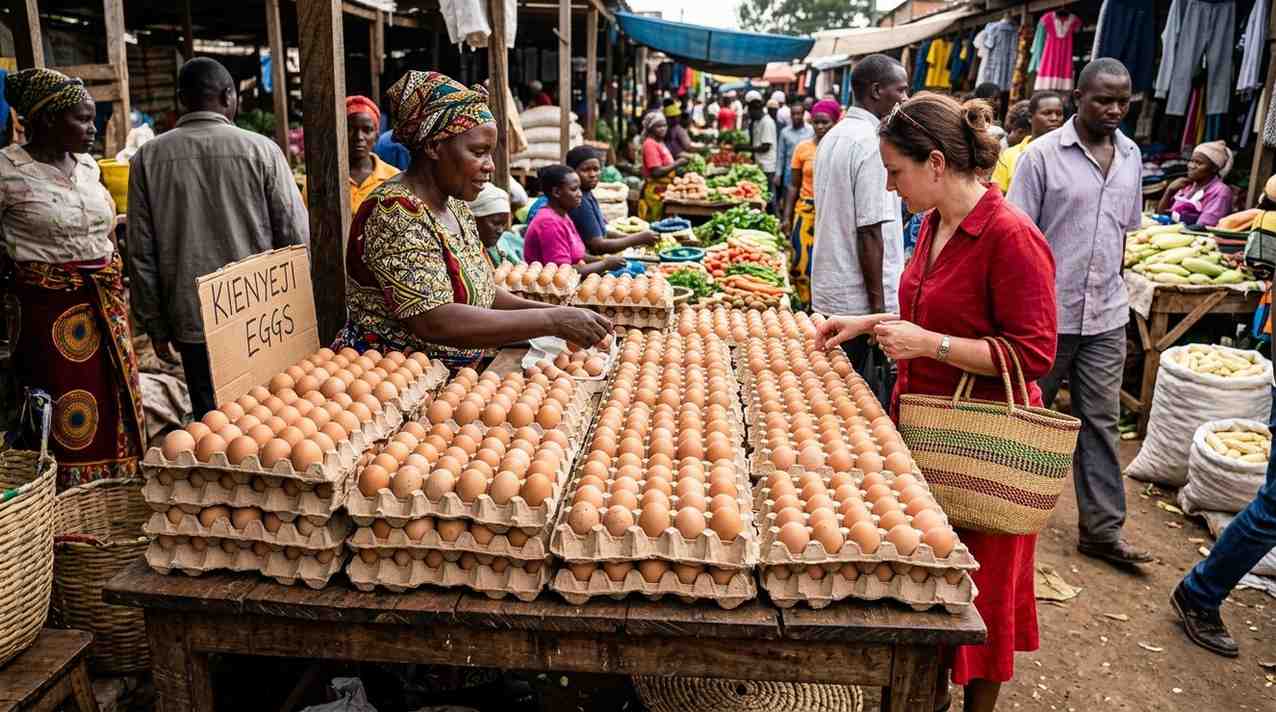
Improved kienyeji hens lay between 180–280 eggs per year — a huge improvement over traditional kienyeji birds that lay only 40–60 eggs per year. A tray of 30 kienyeji eggs typically sells for KSh 600–800 in most Kenyan markets, which is a healthy premium over the standard commercial egg.
Value-Added Products
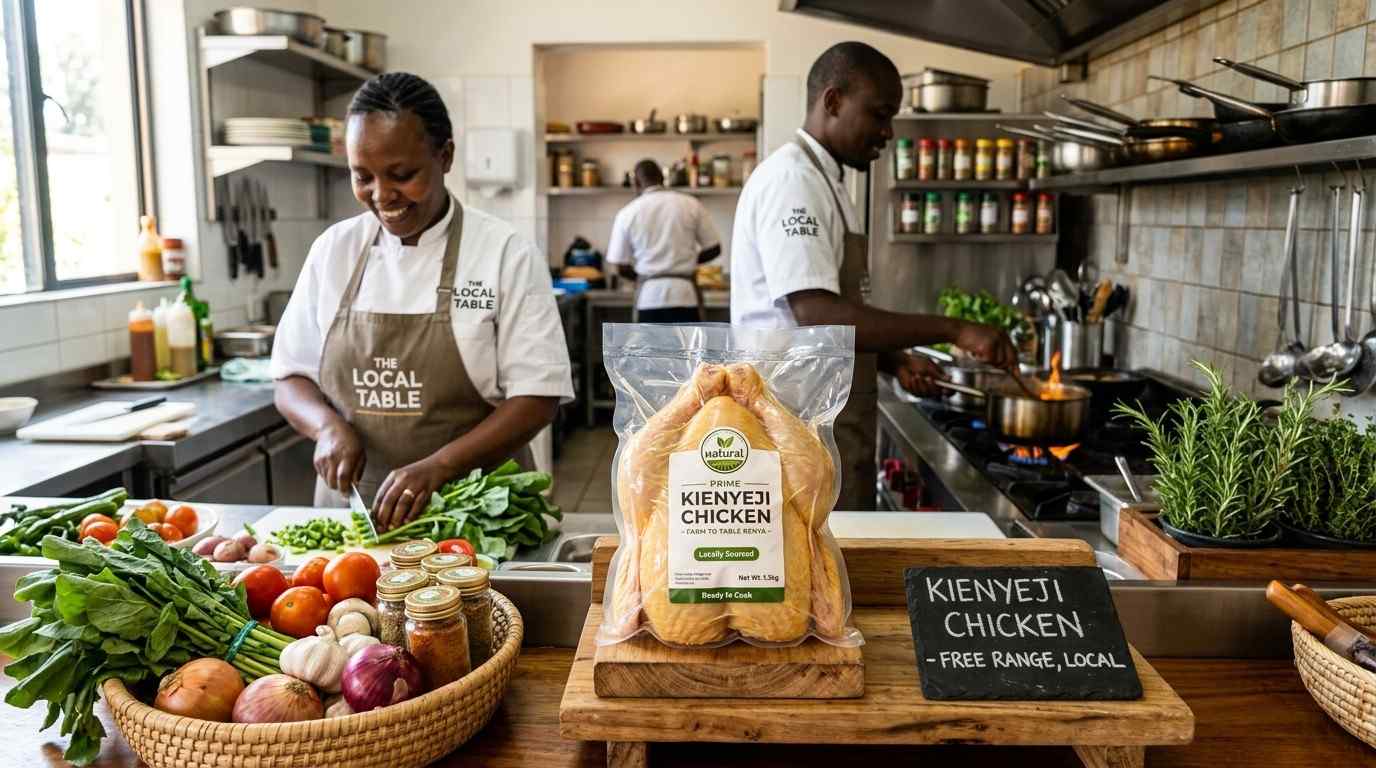
Farmers who go the extra mile and process their chickens — cleaning, packaging, and freezing them — can sell at even higher prices, especially in urban centres like Nairobi, Mombasa, and Kisumu. Packaged kienyeji chicken in supermarkets can sell for KSh 700–900 per kilogram.
Prices by Region in Kenya
Kienyeji chicken prices are not the same everywhere in Kenya. Where you are in the country can make a big difference. Here is a general guide:
- Nairobi & Suburbs: Highest prices. A mature bird can sell for KSh 900–1,200 given the high demand and large population. Direct delivery services and online platforms like Mkulima Online make it easy to connect with urban buyers.
- Central Kenya (Kiambu, Murang'a, Thika): Strong market with prices of KSh 800–1,050 for mature birds. This region is also home to many hatcheries, meaning you can often buy chicks at lower prices.
- Rift Valley (Nakuru, Eldoret, Kericho): A growing market with prices ranging from KSh 700–900 per mature bird. The large agricultural community here creates good demand.
- Western Kenya (Kisumu, Kakamega, Bungoma): Prices hover around KSh 650–850. This is a huge poultry-consuming region with plenty of room for market growth — read more in our guide on why Kisumu is emerging as Western Kenya's business hub.
- Coast Region (Mombasa, Kilifi, Malindi): Prices range from KSh 700–950. Tourism and hospitality create steady premium demand, especially in Mombasa — see our Mombasa County Guide for Residents, Tourists & Investors.
- Rural Upcountry Areas: Farm-gate prices can be lower at KSh 600–750, but farmers who transport birds to nearby towns can earn significantly more.
What Affects Kienyeji Chicken Prices?
Prices do not stay the same all year. Several things can push them up or pull them down. As a farmer or buyer, understanding these factors helps you make smarter decisions.
1. Season and Festive Demand
Prices spike sharply during Christmas, Easter, and Eid — sometimes going up by 30–50% compared to regular months. Savvy farmers time their sales for these periods to maximise earnings. Conversely, prices can drop slightly after the festive season when supply outstrips demand.
2. Feed Costs
Feed makes up 60–70% of total production costs in poultry farming, according to farming data from Farming.co.ke. When the cost of maize or soya shoots up — for example, after a drought — farmers have to charge more per bird just to break even. Buyers should be prepared for price increases after poor harvests.
3. Breed and Age
A larger, older, premium-breed bird will always cost more. A 6-month-old Sasso cock weighing 2.5 kg will fetch more than a 4-month-old Kenbro hen. Knowing the breed helps you understand why a seller is quoting a particular price.
4. Location and Transport
Getting a chicken from a rural farm to a Nairobi restaurant involves transport, time, and sometimes holding costs. Each step in the supply chain adds cost — which is why urban prices are higher.
5. Disease Outbreaks
A disease outbreak like Newcastle disease or Gumboro can reduce the available supply of birds quickly, pushing prices up. Conversely, a scare — even a rumour of disease — can temporarily crash demand. Biosecurity on your farm is therefore a business decision, not just a health one.
6. Order Size
Buying in bulk almost always gets you a better price per bird. Hatcheries often give discounts for orders of 100+ chicks. Organising a group buying scheme with fellow farmers in your area can help everyone pay less.
Watch Out for Fake "Kienyeji" Chicken
Some unscrupulous sellers pass off ordinary broilers or low-quality crossbreeds as "improved kienyeji" and charge kienyeji prices. Always buy from a reputable, verifiable hatchery or supplier. Ask for proof of breed and vaccination records.
Is Improved Kienyeji Farming Profitable in Kenya?
The short answer is: yes, very much so — if managed well.
Consider this simple calculation. You raise 1,000 improved kienyeji birds to maturity. Each bird weighs an average of 2.4 kg. At KSh 500 per kilogram, each bird is worth KSh 1,200. That is a potential gross revenue of KSh 1.2 million from 1,000 birds.
Your break-even cost per bird is roughly KSh 613. That means a gross profit of around KSh 587 per bird — or over KSh 587,000 on 1,000 birds, before subtracting housing and other overheads. Even with a 10% mortality rate, the numbers are very encouraging.
Improved kienyeji chicken also commands a 30–50% price premium over commercial broilers, simply because consumers love its taste. This premium is a powerful competitive advantage.
Tips for Buying Kienyeji Chicken at the Right Price
Whether you are buying chicks to raise or mature birds to cook, here are some smart tips to help you get the best value:
- Buy directly from a hatchery. Cutting out the middleman means you pay less and get fresher, properly vaccinated chicks. Look for hatcheries certified by the Kenya Bureau of Standards (KEBS) or known industry players.
- Order in bulk. Most suppliers give meaningful discounts for orders of 50 chicks or more. Team up with neighbours or a farmers' group to unlock bulk pricing.
- Buy off-season. Chick prices are sometimes slightly lower between festive periods (February–March and August–September). This also means your birds will be ready to sell right when festive-season prices are at their peak.
- Verify vaccinations. A chick that costs KSh 100 but is not vaccinated is actually more expensive in the long run. Always confirm vaccination records — especially for Marek's disease, Newcastle, and Gumboro.
- Check local Facebook & WhatsApp groups. Communities like Poultry Online Kenya on Facebook connect buyers and sellers directly, often at better prices than formal shops.
- Compare multiple suppliers. Prices can vary by as much as KSh 50–80 per chick between suppliers in the same region. A few phone calls can save you thousands on a batch of 100+ birds.
Frequently Asked Questions
How much does a mature improved kienyeji chicken cost in Kenya?
A mature improved kienyeji chicken costs between KSh 700 and KSh 1,200 depending on the breed, weight, and where you buy it. Mature hens (1.5–2 kg) typically go for KSh 750–900, while heavier cocks (2–2.5 kg) fetch KSh 800–1,050. Premium Sasso birds sold to hotels can reach KSh 1,200.
How much does a day-old improved kienyeji chick cost?
Day-old improved kienyeji chicks cost between KSh 100 and KSh 180 per chick. Popular breeds like Kuroiler and Kenbro are at the lower end (KSh 100–145), while premium Sasso chicks from top hatcheries can cost KSh 120–180.
How much does kienyeji chicken sell for per kilogram in Kenya?
Live-weight improved kienyeji chicken sells for approximately KSh 500 per kilogram at the farm gate. Dressed (cleaned and processed) chicken fetches a higher price of KSh 600–700 per kilogram in urban markets and supermarkets.
How long does it take for improved kienyeji chicken to mature?
Improved kienyeji breeds are ready for slaughter in just 3 to 4 months if raised for meat. For egg production, they typically start laying at 4 to 5 months old. This is much faster than traditional kienyeji chickens, which take 6–9 months.
Where can I buy improved kienyeji chicks in Kenya?
You can buy improved kienyeji chicks from: hatcheries in Nairobi (Ronald Ngala Street, Industrial Area, Thika Road), major towns like Nakuru and Eldoret, online via platforms like Mkulima Online, Facebook groups like "Poultry Online Kenya," and KARI research centres. Always verify vaccination records before buying.
Is improved kienyeji chicken farming profitable?
Yes, it is very profitable when managed well. The break-even cost per bird is roughly KSh 613 for a batch of 100. Mature birds sell for KSh 700–1,200 per bird, giving a margin of KSh 87–587 per bird depending on size, breed, and market. Improved kienyeji chicken also commands a 30–50% premium over commercial broilers due to its superior taste.
How many eggs does improved kienyeji chicken lay per year?
An improved kienyeji hen lays between 180 and 280 eggs per year, which is dramatically higher than the 40–60 eggs a year laid by traditional kienyeji hens. A tray of 30 kienyeji eggs sells for KSh 400–500 in most Kenyan markets.
Final Thoughts
Improved kienyeji chicken is one of the smartest farming opportunities available to Kenyans today. Whether you are a smallholder farmer with just a few square metres of land or a serious agribusiness investor, the numbers make sense. Prices are strong, demand is growing, and the product sells itself based on taste alone.
The key to making good money is simple: know your costs, understand your market, time your sales well, and buy quality, vaccinated birds from reputable suppliers. The price you pay for a chick today determines the profit you take home in four months.
For more Kenyan farming, business, and lifestyle guides, keep exploring KE Offers — we break down complex information into clear, practical guides for everyday Kenyans.