
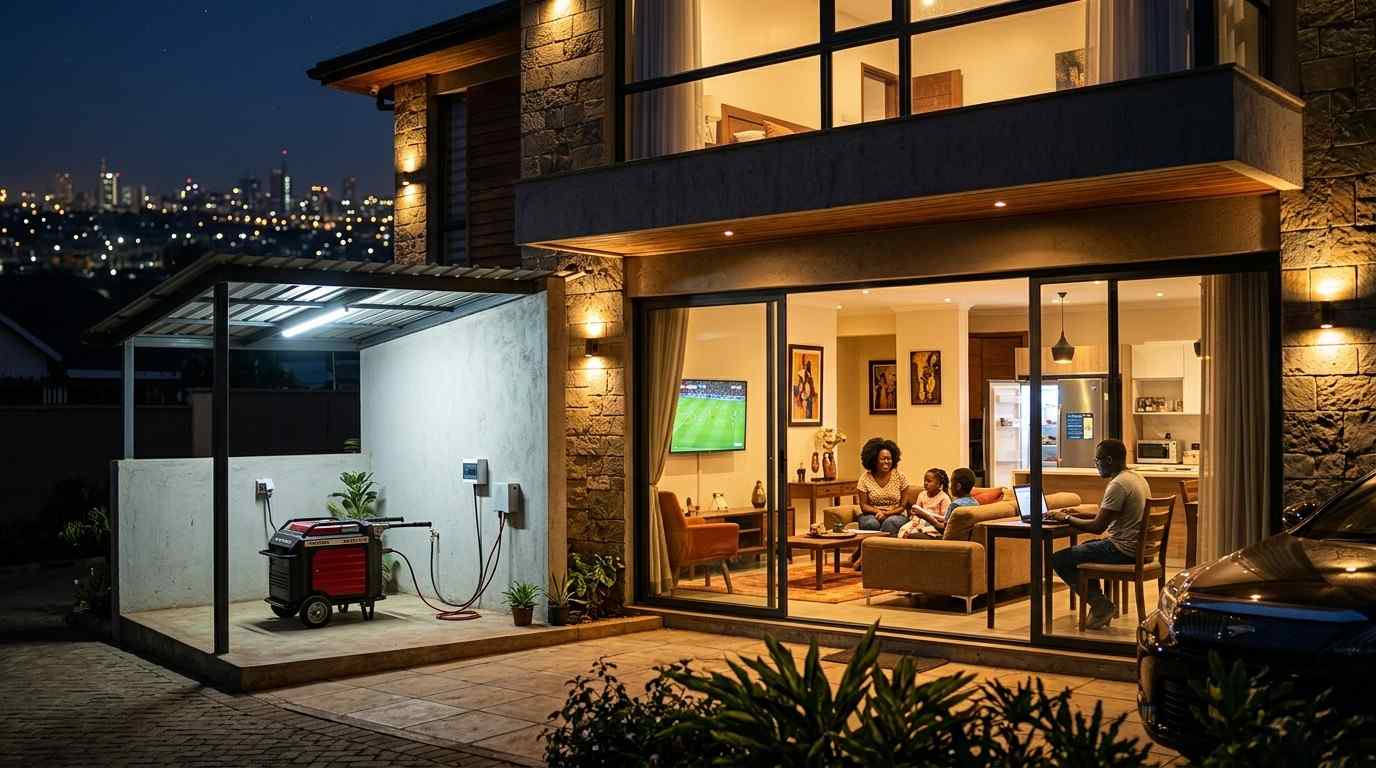
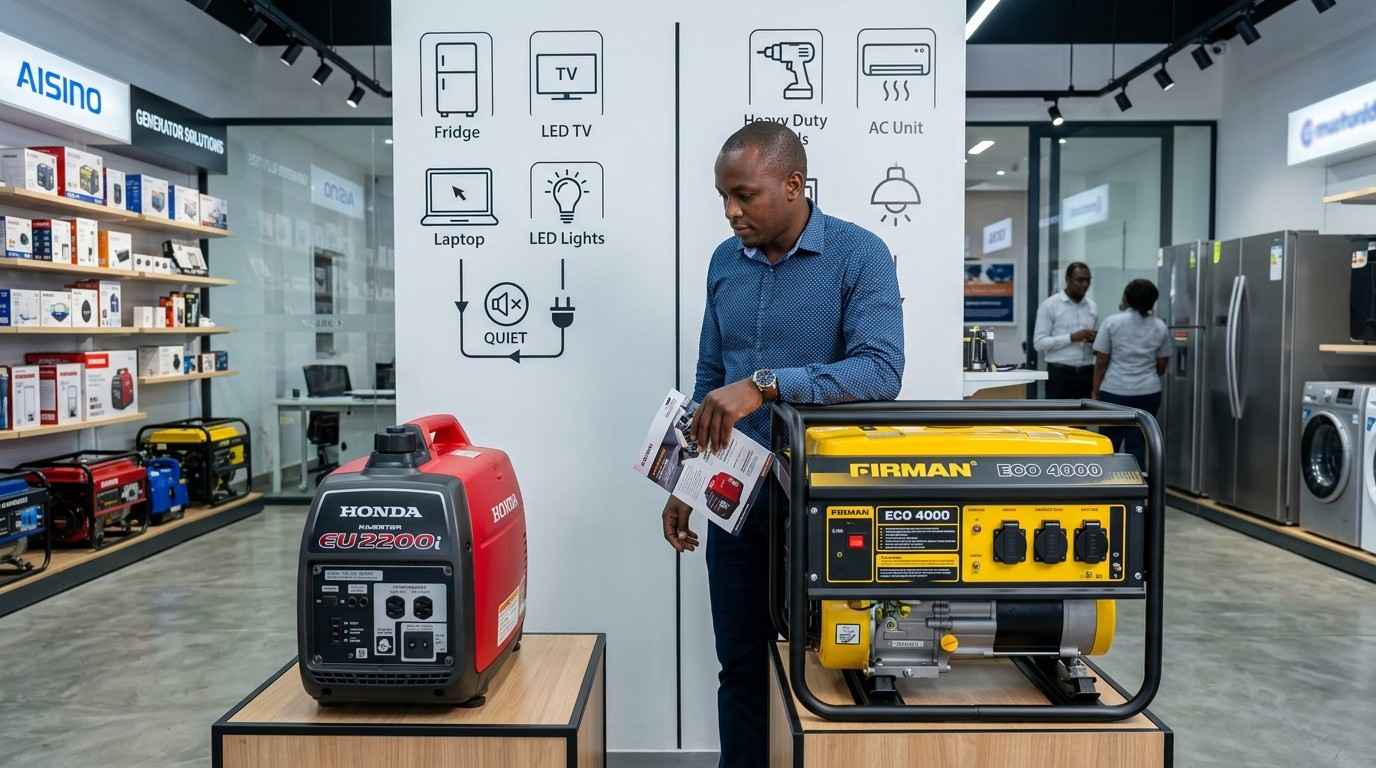
For a typical Kenyan home backup setup — one fridge (150W), one TV (100W), six LED lights (60W), and a laptop (65W) — you need a generator rated at minimum 1.5 kVA. With a 25–30% safety margin for startup surges, a 2–3 kVA inverter generator is the sweet spot, costing between KSh 40,000 and KSh 85,000.
Why Every Kenyan Home Needs a Backup Generator
Kenya's electricity supply has improved significantly over the past decade, yet power outages remain a daily reality for millions of households. According to World Bank data, Kenyan businesses and homes face an average of 6–9 power interruptions per month — each lasting anywhere from 20 minutes to several hours. For homeowners, that translates to spoiled food, missed work, and disrupted routines.
A home backup generator bridges the gap between a power cut and your life continuing normally. But walking into a shop in Nairobi, Mombasa, or Kisumu and picking the first machine on the shelf is a recipe for either underpowering your home (frustrating) or massively overspending (wasteful). The science of sizing a generator is straightforward once you understand the numbers — and this guide walks you through every step.
Even if your area has reliable power now, generator prices in Kenya have risen 15–20% over the past two years due to import costs. Buying during periods of stable supply is smarter than panic-buying during a prolonged outage.
Types of Home Backup Generators Available in Kenya
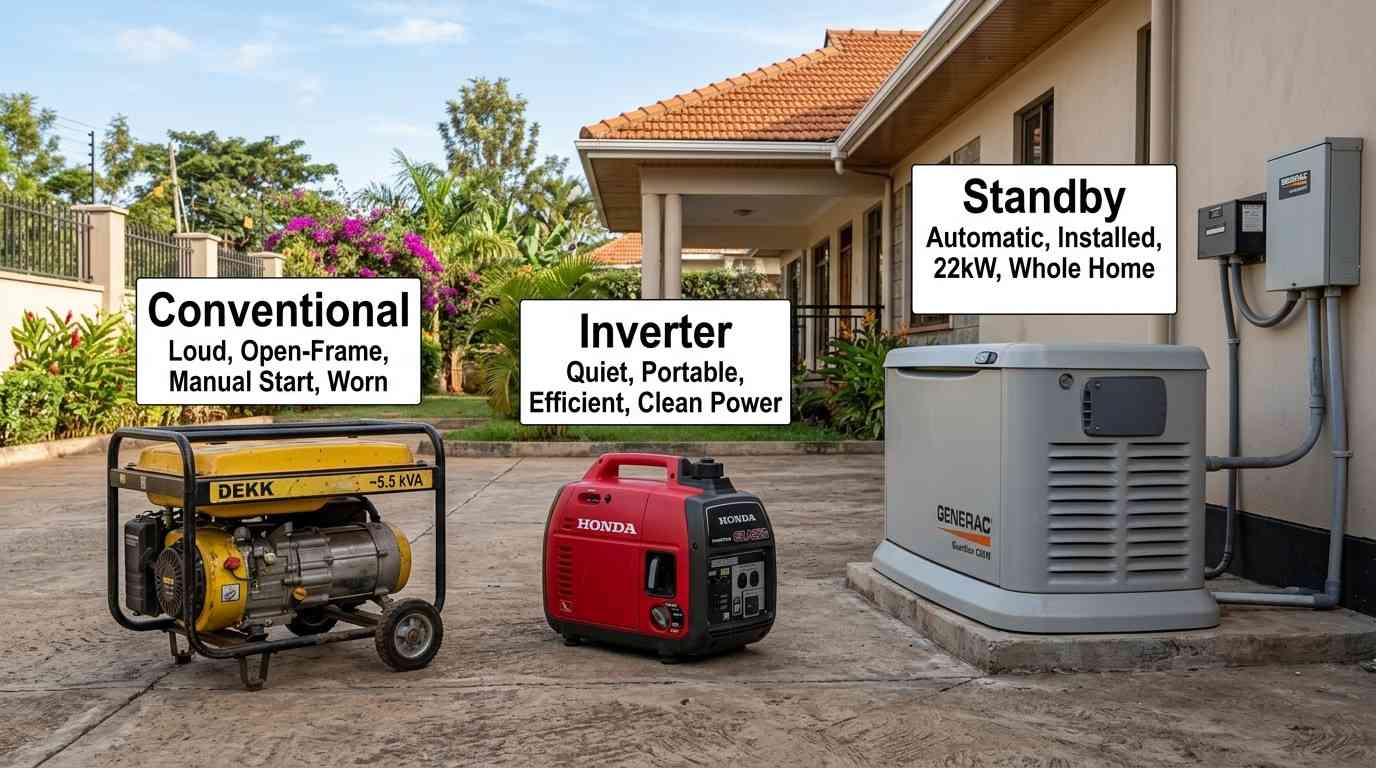
Before sizing, you need to pick the right category. Each type has a different price band, use case, and trade-off in the Kenyan market.
1. Conventional (Open Frame) Generators
These are the most common generators in Kenya — the loud, petrol-guzzling workhorses you see at hardware stores and construction sites. Brands like Kipor, Elepaq, Firman, and Sumec dominate this space. They're affordable (starting from KSh 18,000 for 1 kVA) but produce dirty power — voltage fluctuations that can damage sensitive electronics like laptops, smart TVs, and modems.
2. Inverter Generators
Inverter generators convert AC power to DC and back again, producing clean sine-wave electricity (Total Harmonic Distortion below 3%). This makes them safe for all electronics. They're also significantly quieter (50–60 dB vs. 70–80 dB for conventional) and up to 40% more fuel-efficient. The trade-off? Price. Expect to pay KSh 45,000 to KSh 180,000. Top brands in Kenya include Honda, Yamaha, Kipor IG series, and Champion.
3. Standby (Automatic) Generators
These are permanently installed outside your home, connected to your distribution board, and start automatically within seconds of a power cut. Powered by petrol, diesel, or LPG, they're the gold standard for seamless backup — but they cost upwards of KSh 150,000 and require professional installation. Best suited for homes with home offices, medical equipment, or high-value electronics.
4. Solar Generator / Power Stations
Not a traditional generator, but worth considering. Products like the EcoFlow DELTA or Jackery Explorer (available in Nairobi for KSh 60,000–KSh 200,000) combine a large lithium battery with solar input. They're silent, emission-free, and great for powering lights, TVs, and laptops. However, they struggle with compressor-based appliances like fridges over extended periods unless paired with large solar panels.
How to Size a Generator for Your Kenyan Home (Step-by-Step)
This is the most critical section. Getting the sizing wrong is the single biggest mistake Kenyan buyers make — either the generator keeps tripping, or it runs at 30% load (which accelerates engine wear). Follow these steps precisely.
List Every Appliance You Want to Run
Write down every appliance that must run during a power cut. Focus on essentials: fridge, TV, lights, laptop/computer, phone chargers, modem/router. Note that you do not need to run everything simultaneously — a backup generator supplements grid power, not replaces your entire electrical system.
Find Each Appliance's Running Wattage
Check the rating plate on the back or bottom of each appliance, or refer to the table below. The running wattage is the power consumed during normal operation.
Identify Starting (Surge) Wattage for Motor-Driven Appliances
Compressor-based appliances — fridges, freezers, air conditioners, water pumps — draw 2× to 3× their running wattage for 1–3 seconds at startup. Your generator must handle this peak surge or it will trip or stall.
Add It All Up and Apply a Safety Margin
Sum the running wattages of all simultaneous appliances, then add the single largest starting surge (not all surges at once — only the biggest one). Multiply the total by 1.25 (a 25% safety buffer). This is your minimum generator rating in watts. Divide by 1,000 to get kW.
Convert to kVA
Generators are often rated in kVA (kilovolt-amperes). Most home appliances have a power factor of around 0.8, so: kVA = kW ÷ 0.8. Always buy a generator rated at or above your kVA figure.
Wattage Reference Table for Kenyan Homes
Use this table to calculate your load. The "Starting Surge" column applies to motor/compressor-based appliances only.
| Appliance | Running Watts (W) | Starting Surge (W) | Common in Kenya? |
|---|---|---|---|
| Refrigerator (300L, frost-free) | 150–200 | 400–600 | Very Common |
| LED Bulb (each) | 8–12 | None | Very Common |
| LED Strip Light | 15–25 | None | Very Common |
| 32" LED TV | 40–60 | None | Very Common |
| 43" Smart TV | 80–120 | None | Very Common |
| Laptop (15") | 45–80 | None | Very Common |
| Desktop PC + Monitor | 150–300 | None | Common |
| WiFi Router/Modem | 5–15 | None | Very Common |
| Phone Charger | 5–20 | None | Very Common |
| Ceiling Fan | 50–75 | 100–200 | Very Common |
| Microwave (800W) | 800–1,200 | None | Common |
| Electric Kettle | 1,500–2,200 | None | High Load |
| Iron Box | 1,000–2,000 | None | High Load |
| Water Pump (1HP) | 750 | 1,500–2,250 | Common |
| 1.5HP Air Conditioner | 1,200 | 2,400–3,600 | High Load |
| DSTV / Zuku Decoder | 15–30 | None | Very Common |
Never run an electric kettle (1,500W+) or iron box on a small home backup generator unless you have sized for it specifically. These are pure resistive loads that will push a 2 kVA generator to its absolute limit, reducing its lifespan significantly.
Worked Example: Sizing for a Typical Kenyan Home
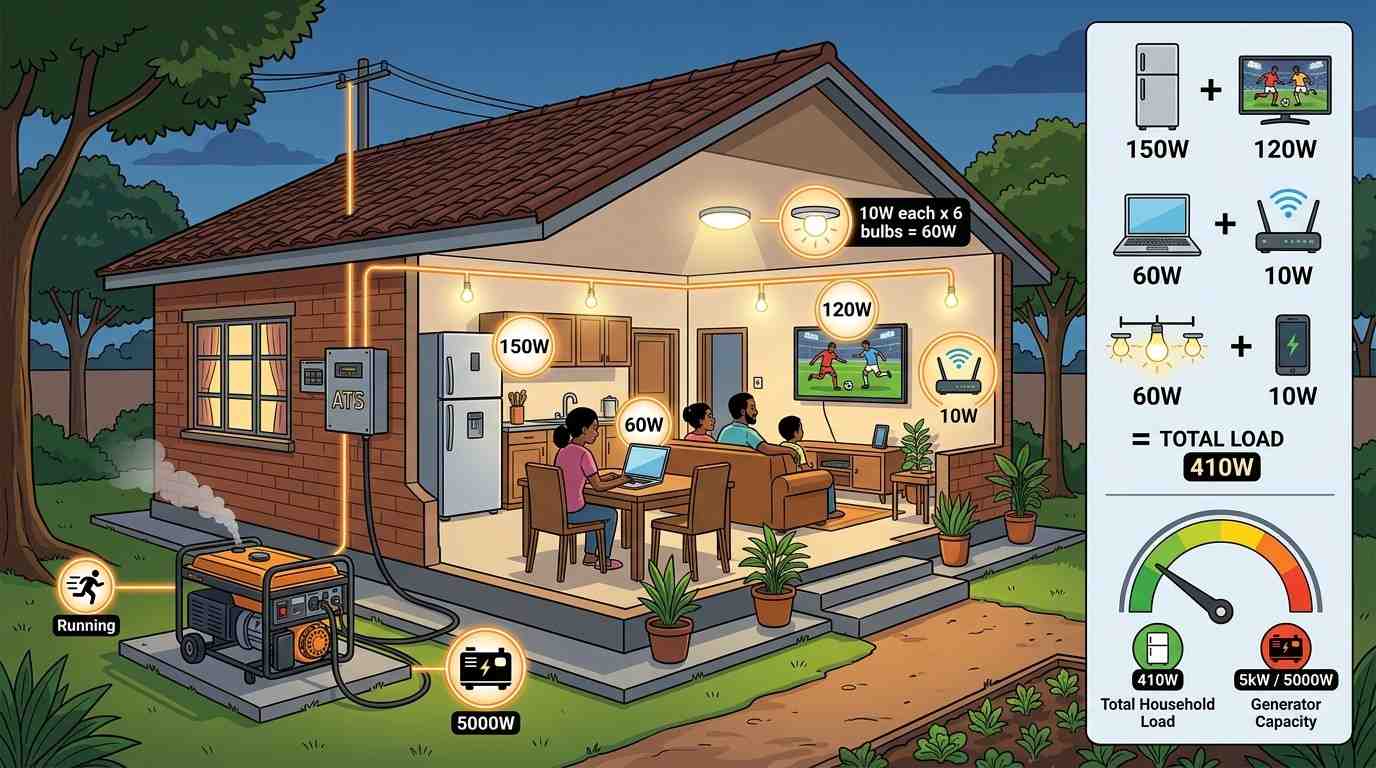
Let's size a generator for the four core appliances mentioned in this guide: a fridge, a TV, lights, and a computer/laptop.
| Appliance | Running Watts | Starting Surge | Notes |
|---|---|---|---|
| Refrigerator (300L) | 180 W | 540 W | Largest surge load |
| 43" Smart TV | 100 W | — | No surge |
| 6 × LED Bulbs (10W each) | 60 W | — | No surge |
| Laptop (15") | 65 W | — | No surge |
| WiFi Router | 12 W | — | No surge |
| Total Running Watts | 417 W | — | — |
| + Largest Starting Surge (Fridge) | — | + 540 W | One-off at startup |
| Peak Demand | 957 W | — | |
| × 1.25 Safety Margin | ≈ 1,200 W (1.2 kW) | — | |
| Convert to kVA (÷ 0.8) | ≈ 1.5 kVA | Minimum Rating | |
A 2 kVA generator is the ideal minimum for this load. It gives you headroom above the 1.5 kVA requirement, handles unexpected startup surges comfortably, and keeps the engine running at a healthy 60–70% load — the optimal zone for efficiency and longevity. If you plan to add a water pump or ceiling fan later, step up to 3 kVA.
Generator Prices in Kenya
Prices below are based on current market rates across Nairobi's major dealers (Hotpoint, Jua Kali market Gikomba, Jumia Kenya, and Kilimall). Expect price variation of 5–15% depending on dealer, location, and whether you're buying with a warranty.
| Generator Size | Type | Best For | Price Range (KSh) | Rating |
|---|---|---|---|---|
| 1 kVA | Conventional | Lights + phone charging only | KSh 18,000 – 28,000 | Too Small (Typical Home) |
| 2 kVA | Conventional | Fridge + TV + lights + laptop | KSh 25,000 – 45,000 | Budget Pick |
| 2 kVA | Inverter | Fridge + TV + lights + laptop (safe for electronics) | KSh 45,000 – 80,000 | Recommended |
| 3 kVA | Inverter | Above + water pump or microwave | KSh 65,000 – 110,000 | Best All-Rounder |
| 5 kVA | Conventional | Larger homes / small business | KSh 55,000 – 95,000 | Good Value |
| 6–10 kVA | Standby Diesel | Full home / home office | KSh 150,000 – 350,000+ | Premium |
Best Home Backup Generators in Kenya — Reviewed
We evaluated each generator on five criteria: power quality, fuel efficiency, noise level, build quality, and value for money. Ratings are out of 10.
Pros
- Exceptionally clean power (THD <3%)
- Whisper-quiet (48–57 dB)
- 8–9 hours on one tank at 25% load
- Honda's legendary engine reliability
- Parallel-ready (run two together)
Cons
- Premium price
- Parts harder to find outside Nairobi
- Slightly lower surge capacity
Pros
- Smart Throttle auto-adjusts speed
- Boost Technology for extra surge power
- USB port built-in for phone charging
- Excellent Yamaha service network in Kenya
Cons
- Slightly louder than Honda EU22i
- Heavier at 21 kg
Pros
- Very affordable — best budget pick
- Good raw power output
- Widely available across Kenya
- Easy to service locally
Cons
- Noisy (72–78 dB) — not estate-friendly
- Dirty power — use AVR/UPS with laptops
- Higher fuel consumption
Running Costs in Kenya: How Much Will It Cost Per Month?
The purchase price is only part of the equation. A generator that runs on petrol in Kenya will cost you in ongoing fuel expenses. Here's how to calculate it for your situation:
| Generator Size | Fuel Consumption at 75% Load | Daily Cost (4 hrs/day @ KSh 215/L) | Monthly Cost (4 hrs/day) |
|---|---|---|---|
| 1 kVA Conventional | ~0.5 L/hr | KSh 430 | ≈ KSh 12,900 |
| 2 kVA Conventional | ~0.7 L/hr | KSh 602 | ≈ KSh 18,060 |
| 2 kVA Inverter | ~0.4 L/hr | KSh 344 | ≈ KSh 10,320 |
| 3 kVA Inverter | ~0.55 L/hr | KSh 473 | ≈ KSh 14,190 |
| 5 kVA Conventional | ~1.2 L/hr | KSh 1,032 | ≈ KSh 30,960 |
Fuel prices as of June 2026 (Nairobi pump price). Actual consumption varies with load. Inverter generators can save KSh 7,000–15,000/month in fuel compared to conventional units of the same kVA — a compelling long-term argument for their higher upfront cost.
Generators and Your Computer — What You Need to Know
Your laptop or desktop computer is likely your most sensitive piece of equipment. Whether you're running a laptop for work or a full desktop setup, generator power quality matters enormously. If you're unsure what type of laptop you have and its power requirements, check our guide to different types of laptops based on use cases — understanding your machine's category helps you estimate its wattage accurately.
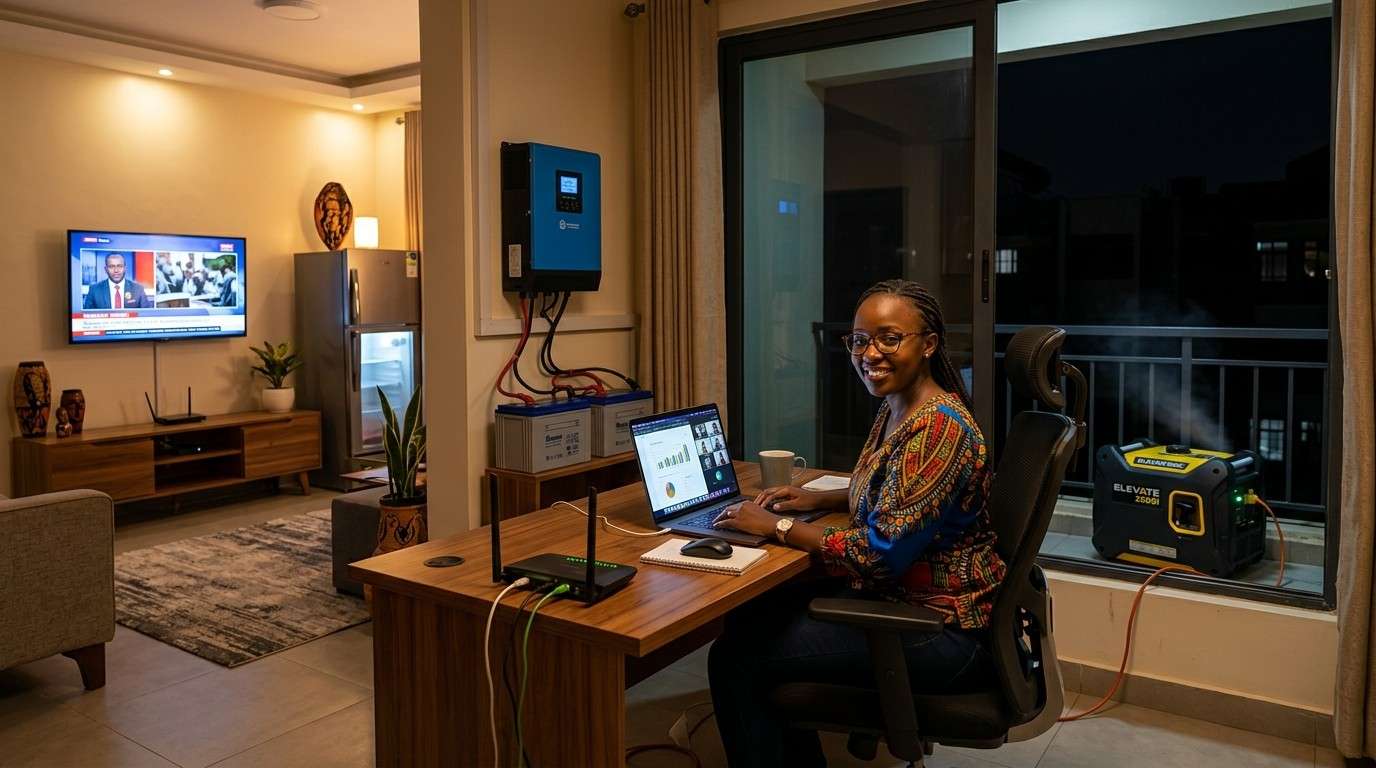
The key risk with conventional generators is voltage spikes and dirty power, which can corrupt hard drives, damage motherboards, and shorten laptop battery lifespan. Here's how to protect your devices:
- Use a UPS (Uninterruptible Power Supply): Even a budget KSh 5,000–8,000 UPS between your generator and computer will smooth out voltage fluctuations and protect against surges.
- Use an Inverter Generator directly: No UPS needed — the clean sine wave output is safe for all electronics right from the socket.
- Use an AVR (Automatic Voltage Regulator): Cheaper than a UPS (KSh 2,500–6,000) and offers basic voltage stabilization, though no battery backup.
If you're in the market for a new laptop that will run efficiently on backup power, our guide to the best laptop prices in Kenya covers energy-efficient options that are ideal for generator-powered setups.
Generator Safety for Kenyan Homes — Non-Negotiable Rules
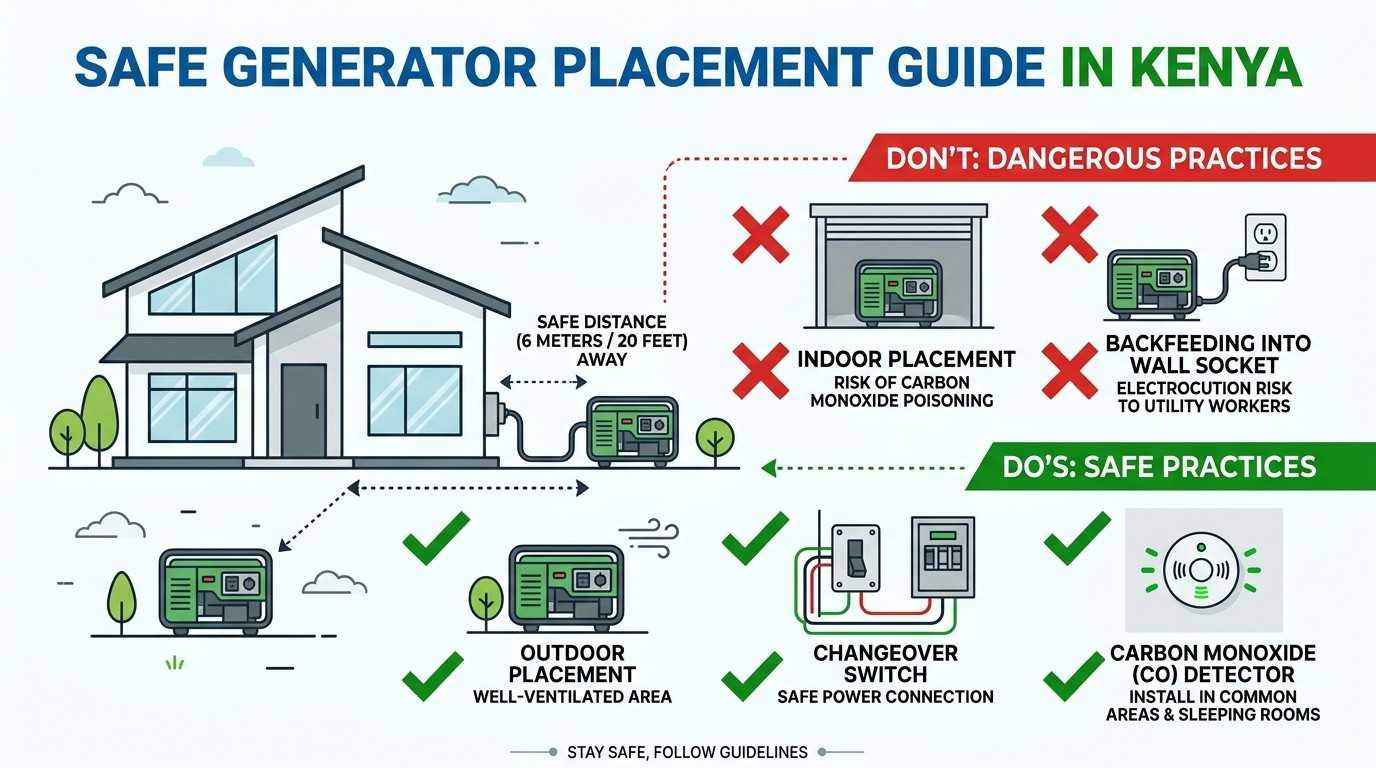
According to the U.S. Centers for Disease Control (CDC), generator-related carbon monoxide poisoning kills hundreds of people each year — and the risk is just as real in Kenya. Follow these rules without exception:
- NEVER run a generator indoors, in a garage, or near an open window. Carbon monoxide (CO) is odourless and kills within minutes. Always operate at least 5–7 metres from any building opening.
- Install a carbon monoxide detector in your home (available at Nairobi hardware stores for KSh 3,500–8,000).
- Never backfeed the grid. Do not connect a generator directly to your home's main supply without a proper transfer switch or changeover switch. Backfeeding can electrocute KPLC linemen working on the lines. A licensed electrician must install a changeover switch (KSh 4,000–12,000 for parts + labour).
- Store petrol safely. Use approved, sealed containers. Store away from the generator and any flame source. Keep no more than 20 litres at home.
- Let the generator cool before refuelling. Hot engine + petrol = fire hazard.
- Service regularly. Change the engine oil every 50–100 hours of use. Use the oil grade specified in the manual (usually SAE 10W-30).
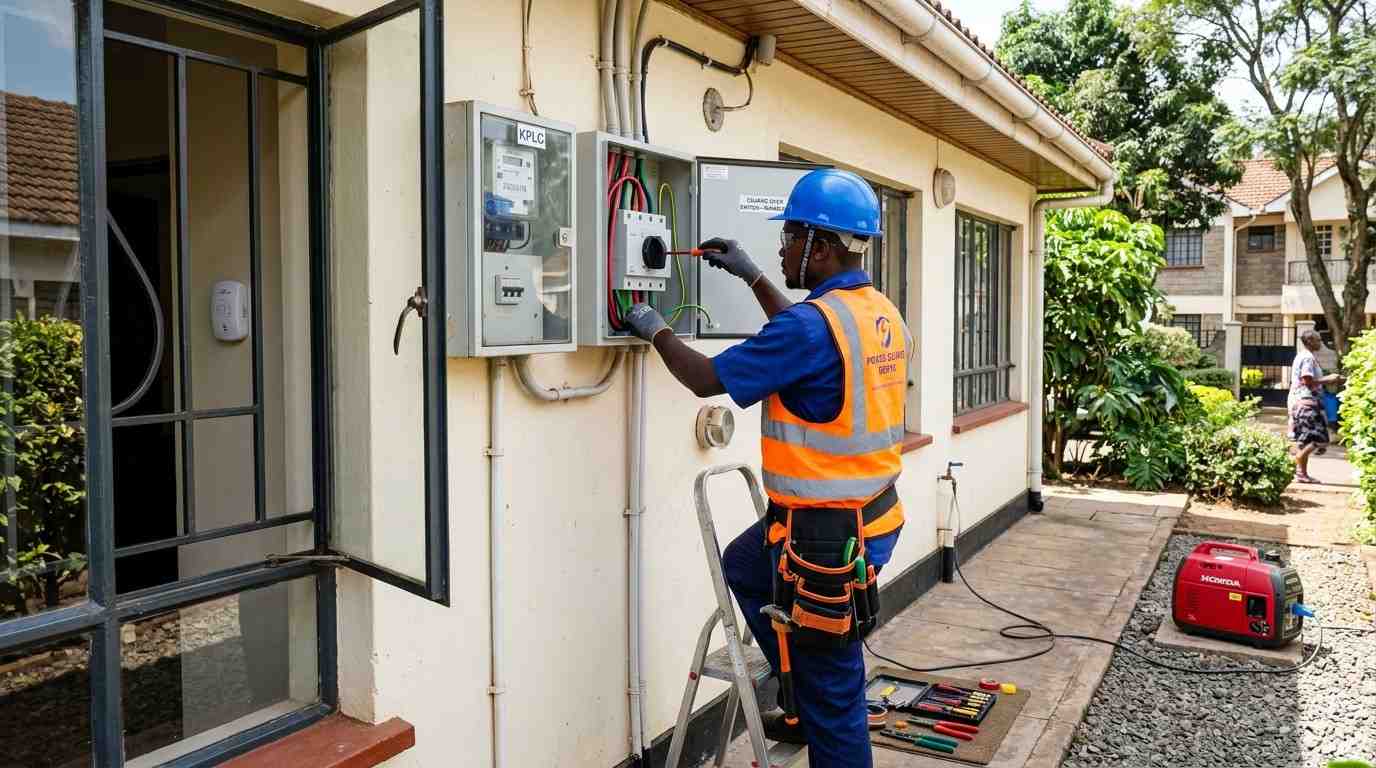
Installing a generator with a changeover switch in Kenya requires a licensed electrician registered with the Energy and Petroleum Regulatory Authority (EPRA). DIY electrical work is both dangerous and illegal under the Energy Act, 2019.
Generator Buying Checklist for Kenya — 10 Things to Verify Before You Pay
| # | What to Check | Why It Matters |
|---|---|---|
| 1 | Rated vs. maximum power | Rated (continuous) power should meet your load; maximum is only for 30-second surges. |
| 2 | Warranty duration and coverage | Reputable brands offer 1–2 years. Insist on a stamped warranty card. |
| 3 | Availability of spare parts in Kenya | Chinese no-name brands often have zero spare parts locally after 2 years. |
| 4 | THD (Total Harmonic Distortion) | Must be <5% if you're powering laptops or smart TVs. Inverter generators ≤3%. |
| 5 | AVR (Automatic Voltage Regulator) built-in | Stabilises output voltage. Standard on good generators; absent on cheap models. |
| 6 | Low-oil automatic shutoff | Prevents catastrophic engine damage when oil runs low. |
| 7 | Noise rating (dB) | Check your estate/residential rules. Many Nairobi estates restrict noise above 65 dB after 10pm. |
| 8 | Fuel tank size and run time | A 15-litre tank at 0.5 L/hr gives 30 hours. Smaller tanks mean more refuelling trips. |
| 9 | Test run before purchase | Always ask the dealer to start the generator and run it under a simulated load before paying. |
| 10 | EPRA certification or standard compliance | Look for a Kenya Bureau of Standards (KEBS) mark of quality where available. |
Frequently Asked Questions
Final Verdict: Our Top Recommendation for Kenyan Homeowners
After breaking down the numbers, comparing brands, and factoring in Kenya's specific market conditions, here's our clear recommendation:
- 🥇 Best Overall: Honda EU22i (2.2 kVA Inverter) — KSh 95,000–130,000. Unmatched reliability and clean power for electronics.
- 🥈 Best Runner-Up: Yamaha EF2200iS (2.2 kVA Inverter) — KSh 85,000–115,000. Excellent value with slightly better surge handling than Honda.
- 🥉 Best Budget Pick: Firman SPG3000 (2.8 kVA Conventional) — KSh 28,000–42,000. Buy with a KSh 6,000 UPS for electronics protection.
- 💡 Best Premium/Eco Option: EcoFlow DELTA Pro Solar Generator — KSh 150,000–200,000. Zero noise, zero emissions, pairs with solar panels for fuel-free backup.
Whatever your budget, the formula is simple: calculate your load accurately, add a safety margin, choose an inverter type if you own sensitive electronics, and always use a licensed electrician for installation. A generator is a long-term investment — buy once, buy right.
For more on the electronics you'll be protecting with your new generator, browse our in-depth guide to the best laptop prices in Kenya and make sure your devices are as solid as your power backup plan.
Bookmark this page for future reference and share it with a neighbour who's still figuring out their backup power setup. Kenya's power grid is improving — but it pays to be prepared.