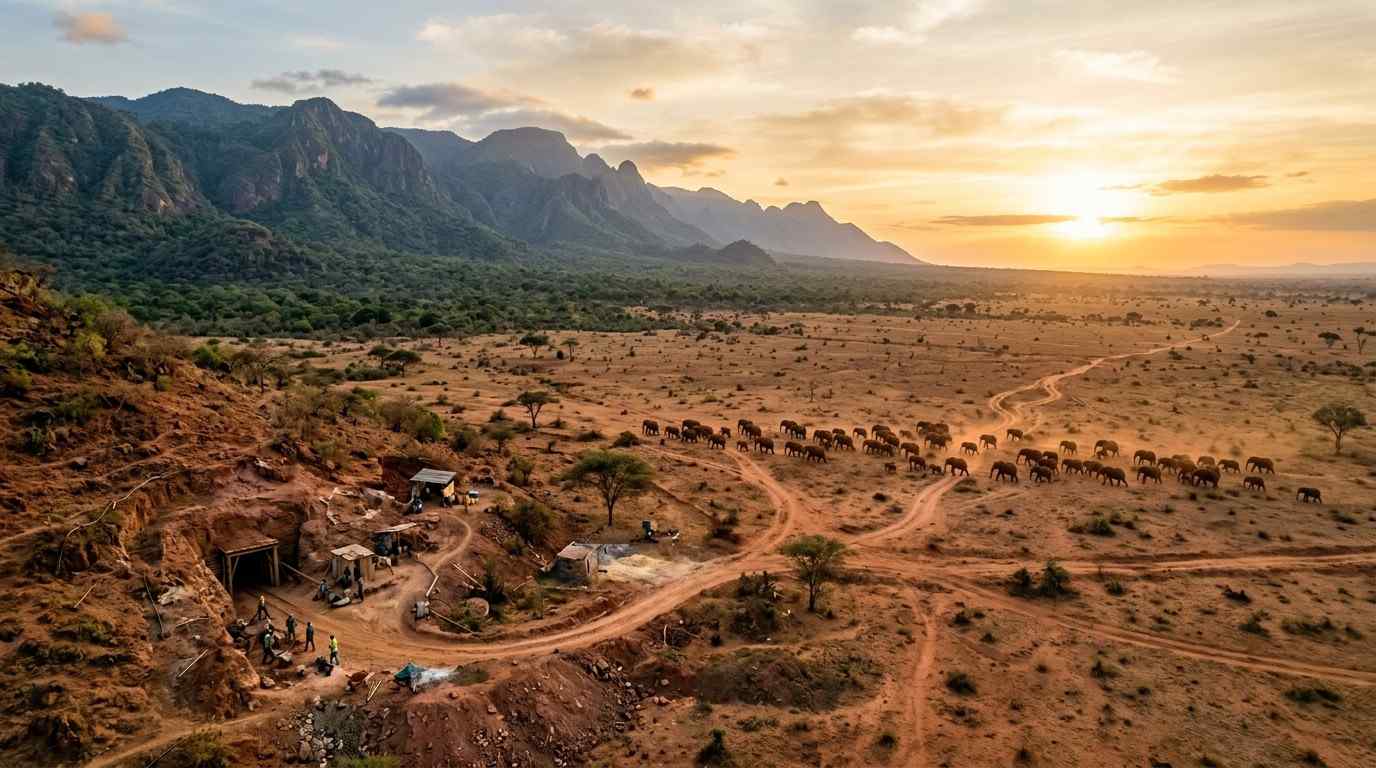
A County Like No Other
Taita Taveta County is located about 360 km south-east of Nairobi and 200 km north-west of Mombasa, right near the Kenya-Tanzania border. With a land area of roughly 17,084 km², it is one of Kenya's largest counties. Yet most of that land — an incredible 62% — falls inside Tsavo East and Tsavo West National Parks. That fact alone tells you this is no ordinary county.
The county headquarters sit in Mwatate, and the main towns include Voi, Taveta, Mwatate, and Wundanyi. The land ranges from dry, flat lowlands at about 500 metres above sea level all the way up to the cool, misty Taita Hills, which rise to 2,229 metres at Vuria Peak — the highest point in the county.
Taita Taveta County runs on three main economic pillars. Mining produces rare gems like tsavorite and ruby. Tourism draws visitors to Tsavo National Park, one of Africa's largest. Agriculture supports about 95% of household incomes through crops like maize, beans, sisal, and bananas. Together, these sectors make Taita Taveta one of Kenya's most resource-rich counties.
With a projected population of about 360,000 people, the county has a poverty rate of 33.9% — slightly below the national average of 38.6%, according to the Kenya National Bureau of Statistics. That means there is real need to unlock the county's enormous economic potential for ordinary people. Let's explore how mining, tourism, and agriculture each play a role in that story.
Mining in Taita Taveta County
If you were told the ground under your home was hiding gemstones worth billions of shillings, you might find it hard to believe. But that is the reality for people in Taita Taveta County. The county sits on the Mozambique Orogenic Belt, a giant band of ancient rock stretching from East Africa down to Mozambique. This belt is one of the most mineral-rich zones on the planet.
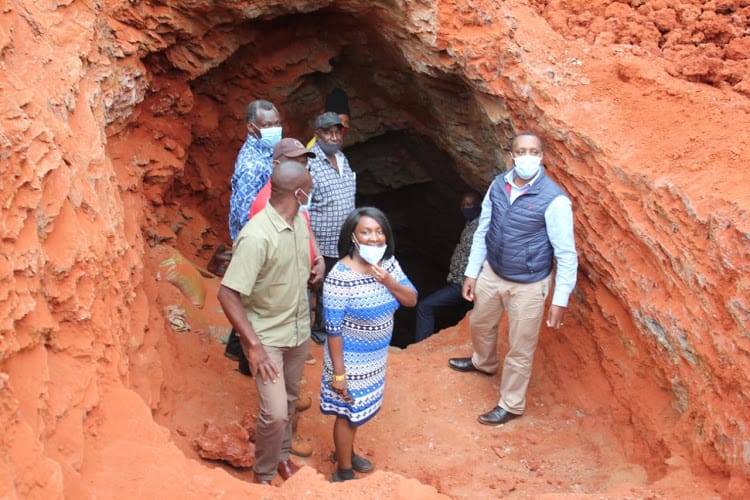
An artisanal miner sorts precious tsavorite gemstones at a mine near Mwatate. Taita Taveta County has over 500 active gemstone mine sites.
What Minerals Are Found Here?
The county has over 500 known gemstone mine sites. The precious stones found here include tsavorite, ruby, sapphire, garnet, tourmaline, and tanzanite. Beyond gems, the county also holds industrial minerals such as iron ore, manganese, marble, and limestone.
| Mineral | Type | Key Facts |
|---|---|---|
| Tsavorite | Precious gemstone | Found only near Tsavo; can fetch up to KSh 890,000 per carat |
| Ruby | Precious gemstone | Comparable in quality to world-famous Burmese rubies |
| Sapphire | Precious gemstone | Blue, yellow, and pink varieties mined in the area |
| Garnet | Semi-precious stone | Green, red, pyrope, and spessartite varieties |
| Tourmaline | Semi-precious stone | Ranges from golden yellow to vivid green |
| Tanzanite | Precious gemstone | Rare blue-violet stone; found in limited quantities |
| Iron Ore | Industrial mineral | Widely distributed in the county |
| Manganese | Industrial mineral | Used in steel manufacturing |
| Limestone / Marble | Industrial mineral | Used in construction |
Tsavorite: Taita Taveta's Crown Jewel
Among all of Taita Taveta's minerals, tsavorite holds the top spot. This rare green garnet was first discovered in 1970 inside Tsavo National Park. The Tiffany & Co. jewellery company named it after the park. Tsavorite is considered a uniquely Kenyan product — it is found almost nowhere else in the world.
At the top end of the market, a high-quality tsavorite can fetch as much as KSh 890,000 per carat. That is extraordinary money. Yet, the miners who dig for it every day are often very poor. Why? Because tsavorite is listed as one of Kenya's 14 strategic minerals, meaning the government controls how it is traded. A lot of the stone is smuggled out of the country by dishonest dealers who pay miners very little and then sell the gems abroad at huge profits.
The Kenya National Bureau of Statistics reported Taita Taveta's poverty rate at 33.9% — despite the county sitting on billions of shillings worth of minerals. This gap between natural wealth and community poverty is one of the county's biggest challenges.
To help change this, the Africa Social Financing Centre has partnered with the Taita Taveta Artisanal Miners Association to create the Tsavorite Market and Auction Centre, which aims to give local miners better access to fair international prices. The government is also working on letting licensed artisanal miners access minerals inside Tsavo National Park — a move that could unlock enormous income for local communities.
Challenges in the Mining Sector
Mining in Taita Taveta is not without serious problems. Many artisanal miners work in unsafe pits without proper equipment or protective gear. Cave-ins have killed and injured many people over the years. Authorities like the Mwatate Deputy Commissioner have been working with the Ministry of Mines and the National Environment Management Authority (NEMA) to improve safety standards and ensure that mining activities follow the law.
The government recently categorised tsavorite as a strategic mineral in Kenya. This is expected to increase government revenue and protect miners from dishonest brokers who have long taken advantage of them.
Tourism in Taita Taveta County
If mining is the underground treasure of Taita Taveta, then tourism is its above-ground crown. The county is home to Tsavo East and Tsavo West National Parks — together, the largest national park system in Kenya and one of the biggest wildlife sanctuaries in the entire world.
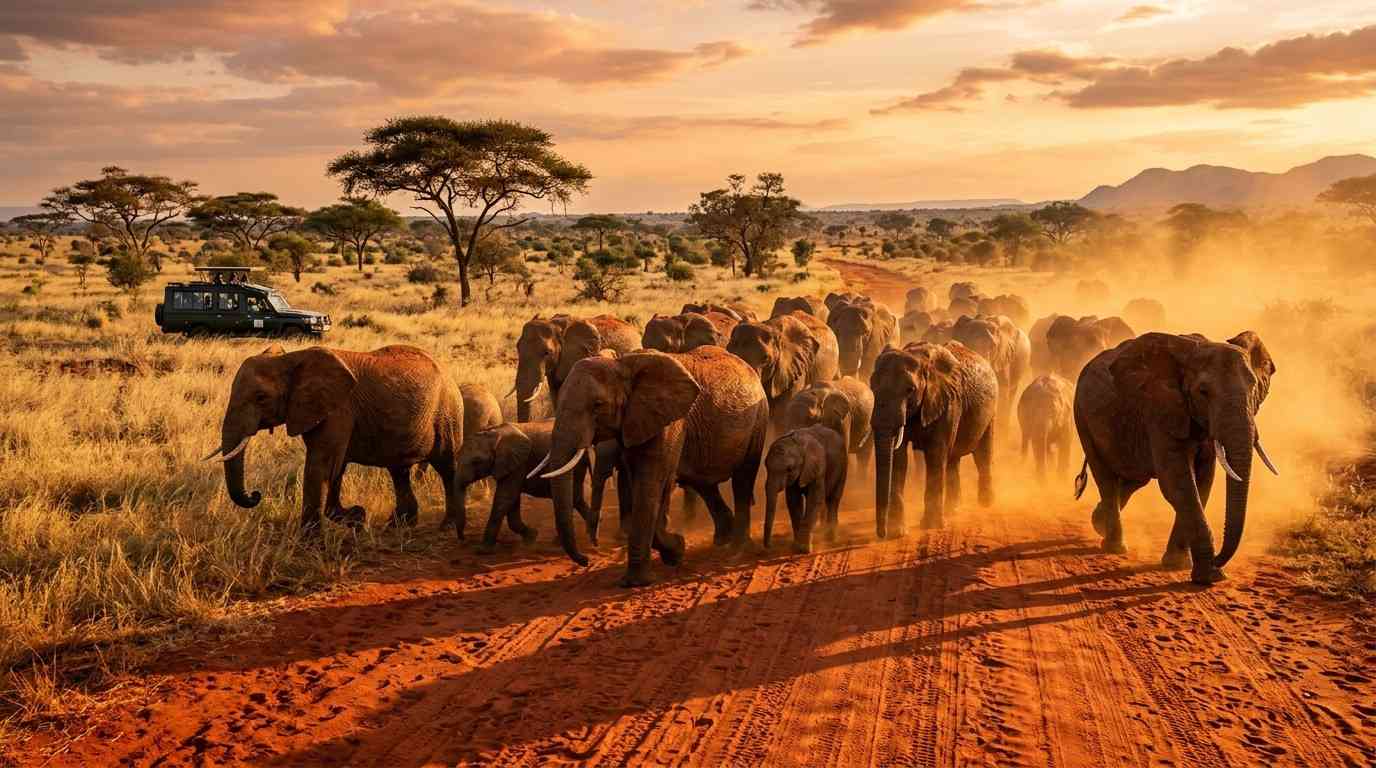
Tsavo East and West National Parks together cover over 10,600 km² — about 62% of Taita Taveta County. Kenya earns an estimated KSh 60 billion from these parks annually.
Tsavo National Parks
The two Tsavo parks cover about 10,650 km², which is roughly the size of Jamaica. They are home to the famous "red elephants" of Tsavo — elephants that are coated in the red dust of the area and have become one of Kenya's most recognised wildlife images. The parks also host lions, leopards, cheetahs, buffaloes, hippos, crocodiles, and hundreds of bird species.
Kenya as a whole earns an estimated KSh 60 billion or more from Tsavo East and West National Parks every year. This makes tourism one of the single biggest revenue generators linked to Taita Taveta County. Yet local communities often feel they do not get a fair share of this money. County leaders have called for a 50-50 revenue-sharing formula between the Kenya Wildlife Service (KWS) and the county government.
Famous attractions inside Tsavo include Aruba Dam, Mzima Springs, Mudanda Rock, and Lugard's Falls. Visitors can also spot the rare Hirola antelope and vast herds of elephants.
Taita Hills & Other Attractions
Beyond the national parks, the Taita Hills themselves are a major draw. Rising dramatically from the dry plains, the hills are covered in mist, cloud forests, and stunning landscapes. The area includes the Taita Hills Wildlife Sanctuary and the famous Salt Lick Lodge, built on stilts above a natural salt lick where animals gather to eat minerals from the ground.
The county also has two beautiful lakes — Lake Jipe and Lake Chala. Lake Chala is a deep, blue volcanic crater lake on the Kenya-Tanzania border, popular with swimmers and kayakers. Lake Jipe straddles the border and is perfect for bird-watching, with hundreds of species visible from the water's edge.
Another hidden gem is the Kasigau Hill, which is a key stop for migratory birds and offers breathtaking hiking trails. Many community conservancies in the county are also developing eco-tourism products — giving visitors a chance to see wildlife while directly benefiting local communities.
Taita Taveta County Tourism Rating
The African Wildlife Foundation (AWF) has been working with communities in Taita Taveta to develop a connected tourism circuit that stretches across the entire Tsavo landscape — linking national parks, community conservancies, and the sisal estates into a single world-class destination. If successful, this circuit could transform tourism income into a genuine engine for local development.
Agriculture in Taita Taveta County
While mining and tourism attract the most attention, it is agriculture that keeps families fed and financially afloat in Taita Taveta. Agriculture contributes to about 95% of household incomes in the county — a number that shows just how central farming is to everyday life here.
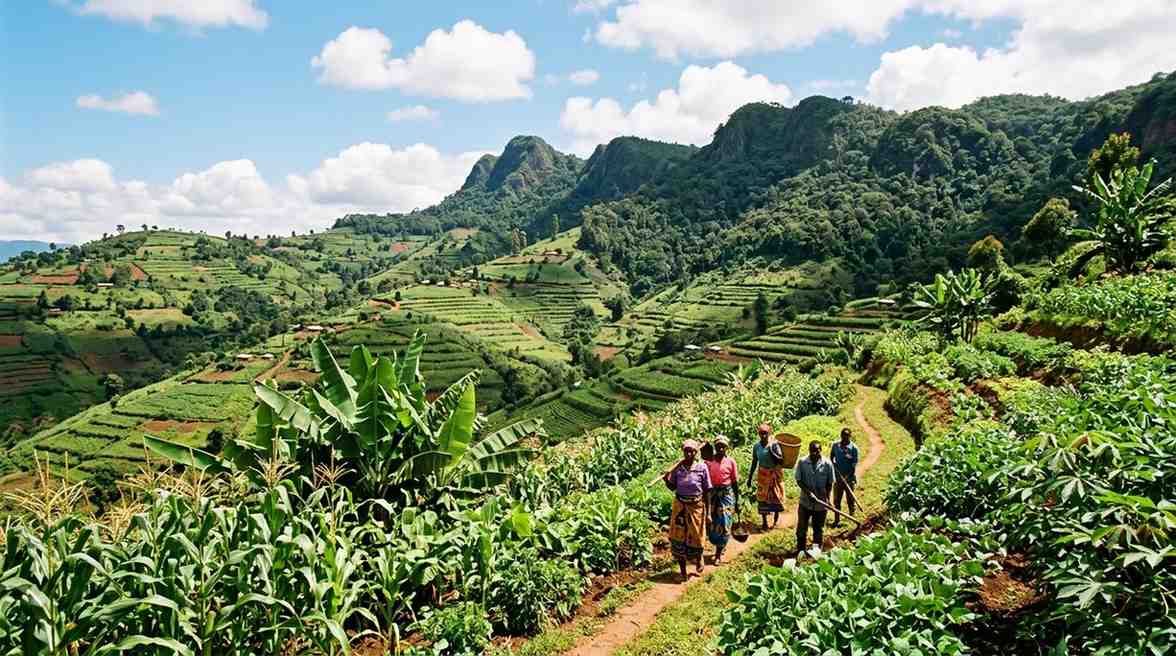
The fertile Taita Hills highlands support a wide range of crops, from maize and beans to bananas and macadamia nuts. Agriculture supports around 95% of household incomes in the county.
Key Crops and Farming Activities
The county's farming landscape is split into two very different zones. The highlands — the Taita Hills — receive heavy rainfall of up to 1,900 mm per year and are cool and fertile. The lowlands, which include most of the county, are dry and receive only about 440 mm of rain per year on average.
In the fertile highlands, farmers grow maize, beans, bananas, and macadamia nuts. These crops are grown mainly for food and local sale. In the drier lowlands and transition zones, the landscape is better suited to sisal farming, cattle ranching, and gemstone mining.
Sisal Farming: A Giant Industry
Taita Taveta is home to one of East Africa's biggest agribusiness operations — the Teita Sisal Estate. This estate covers 32,000 acres and is said to be the largest sisal producer in the entire East Africa region. Voi Sisal Estate and Taveta Sisal Estate also operate in the county, making sisal a key commercial crop.
Sisal is a tough plant that grows well in dry conditions. Its fibres are used to make rope, matting, bags, and even eco-friendly products for export. The sisal industry has the potential to support thousands of jobs in the county and create new products linked to tourism — such as handmade baskets sold to visitors.
The Teita Sisal Estate covers 32,000 acres and is considered the largest sisal producer in East Africa. It also has a conservation area — the Teita Estate Conservation Area (TECA) — which is actively developing eco-tourism products alongside its farming activities.
Livestock & Ranching
Cattle ranching is a major activity in the lowland areas. The county has approximately 25 ranches, most of which focus on beef cattle. Over time, many of these ranches have shifted towards wildlife tourism and conservation because that often brings more money than livestock alone.
Fisheries is a smaller but growing sector, particularly around Lake Jipe and Lake Chala. Tilapia and other freshwater fish are caught and sold locally, providing nutrition and income for communities near the lakes.
Challenges Facing Agriculture
Agriculture in Taita Taveta faces several serious problems. The biggest challenge is the human-wildlife conflict. Because 62% of the county is national park, wildlife frequently moves onto farms and destroys crops. Elephants are the main culprits — a single herd can wipe out an entire season's harvest in one night. Farmers have lost not just crops but also livestock and sometimes their own lives.
Other challenges include climate change (reducing reliable rainfall), lack of proper irrigation, limited access to crop insurance, and poor market access for smallholder farmers. A KIPPRA policy brief from 2024 recommended that the county invest heavily in irrigation infrastructure, crop insurance schemes, and agro-processing to help transform the agriculture sector and raise productivity.
How the Economy Works Together
When you look at Taita Taveta as a whole, you see three pillars that are deeply connected. Mining happens in the dry areas where farming is hard. Tourism happens on the large wildlife lands that cannot be farmed. Agriculture fills the remaining farmable land in the highlands and irrigated lowlands. Each sector operates in a different part of the county but together they form the full economic picture.
The county government projected total revenues of about KSh 7.5 billion for the 2023/2024 financial year — made up of KSh 628 million from the county's own sources and KSh 6.87 billion from national government transfers and donor funding. Departments covering agriculture, water, and infrastructure were among the biggest recipients of spending.
Taita Taveta County has been listed as one of Kenya's counties eligible for Financing Locally Led Climate Action (FLLoCA) funds — money to help communities adapt to the impacts of climate change on farming, water, and livelihoods.
Experts from KIPPRA (the Kenya Institute for Public Policy Research and Analysis) have noted that labour productivity in the county is highest in the services sector, while agriculture lags behind. Their key recommendations include investing in agro-processing factories, improving nutrition for workers, supporting the mining sector with better regulation, and building tourism beyond just game viewing to include cultural and community experiences.
Frequently Asked Questions
What minerals are found in Taita Taveta County?
Taita Taveta County is rich in tsavorite (a rare green garnet), ruby, sapphire, garnet, tourmaline, and tanzanite. It also holds industrial minerals like iron ore, manganese, marble, and limestone. The county has over 500 known gemstone mine sites.
Why is Tsavorite so special and valuable?
Tsavorite is a rare green garnet found almost exclusively in Taita Taveta County, Kenya. It was discovered in 1970 near Tsavo National Park and named by Tiffany & Co. At the top end of the market, it can fetch up to KSh 890,000 per carat, making it more valuable per carat than most other gemstones.
What percentage of Taita Taveta is national park?
About 62% of Taita Taveta County — roughly 10,650 km² — falls inside Tsavo East and Tsavo West National Parks. This makes it one of the most wildlife-rich counties in all of Kenya and East Africa.
What are the main crops grown in Taita Taveta?
The main crops are maize, beans, bananas, macadamia, and sisal. The fertile Taita Hills highlands are best for food crops, while the dry lowlands are suited to sisal farming and cattle ranching. Agriculture supports around 95% of household incomes in the county.
Is Taita Taveta County worth visiting as a tourist?
Absolutely. Taita Taveta County offers some of Kenya's most spectacular wildlife experiences — the twin Tsavo parks, the Taita Hills, Lake Chala, Lake Jipe, the Salt Lick Lodge, and growing community conservancies. It is a fantastic destination for both safari lovers and adventure tourists.
What is the biggest challenge facing Taita Taveta County?
The biggest challenge is the gap between the county's enormous natural resources and the poverty of its people. Human-wildlife conflict destroys crops, gemstone wealth is lost to smuggling, and tourism revenue does not always reach local communities. Better regulation, fairer revenue sharing, and stronger investment in local infrastructure are all needed.
Final Thoughts
Taita Taveta County is a place of extraordinary contrasts. On one hand, it sits on some of the rarest gemstones in the world, hosts one of Africa's most iconic wildlife destinations, and grows food that sustains hundreds of thousands of people. On the other hand, many of its people remain poor, and the county's natural wealth has yet to be fully converted into better schools, hospitals, and roads for everyone.
The three pillars of mining, tourism, and agriculture are not just industries — they are also the key to unlocking a better future for Taita Taveta. With smarter regulation in mining, fairer revenue sharing in tourism, and more investment in agriculture, this county could become one of Kenya's most prosperous places.
For now, the journey continues. And for anyone looking to understand Kenya beyond Nairobi, Taita Taveta County is one of the most rewarding places to start.
Want to learn more about other Kenyan counties and guides? Check out our articles on Homa Bay County's Hidden Gems, the 10 Landmarks That Define Kenya, and our comprehensive Web Hosting Guide for Kenyan businesses.