10 Landmarks That Define the Republic of Kenya Beyond Nairobi
KE Offers
Travel & Culture · Kenya
10 Landmarks That Define the Republic of Kenya Beyond Nairobi
The Republic of Kenya stretches across 580,000 sq km of staggering diversity — savanna, snowcapped peaks, Indian Ocean coastline, and ancient Swahili cities. This guide takes you to ten iconic landmarks that reveal the country's true soul, complete with entry fees, insider travel tips, and everything you need to plan your visit.
By KE Offers EditorialUpdated: June 2, 2026📍 Kenya⏱ 12 min read
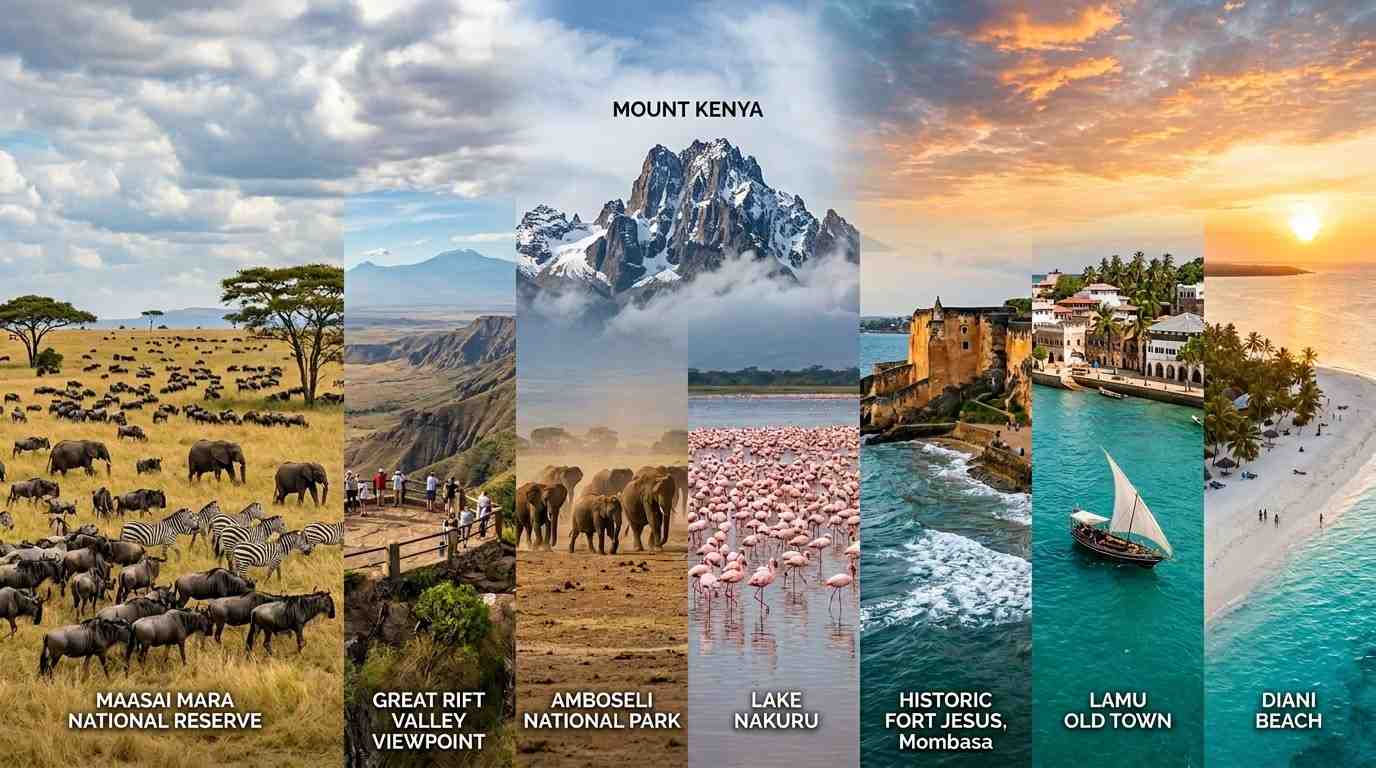
The Republic of Kenya's most defining landmarks beyond Nairobi include the Maasai Mara National Reserve, Mount Kenya, Fort Jesus (Mombasa), Hell's Gate National Park, Lake Nakuru, Amboseli National Park, Lamu Old Town, Tsavo National Parks, the Great Rift Valley, and Diani Beach — each offering a unique window into Kenya's natural and cultural heritage.
Most visitors to the Republic of Kenya land in Nairobi — the continent's most dynamic capital — but the city is merely a gateway. Kenya's true grandeur lies in the landscapes, ecosystems, and civilisations that unfurl beyond the city limits: the crimson dust of the Mara, the glacial silence of Mount Kenya's upper flanks, the monsoon-worn walls of a 500-year-old Portuguese fortress on the Swahili Coast.
Whether you're a first-time visitor budgeting carefully, a seasoned safari-goer seeking off-the-beaten-path gems, or a Kenyan rediscovering your own country, this guide covers ten landmarks that collectively tell the full story of this extraordinary nation. We include honest pricing, the best time to visit each site, and practical logistics — so you can plan your trip with confidence.
For context on Kenya's broader economic landscape and investment potential, our in-depth piece on investing in Kenya is an excellent companion read.
1
Wildlife Reserve · Narok County
Maasai Mara National Reserve World Renowned
Entry (Citizen)
KSh 8,550/day
Entry (Non-Resident)
USD 200/day
Best Time
Jul – Oct
Distance from Nairobi
~270 km
No landmark better encapsulates Kenya's global identity than the Maasai Mara. Spanning approximately 1,510 sq km of open savanna in Narok County, the Mara is the Kenyan extension of Tanzania's Serengeti ecosystem — and together they form the largest wildlife corridor on Earth. The reserve is celebrated for hosting all of Africa's "Big Five" (lion, leopard, elephant, buffalo, and rhinoceros), but its supreme spectacle is undoubtedly the Great Wildebeest Migration.
Between July and October each year, over 1.5 million wildebeest, accompanied by hundreds of thousands of zebra and gazelle, thunder across the Mara River in scenes of almost biblical drama. Crocodiles breach the surface; lions ambush from the banks; the air fills with dust and the roar of hooves. National Geographic has called it "the greatest wildlife show on Earth" — and it happens right here, in Kenya.
"The Mara is not just a reserve — it is a living, breathing reminder of the Africa that existed before fences."
The Mara is also deeply intertwined with Maasai culture. The Maasai people are not merely a backdrop to the tourist experience; they are the traditional custodians of these lands, and many community conservancies surrounding the reserve — such as Ol Kinyei and Naboisho — are Maasai-owned and operated, channelling revenue directly into community welfare.
💡 KE Offers Pro Tip
Book a stay in one of the private conservancies bordering the reserve (Mara North, Naboisho) rather than inside the reserve itself. You'll pay less during peak season, enjoy lower visitor density, and experience walking safaris and night drives that are prohibited inside the official reserve boundaries.
2
National Park & UNESCO Site · Central Kenya
Mount Kenya UNESCO WHS
Entry (Citizen)
KSh 515/day
Entry (Non-Resident)
USD 52/day
Peak (Batian)
5,199 m
Best Time
Jan–Feb, Aug–Sep
Africa's second-highest peak — and Kenya's tallest — Mount Kenya is a dormant stratovolcano whose jagged peaks pierce the clouds at 5,199 metres above sea level. It is a UNESCO World Heritage Site, a critical water tower for over six million Kenyans, and one of the continent's most compelling trekking destinations. The mountain is sacred to the Kikuyu, Meru, and Embu peoples, who believe their god Ngai dwells on its icy summits.
There are three main routes to the upper moorlands and glaciers: the Sirimon Route (most gradual, recommended for acclimatisation), the Chogoria Route (widely considered the most scenic, passing the breathtaking Lake Michaelson), and the Naro Moru Route (most direct but demanding). A two- to five-day trek through giant lobelias, zebra-striped valleys of tussock grass, and glacial tarns rewards even non-technical hikers with extraordinary panoramas.
The UNESCO World Heritage listing protects both the mountain's extraordinary ecological zones — from montane rainforest through bamboo and heath to afroalpine moorland — and its glaciers, which have retreated significantly due to climate change, making a visit today all the more poignant.
💡 KE Offers Pro Tip
Combine the Sirimon ascent with the Chogoria descent for the fullest experience of the mountain's diverse landscapes. Hire a licensed guide through the Kenya Wildlife Service (KWS) gate — they are mandatory above 3,000 m and genuinely enhance the experience.
3
Historical Monument · Mombasa City
Fort Jesus UNESCO WHS
Entry (Citizen)
KSh 500
Entry (Non-Resident)
USD 20
Built
1593–1596
Location
Old Town, Mombasa
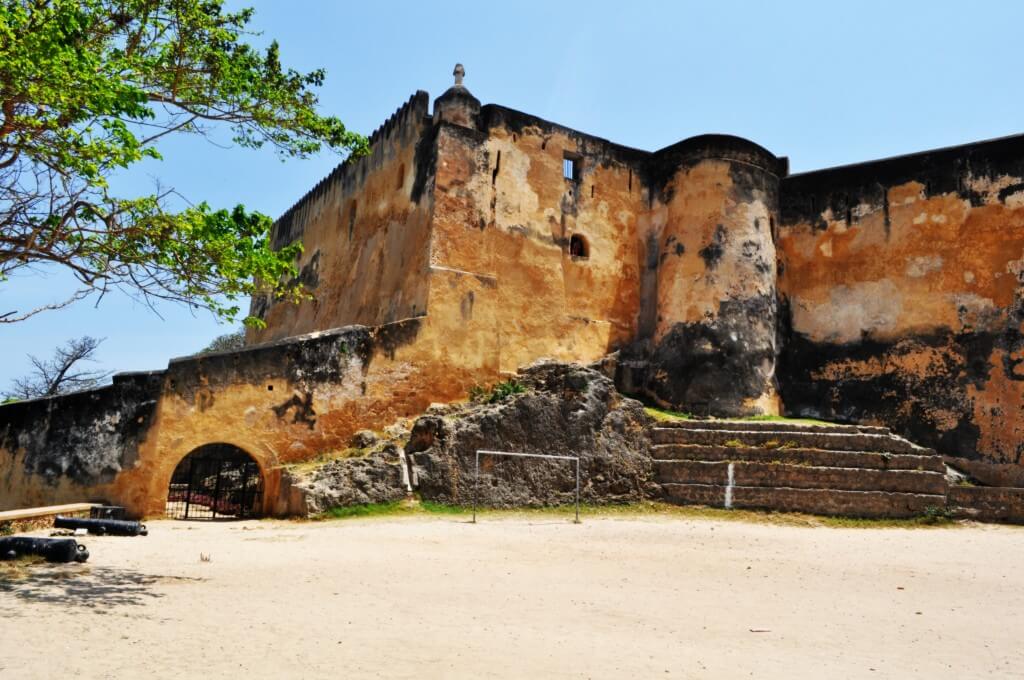
Rising above the mouth of Mombasa's Old Harbour in weathered coral stone the colour of old honey, Fort Jesus is Kenya's most important historical monument — and one of the most outstanding examples of Portuguese military architecture in the world. Built between 1593 and 1596 under the orders of King Philip I of Portugal (then also King Philip II of Spain), the fort was designed to guard the strategically vital port of Mombasa at a time when the Portuguese dominated Indian Ocean trade routes.
Its walls have absorbed five centuries of extraordinary violence. The fort changed hands nine times between the Portuguese, Swahili-Arab forces, the Omanis, the British, and various local rulers. The most famous siege lasted 33 months (1696–1698), when an Omani fleet blockaded the port until only a handful of Portuguese soldiers remained alive. Today, the fort's museum houses one of East Africa's finest collections of Islamic porcelain, weapons, and maritime artefacts recovered from the surrounding seabed.
Inscribed as a UNESCO World Heritage Site in 2011, Fort Jesus sits at the heart of Mombasa's Old Town — a labyrinthine neighbourhood of carved wooden doors, coral-plastered mosques, and dhow-building yards that has changed little since the 18th century.
💡 KE Offers Pro Tip
Visit Fort Jesus in the late afternoon when the light turns golden on the coral walls, then walk into Old Town for dinner at one of the Swahili seafood restaurants along Ndia Kuu Road. Entry to the fort is valid all day — keep your ticket stub.
4
National Park · Nakuru County
Hell's Gate National Park
Entry (Citizen)
KSh 350/day
Entry (Non-Resident)
USD 26/day
Best Activity
Cycling & Hiking
Distance from Naivasha
~15 km
Hell's Gate is Kenya's most unusual national park — not because of its wildlife (though buffalo, zebra, and the rare lammergeyer vulture roam freely here), but because you can explore it on foot or by bicycle, without a vehicle or ranger escort. This is vanishingly rare in East African conservation areas, and it creates an entirely different quality of encounter with the landscape.
The park's centrepiece is a dramatic gorge carved by ancient geothermal activity, where red-and-ochre lava-plugs called Fischer's Tower and Central Tower jut from the valley floor like sentinels. Hot springs hiss from fissures in the rock; geothermal steam vents the earth. It is a landscape so otherworldly that it inspired the animators of Disney's The Lion King and Pixar's Up to use it as visual reference.
Beyond the gorge, the park borders Lake Naivasha — one of Kenya's few freshwater Rift Valley lakes — where hippo pods wallow within sight of the geothermal power station that supplies a significant share of Kenya's electricity grid. The juxtaposition of raw geological drama and modern energy infrastructure is uniquely Kenyan.
💡 KE Offers Pro Tip
Rent a bicycle at the main gate for approximately KSh 500–800 per day. The gorge walk takes 2–3 hours on foot; start early to avoid the midday heat emanating from the geothermal vents. Combine with a boat ride on Lake Naivasha for a full day out.
5
National Park · Nakuru County
Lake Nakuru National Park
Entry (Citizen)
KSh 600/day
Entry (Non-Resident)
USD 60/day
Known For
Flamingos & Rhinos
Altitude
1,754 m
Lake Nakuru became famous in the 20th century as the flamingo capital of the world — at its peak, over two million lesser flamingoes painted the alkaline lake a shocking shade of pink, creating one of nature's most extraordinary spectacles. Flamingo numbers have fluctuated significantly in recent decades as the lake's water levels and alkalinity shift due to rainfall patterns, but Nakuru remains one of Africa's most rewarding birding destinations, with over 450 recorded species.
The park, which completely encircles the lake and extends into the surrounding woodland and cliffs, is also one of Kenya's most important rhinoceros sanctuaries. Both black and white rhinos were reintroduced here and thrive under intense anti-poaching protection — making a rhino sighting here far more reliable than almost anywhere else in East Africa. Lions, leopards, buffalo, Rothschild's giraffe, and waterbuck are equally abundant.
The Ramsar Convention recognises Lake Nakuru as a Wetland of International Importance — a designation that underscores both its ecological significance and the ongoing conservation work required to protect it from pollution and invasive species.
💡 KE Offers Pro Tip
Baboon Cliff viewpoint offers a sweeping panorama of the entire lake — go at sunrise for the best light and the spectacle of flamingoes taking flight across the pink water. The drive around the lake's perimeter is only about 60 km and easily done in half a day.
6
National Park · Kajiado County
Amboseli National Park
Entry (Citizen)
KSh 1,030/day
Entry (Non-Resident)
USD 80/day
Known For
Elephants & Kilimanjaro
Best Time
Jun – Oct, Jan – Feb
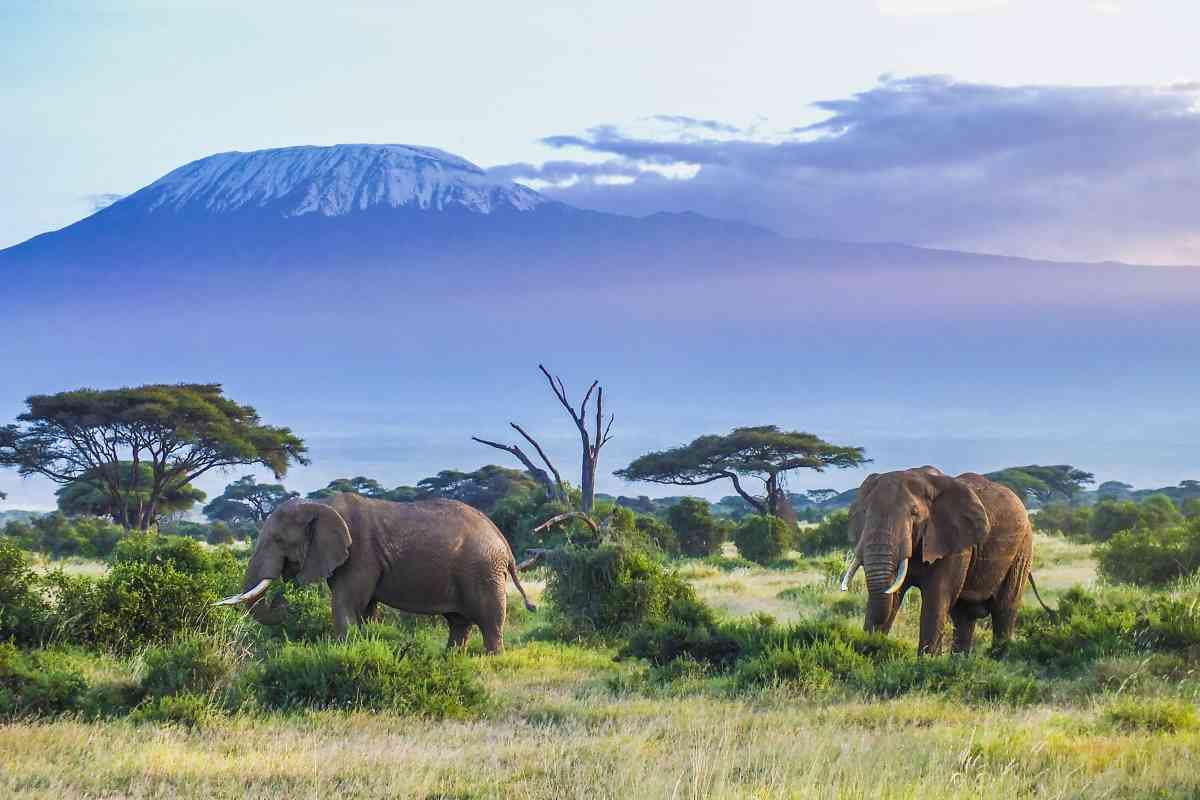
Amboseli National Park offers what is arguably the single most photogenic scene in all of Africa: herds of free-ranging African elephants moving across dusty plains with the snow-streaked summit of Mount Kilimanjaro — at 5,895 m, Africa's highest peak and located across the border in Tanzania — shimmering in the background. It is an image that has graced the covers of magazines, documentary films, and conservation campaigns the world over.
Amboseli's elephants are among the best-studied in the world, thanks to decades of research by the Amboseli Elephant Research Project, founded by Dr. Cynthia Moss. The project has followed individual elephant families for over 50 years, building one of the richest long-term wildlife datasets on the planet. This means that many of Amboseli's elephants are individually recognisable — guides can name them, explain their family histories, and tell you which matriarch leads which herd.
The park's swampy central basin — fed by underground water from Kilimanjaro's glaciers — supports vast concentrations of wildlife year-round, even in the dry season, and attracts both predators and prey in continuous dramatic proximity.
💡 KE Offers Pro Tip
Kilimanjaro's summit is most visible in the early morning, before cloud builds around the peak by mid-morning. Position yourself at Observation Hill at dawn for the quintessential Amboseli photograph. A clear view is not guaranteed, but January–February and June–October offer the best odds.
7
Old Town · Lamu County
Lamu Old Town UNESCO WHS
Location
Lamu Island
Founded
~14th century
Transport
No cars on island
Key Festival
Lamu Cultural Festival
Lamu Old Town is East Africa's oldest continuously inhabited settlement and one of the world's best-preserved examples of Swahili architecture. A UNESCO World Heritage Site since 2001, the town sits on Lamu Island off Kenya's northern coast — an island where there are no cars, no motor vehicles of any kind, and where the only transport is by foot, donkey, or wooden dhow. This absence of modernity is not a quirk — it is the very thing that has preserved the town's extraordinary character across six centuries.
The streets of Lamu Old Town are narrow enough to touch both walls simultaneously, lined with tall coral-stone houses whose elaborately carved wooden doors are works of art in their own right. The town's approximately 23 mosques, its traditional Swahili courtyard architecture, and its thriving dhow-building industry reflect the layered influences of Arab, Indian, Persian, and African cultures that converged here through Indian Ocean trade.
The annual Lamu Cultural Festival (held in November) is the highlight of the island's calendar — a week of dhow races, donkey races, Swahili poetry, henna artistry, and traditional cooking competitions that draw visitors from across Kenya and beyond.
💡 KE Offers Pro Tip
Fly into Lamu airport (LAU) from Nairobi's Wilson Airport — the flight takes about 90 minutes and offers spectacular views of the coast. Budget KSh 8,000–14,000 for a return ticket on domestic carriers. Once on the island, hire a dhow for a sunset sail through the mangroves — a uniquely Lamu experience for around KSh 2,000–4,000 per boat.
8
National Parks · Coast & Eastern Kenya
Tsavo National Parks
Entry (Citizen)
KSh 600/day
Entry (Non-Resident)
USD 52/day
Combined Area
~21,000 sq km
Known For
Red Elephants, Mzima
Tsavo East and Tsavo West together form the largest protected wildlife area in Kenya and one of the biggest in the world — approximately 21,000 sq km of rugged wilderness stretching from the foot of Kilimanjaro to the Galana River and the Yatta Plateau. This is Kenya unfiltered: vast, fierce, sometimes unforgiving, and breathtakingly beautiful.
Tsavo is famous for its red elephants — not a separate species, but the resident elephants who roll in the area's distinctive red volcanic dust, coating themselves in what appears to be crimson armour. The parks also host the legendary Mzima Springs in Tsavo West, an oasis of crystal-clear water (approximately 50 million gallons per day) bubbling up from underground lava channels, visible through an underwater observation chamber where hippos drift past like grey submarines.
For history enthusiasts, Tsavo is inseparable from the story of the Man-Eaters of Tsavo — two maneless lions who killed construction workers building the Uganda Railway in 1898. Their story was later adapted into the 1996 film The Ghost and the Darkness and remains one of the most chilling wildlife episodes in colonial history.
💡 KE Offers Pro Tip
Tsavo is Kenya's best-kept safari secret — far fewer visitors than the Mara, lower accommodation prices, and equally spectacular wildlife. Stay in Tsavo West for the Mzima Springs and Chyulu Hills scenery; cross into Tsavo East for the red-dust elephant herds along the Galana River.
9
Geological Wonder · Multiple Counties
The Great Rift Valley
Total Length
~6,000 km
Kenya Section
~800 km
Key Viewpoint
Mai Mahiu–Naivasha Road
Depth (avg Kenya)
600–900 m
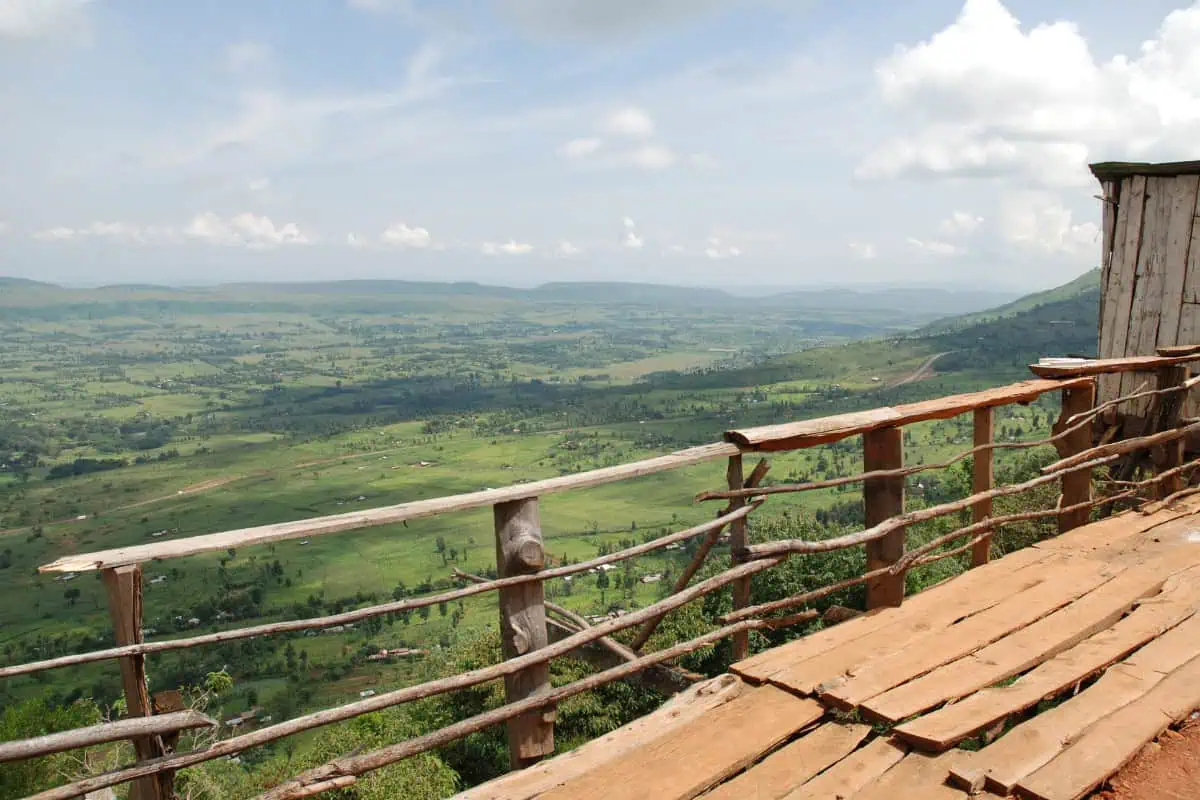
The Great Rift Valley is not a single landmark but a continental scar — a 6,000 km tectonic fracture that runs from the Afar Triangle in Ethiopia to Mozambique, and which has shaped the ecology, climate, geology, and human history of eastern Africa more profoundly than any other geological feature on Earth. In Kenya, the valley runs roughly 800 km from north to south, creating the dramatic escarpments, soda lakes, geothermal fields, and highland plateaux that define the country's interior landscape.
The most accessible viewpoint — and arguably the most dramatic — is the escarpment overlooking Lake Naivasha along the Mai Mahiu–Naivasha Road (the old Naivasha Road, not the expressway), where the land drops nearly 900 metres from the Kikuyu Escarpment to the valley floor in a single vertiginous sweep. On a clear morning, you can see Lake Naivasha glinting 60 km away, with the Aberdares rising beyond.
The Rift Valley's floor in Kenya is studded with a chain of lakes — Turkana, Baringo, Bogoria, Nakuru, Elementaita, Naivasha, and Magadi — each with its own distinct character, ecology, and wildlife. Kenya's Lake System in the Great Rift Valley — comprising Lakes Bogoria, Nakuru, Elementaita, and Naivasha — is a UNESCO World Heritage Site.
💡 KE Offers Pro Tip
Stop at the roadside curio markets on the escarpment — vendors sell excellent Maasai beadwork, soapstone carvings, and honey at prices far lower than Nairobi craft markets. A 30-minute stop here makes for one of the most memorable shopping experiences in Kenya.
10
Coastal Beach · Kwale County
Diani Beach
Length
~17 km
Best Time
Oct – Mar
Water Sport
Kite Surfing
Airport
Ukunda Airstrip
Consistently voted among the best beaches in Africa by World Travel Awards, Diani Beach stretches 17 km of powdery white sand along Kenya's south coast, protected by a fringing coral reef that keeps the Indian Ocean warm, turquoise, and remarkably calm. The reef also makes Diani a world-class diving and snorkelling destination — with visibility routinely exceeding 20 metres and an extraordinary diversity of coral, reef fish, and pelagic species.
Above the waterline, the beach is flanked by a continuous strip of forest inhabited by Angola colobus monkeys, whose black-and-white capes and extraordinary leaping ability make them a delight to watch from a beach bar or resort garden. The Colobus Conservation centre on Diani's main road is Africa's only colobus monkey sanctuary and rehabilitation facility — worth a morning visit.
Diani has evolved into Kenya's most sophisticated coastal resort destination, offering everything from barefoot beach bars and backpacker hostels (from around KSh 2,500/night) to ultra-luxury boutique hotels (from KSh 60,000/night) — all within a short ferry crossing from Mombasa's south coast.
💡 KE Offers Pro Tip
Avoid driving through Mombasa city to reach Diani. Instead, take the Likoni Ferry (free for pedestrians; approximately KSh 10 for motorbikes) and book accommodation on the southern side. The Likoni crossing at dawn — watching the Indian Ocean light up — is itself a memorable experience.
Planning Your Visit: Essential Kenya Travel Information
Visiting these landmarks requires some upfront planning, especially regarding entry fees, which are managed through the Kenya Wildlife Service (KWS) eCitizen portal for national parks. All park fees are payable via the eCitizen platform or M-Pesa — cash is increasingly not accepted at official gates.
For Kenyan citizens and residents, the discounted entry rates (quoted in KSh above) represent exceptional value — many of these parks remain undervisited by locals despite being world-class attractions on their doorstep. If you're planning a road trip across the country, consider our guide to Kenya travel guides for practical logistics including vehicle options. For those considering a self-drive safari, our automotive guide to 4WD vehicles in Kenya covers the most popular models and their performance on Kenyan roads.
Kenya's general entry requirements for foreign visitors are managed through the eTA Kenya portal, which replaced the visa-on-arrival system. Citizens of the East African Community (EAC) — Tanzania, Uganda, Rwanda, Burundi, South Sudan, DRC — enter Kenya without a visa; most other nationalities pay USD 30 for a single-entry eTA.
Frequently Asked Questions
What are the most iconic landmarks in Kenya outside Nairobi?
The most iconic landmarks in Kenya beyond Nairobi include the Maasai Mara National Reserve, Mount Kenya, Fort Jesus in Mombasa, Hell's Gate National Park, Lake Nakuru National Park, Amboseli National Park, Lamu Old Town, the Tsavo National Parks, the Great Rift Valley, and Diani Beach.
How much does it cost to enter Maasai Mara in KSh?
Kenyan citizens and residents pay KSh 8,550 per adult per day to enter Maasai Mara National Reserve. Foreign non-residents pay USD 200 per adult per day during peak season (July–October) and USD 80 during the low season. Fees are payable through the KWS eCitizen portal or M-Pesa at the gate.
How many UNESCO World Heritage Sites does Kenya have?
Kenya has seven UNESCO World Heritage Sites: Mount Kenya National Park and Natural Forest, Lamu Old Town, the Sacred Mijikenda Kaya Forests, Fort Jesus in Mombasa, Kenya's Lake System in the Great Rift Valley, the Kenya Great Rift Valley Lakes, and the recently inscribed Kenya Lake System. Three of these — Mount Kenya, Lamu Old Town, and Fort Jesus — feature directly in this guide.
What is the best time of year to visit Kenya's landmarks?
Kenya has two dry seasons that are generally best for wildlife viewing and travel: January–February and June–October. The Great Wildebeest Migration in the Maasai Mara peaks between July and October. The coast (Diani Beach, Mombasa) is best visited between October and March, when the southeast monsoon has passed. Mount Kenya is clearest in January–February and August–September.
Is it safe to travel around Kenya as a tourist?
Kenya's major tourist areas — Nairobi CBD, Maasai Mara, Amboseli, Diani Beach, Mombasa Old Town, Nakuru, and Naivasha — are generally safe for travellers when standard precautions are followed. The UK Foreign Commonwealth & Development Office and the US State Department both maintain current advisories at travel.state.gov and gov.uk. The northern and northeastern border regions require additional caution.
Can I visit Kenya's national parks without a tour company?
Yes — most of Kenya's national parks can be entered independently with a personal vehicle or hired car. You will need to pay park entry fees through the KWS eCitizen portal or at the gate via M-Pesa. A 4WD vehicle is strongly recommended for game drives, particularly in Maasai Mara, Tsavo, and Amboseli. For Mount Kenya, licensed guides are mandatory above 3,000 m altitude.
Kenya Is More Than a Safari
From the Portuguese walls of Fort Jesus to the Swahili alleyways of Lamu, from the geothermal fury of Hell's Gate to the serene flamingo-pink waters of Lake Nakuru — the Republic of Kenya rewards the curious traveller at every turn. Whether you're planning your first visit or rediscovering your own country, these ten landmarks are the essential starting points.