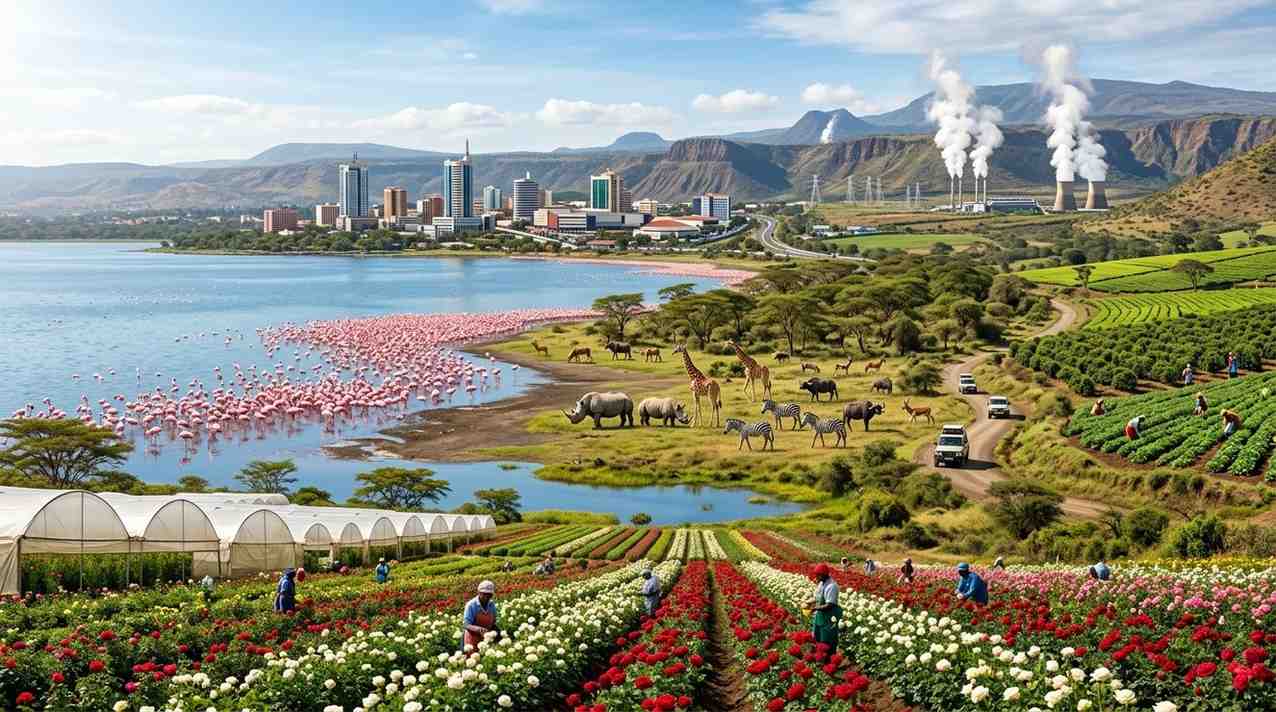
⚡ Nakuru County - Quick Overview
Nakuru County is Kenya's second-largest county economy, contributing KSh 785.75 billion (5.7%) to national GDP in 2023. It is home to Lake Nakuru National Park, Hell's Gate National Park, Egerton and Kabarak universities, and offers premier investment opportunities in agribusiness, tourism, floriculture, and manufacturing along the Nairobi–Western Kenya corridor.
Introduction: The Pride of the Rift Valley
Nakuru County sits at the heart of Kenya's Great Rift Valley, a land of dramatic escarpments, soda lakes flushed pink with flamingos, and a civic energy that has made it one of sub-Saharan Africa's most compelling counties. Named after the Maasai word Nakuru — meaning "dusty place" — the county has long since shed that humble origin to become a dust-free symbol of growth, ambition, and natural beauty.
Covering approximately 7,509 km² and home to more than 2.2 million people, Nakuru County sits roughly 153 km northwest of Nairobi along the busy A104 highway, placing it on one of Kenya's most strategic transport corridors. Its elevation — ranging from 1,500 m to over 3,000 m above sea level — blesses the county with a cool, temperate climate that supports diverse agriculture and makes it a year-round tourism destination.
In 2021, Nakuru became Kenya's fourth city, a landmark elevation that unlocked new infrastructure investments, foreign direct interest, and a stronger mandate for urban planning. Today, the landmarks that define Kenya include many in this county, from Lake Nakuru's pink horizons to Hell's Gate's towering cliffs and the geological marvel of Menengai Crater.
This guide breaks down everything you need to know about Nakuru County — its economy, tourism drawcards, educational landscape, and the investment opportunities that are making international eyes turn toward the Rift Valley floor.
Economy: Kenya's Second-Largest County GDP
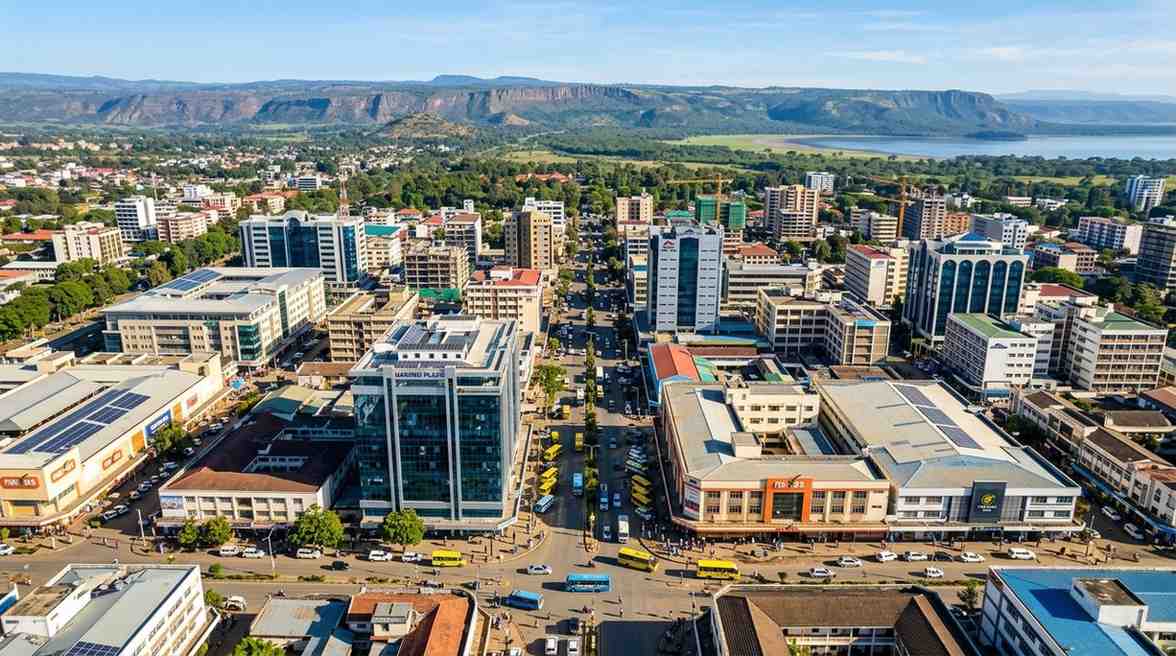
Nakuru County's economic ascent has been nothing short of remarkable. In 2023, the Kenya National Bureau of Statistics (KNBS) Gross County Product report confirmed that Nakuru had overtaken Kiambu to become Kenya's second-largest county economy, posting a GDP of KSh 785.75 billion — a contribution of 5.7% to national GDP, up from 4.9% in 2019. The county's economy is anchored on four broad pillars: agriculture, tourism, manufacturing, and services.
Agriculture: The Backbone of Prosperity
Agriculture remains Nakuru County's most significant sector. The county is a leading producer of maize, wheat, potatoes, pyrethrum, tea, and dairy — products that feed both local markets and export pipelines. The Rift Valley's fertile volcanic soils and reliable rainfall make farming almost uniquely productive here. Floriculture — the growing of flowers for export — has emerged as a high-value niche, particularly around Lake Naivasha where cut-flower farms supply European markets year-round. The county government's agriculture division actively supports expanded irrigation, agritech adoption, and cooperative development to boost farmer incomes.
Revenue Collection: A County That Pays Its Way
Revenue performance is a strong indicator of economic health — and Nakuru County ranks impressively. During Q1 of FY 2024/25, the county collected close to KSh 700 million in Own Source Revenue, placing it fourth nationally. This was made possible by automating revenue collection, eliminating cash leakages, and broadening the tax net through digital payment systems. Such fiscal discipline has enabled greater reinvestment in infrastructure, healthcare, and education — creating a virtuous cycle of development.
Manufacturing and Industry
Nakuru hosts a diverse manufacturing base — from food processing and textile factories to chemical and pharmaceutical production. The county government has been developing County Aggregation and Industrial Parks (with KSh 250 million in initial allocations), where agro-processing, packaging, and light manufacturing can be co-located to reduce logistics costs and create employment. The presence of affordable Kenya Electricity Generating Company (KenGen) geothermal power from the Olkaria fields in Naivasha gives Nakuru manufacturers a significant energy-cost advantage over peers in Nairobi.
Services and the City Economy
Nakuru's elevation to city status in 2021 has supercharged its services sector. Banking, insurance, retail, hospitality, education, and health services are all expanding rapidly. The city acts as the commercial hub for the broader Rift Valley region — serving Baringo, Laikipia, Kericho, Narok, and parts of Trans-Nzoia counties. The Standard Gauge Railway (SGR) connection through Naivasha further integrates Nakuru into national trade networks, reducing freight costs and transit times.
"Experts attribute Nakuru's economic growth to sustained investments in agriculture, tourism, and infrastructure — a diversified model that has made it resilient where single-sector counties have stalled."
Tourism: Africa's Most Scenic Safari Country
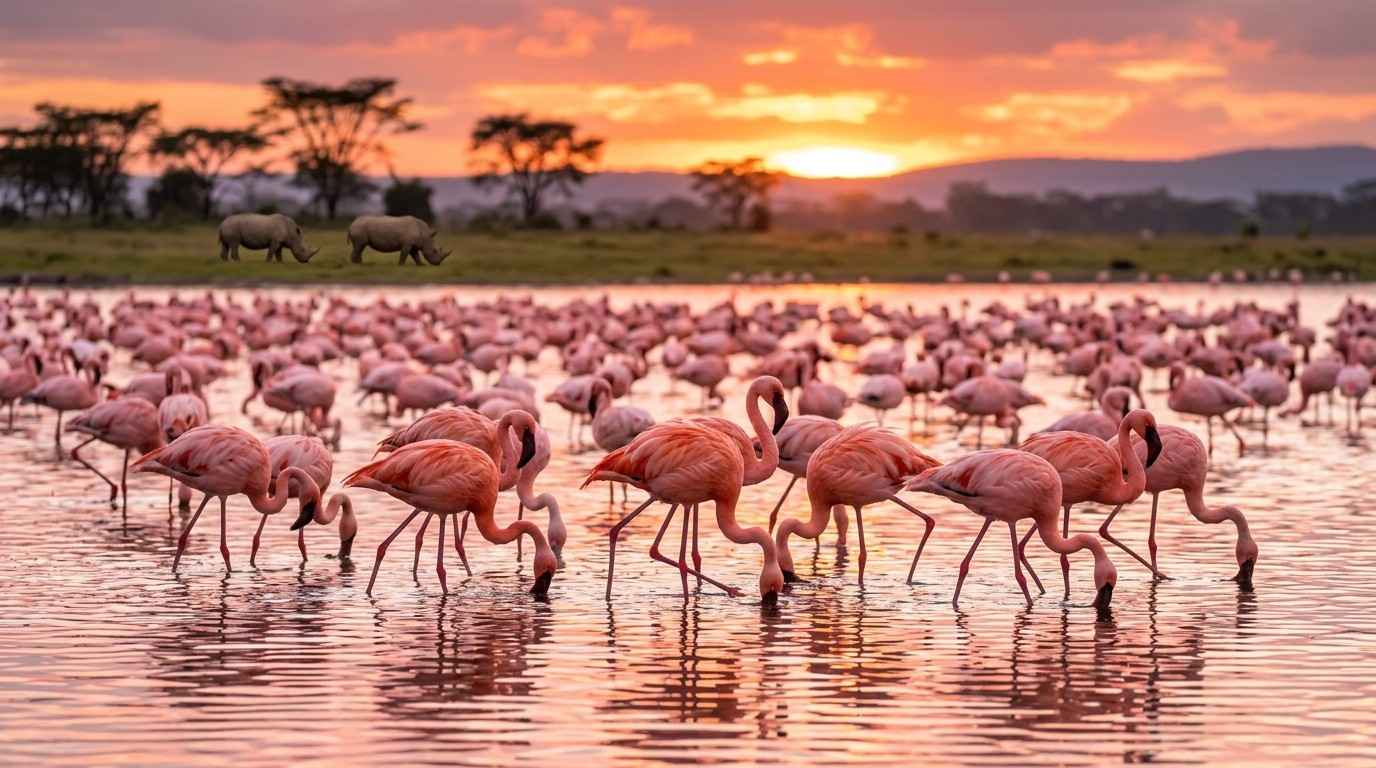
If Nakuru County has a single global claim to fame, it is the Lake Nakuru National Park — a UNESCO-designated Ramsar Wetland site and one of East Africa's most visited wildlife reserves. The park sits within a fenced sanctuary of 188 km², encompassing the alkaline Lake Nakuru, acacia forests, open grasslands, and rocky escarpments.
Lake Nakuru National Park: A Living Masterpiece
The park's centrepiece, Lake Nakuru, is a shallow, soda-rich basin that has historically supported spectacular populations of Greater and Lesser flamingos. When conditions are ideal, hundreds of thousands of these birds paint the lakeshore a vivid pink — one of the most photographed natural spectacles on the African continent. The best time to see flamingos in Lake Nakuru is during the dry months of July–September and December–February, though fluctuations in algae levels mean populations are dynamic.
Beyond flamingos, the park records over 400 bird species — including pelicans, cormorants, African fish eagles, ostriches, and raptors — making it a premier birding destination even when flamingo numbers are low. The park also hosts both black and white rhinos within its secure fenced sanctuary, making it one of the best places in Kenya to see these critically endangered giants at close range.
🦩 Lake Nakuru National Park — Key Wildlife Highlights
- Greater & Lesser flamingos (hundreds of thousands when conditions are right)
- Black rhino and white rhino — one of Kenya's best rhino sanctuaries
- Endangered Rothschild's giraffe
- Lions, leopards, and African wild dogs
- 400+ recorded bird species
- Zebras, buffalos, warthogs, and baboons
- Scenic viewpoints: Baboon Cliff, Lion Hill, Out of Africa
- Makalia Waterfall — especially dramatic after rains
Hell's Gate National Park: Adventure on the Rift Valley Floor
Located near Naivasha town, Hell's Gate National Park is unlike any other park in Kenya — it allows cycling, hiking, and walking among wildlife without a vehicle. Its dramatic towering cliffs, gorges, geothermal steam vents, and hot springs create an almost otherworldly landscape that inspired the setting for Disney's The Lion King. Rock climbers, hikers, and photographers flock here in significant numbers. Entry fees are managed by the Kenya Wildlife Service (KWS), and the park is accessible from Naivasha town in under 30 minutes.
Menengai Crater: The Sleeping Giant
Rising above Nakuru City is the Menengai Crater, one of the world's largest volcanic calderas, stretching approximately 12 km in diameter. Panoramic views from the crater rim take in the Rift Valley floor, Lake Nakuru, and on clear days, Mount Longonot far to the south. The site has both geological and historical significance — it was the scene of a major Maasai battle in the early 19th century. Hiking trails, picnic spots, and guided tours make it a popular day excursion from Nakuru City.
Lake Naivasha: The Freshwater Jewel
Lake Naivasha lies in the southern part of Nakuru County and offers a completely different experience from Lake Nakuru. As a freshwater lake, it supports hippos, diverse fish species, and a rich birdlife corridor. Boat rides, horseback riding, and visits to the famous Crescent Island Game Sanctuary — where you can walk among zebras and giraffes — are the main draws. The adjacent town of Naivasha is also Kenya's floriculture capital, with major flower farms lining the lake's shores.
Other Attractions Worth Knowing
The Hyrax Hill Prehistoric Site near Nakuru City is a nationally protected archaeological monument, offering insights into pre-colonial East African settlements. Lake Elementaita, a smaller soda lake between Nakuru and Naivasha, is a UNESCO World Heritage Site (as part of the Kenya Rift Valley Lakes cluster) known for its flamingo colonies and pelican roosts — and its shore is flanked by boutique eco-lodges ideal for a quiet retreat.
Education: Universities, Colleges & TVET
Nakuru County punches well above its weight in the education sector, hosting a range of institutions from public universities and technical colleges to well-regarded secondary schools and Early Childhood Development Education (ECDE) centres managed by the county government.
Universities and Higher Education
The county's flagship universities attract students from across Kenya and the East African region:
- Egerton University (Njoro Campus) — One of Kenya's oldest public universities, Egerton has been central to agricultural research and education since 1939. Its Njoro campus, located about 25 km from Nakuru City, is particularly well-regarded for agricultural sciences, education, and environmental studies. It is affiliated with the University of Nairobi consortium for postgraduate programs.
- Kabarak University — A private chartered university established by former President Daniel arap Moi, Kabarak offers programmes in law, medicine, business, education, and theology. It is one of the most recognised private universities in Kenya, known for its discipline and academic rigour.
- Kenya Medical Training College (KMTC) Nakuru — A key feeder institution for Kenya's healthcare sector, KMTC Nakuru trains clinical officers, nurses, medical laboratory technicians, and health records staff.
Technical and Vocational Education (TVET)
The county government has invested heavily in Vocational Training Centres (VTCs) and TVET institutions, equipping young Kenyans with market-ready skills in mechanics, construction, IT, hospitality, and garment manufacture. Notable institutions include:
- Rift Valley Institute of Science and Technology (RVIST) — Established in 1979 and located about 10 km from Nakuru City, RVIST offers diplomas and certificates in engineering, business, and applied sciences.
- Nakuru Training Institute (NTI) — A TIVET institute founded in 2002, with a strong focus on community transformation through skills training.
- Adept College of Professional Studies — A well-established business and professional studies college in Nakuru Town.
Primary and Secondary Education
Nakuru County hosts some of Kenya's most competitive secondary schools, including Nakuru High School, Menengai High School, and Bahati Girls High School. The county government funds the ECDE programme, which now covers hundreds of early childhood centres across the county's sub-counties. Under Governor Susan Kihika's administration, education spending has grown by 35% year-on-year in the first half of FY 2024/25, signalling continued commitment to human capital development.
📚 Nakuru County Education Fast Facts
- Major public university: Egerton University, Njoro Campus
- Major private university: Kabarak University
- KMTC Nakuru trains Kenya's future healthcare workers
- RVIST: diploma-level TVET since 1979
- Education revenue grew 35% in H1 FY 2024/25
- County-managed ECDE centres across all sub-counties
Investment: Why Nakuru Is Investors' Top Pick
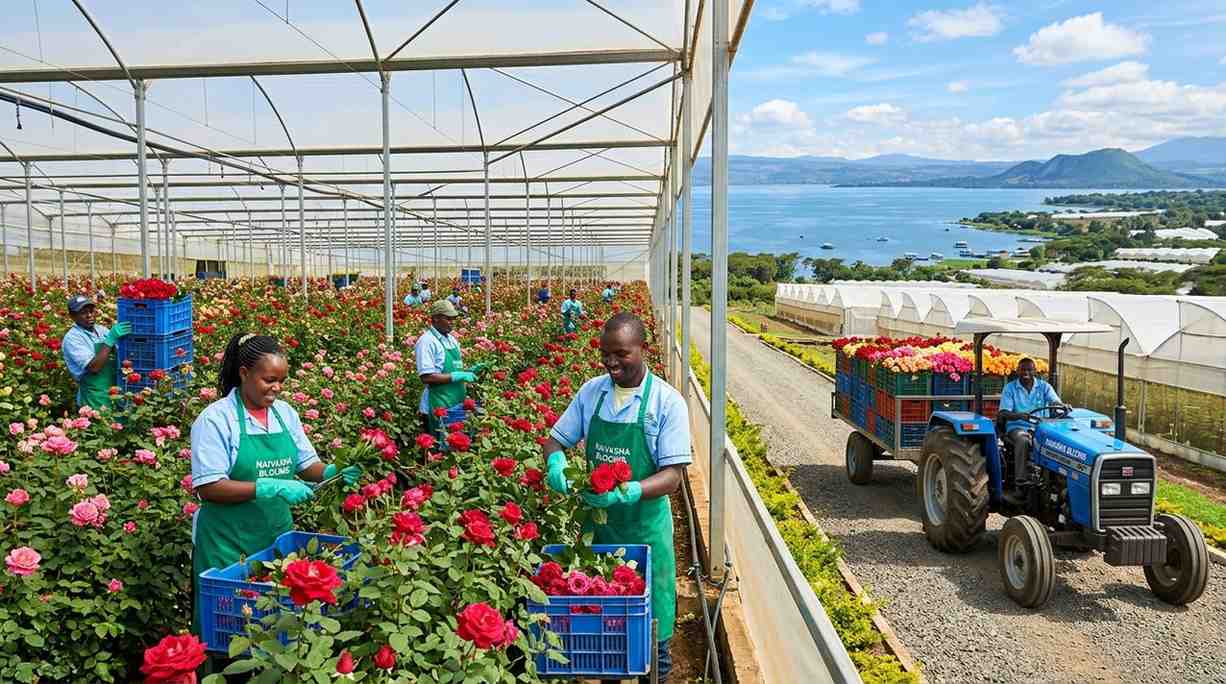
Nakuru County is no longer a hidden gem — it is an openly declared investment hotspot. In December 2023, Governor Susan Kihika hosted a high-profile County Investment Forum at Sawela Lodge in Naivasha, attended by the United States Ambassador H.E. Meg Whitman. The forum showcased opportunities across dairy, pyrethrum, potato, floriculture, poultry, apparel, health, IT, education, and hospitality sectors — and generated significant investor interest from both local and international players.
Strategic Location: The Corridor Advantage
Nakuru is positioned along the A104 Nairobi–Kisumu–Kampala highway, the busiest road corridor in East Africa. Every truck transporting goods between Nairobi, western Kenya, Uganda, Rwanda, Burundi, and the DRC passes through Nakuru County. The county is also connected to the Standard Gauge Railway (SGR) through the Naivasha Inland Container Depot — reducing the cost of moving containerised goods from Mombasa Port by approximately 40% compared to road transport alone.
Key Investment Sectors
| Sector | Opportunity | Status |
|---|---|---|
| Agribusiness | Dairy processing, potato value-addition, pyrethrum refining, maize milling | High Growth |
| Floriculture | Cut-flower export farms around Lake Naivasha for European markets | Established |
| Tourism & Hospitality | Eco-lodges, boutique hotels, adventure tourism operations | High Growth |
| Real Estate | Residential housing, commercial space, student accommodation near universities | Emerging |
| Manufacturing | County Industrial Parks: food processing, textiles, packaging | Active |
| Renewable Energy | Geothermal energy from Olkaria, solar park development | Established |
| ICT & BPO | Digital hubs, agritech platforms, business process outsourcing | Emerging |
Business-Friendly County Government
Governor Kihika's administration has streamlined business registration by unifying all licences into a single business permit, eliminating the multi-agency bureaucracy that previously cost businesses time and money. The county has also set up a KSh 50 million Trade and Cooperative Fund and a KSh 250 million County Aggregation Industrial Parks programme to support manufacturing growth. For SMEs and startups, a Wezesha Fund has been launched to provide working capital to entrepreneurs in ward-level markets.
Affordable Geothermal Energy: A Hidden Competitive Advantage
Perhaps the most underappreciated advantage Nakuru County offers investors is access to cheap, clean geothermal electricity from the Olkaria Geothermal Power Station — one of Africa's largest. KenGen's Olkaria complex, located in Naivasha sub-county, generates over 800 MW of geothermal power, providing manufacturers and industrial users in the county with energy costs significantly below the national average. For energy-intensive industries such as food processing, textiles, and cold-chain logistics, this is a decisive cost advantage.
City Status and Infrastructure Boom
Nakuru City status (gazetted in 2021) has triggered an infrastructure investment wave. New roads, upgraded water systems, improved sewerage, enhanced street lighting, and modern market infrastructure are all under active development. The digital economy is also growing, with the county investing in ICT connectivity and smart city initiatives. For property investors, the ongoing urbanisation wave in Nakuru makes residential and commercial real estate a compelling long-term play.
"Nakuru's strategic location, affordable geothermal energy, fertile soils, educated workforce, and supportive county government make it one of Kenya's most compelling investment destinations for the 2020s."
How to Start Investing in Nakuru
Interested investors should engage directly with the Nakuru County Government's trade and investment office. The county offers investment incentives, land allocation assistance, and matchmaking with local cooperative societies and business networks. The Kenya Investment Authority (KenInvest) at national level also provides one-stop licensing support for foreign investors entering sectors like manufacturing, agriculture, and tourism.
For guidance on running a business online in Kenya — including setting up a website for your Nakuru-based venture — check out KE Offers' comprehensive web hosting guides tailored for Kenyan businesses, or read the detailed HostPinnacle review for an affordable and reliable hosting option for new investors.
Frequently Asked Questions About Nakuru County
Conclusion: Nakuru County's Time Has Come
Nakuru County has evolved from a modest Rift Valley stopover into one of Kenya's most dynamic regions. Its economic story — powered by agriculture, tourism, manufacturing, and services — is one of the most impressive growth narratives in devolved Kenya. Its tourism offering, anchored by Lake Nakuru National Park but enriched by Hell's Gate, Menengai, Naivasha, and Elementaita, is diverse enough to satisfy the wildlife enthusiast, the adventure traveller, and the leisure seeker alike.
In education, Nakuru is building the human capital that will sustain long-term growth — with Egerton and Kabarak universities producing graduates who stay and build businesses locally. And in investment, the convergence of city status, SGR connectivity, cheap geothermal power, fertile soils, and a reform-minded county government has created conditions that are rare even by Nairobi standards.
Whether you are considering a safari itinerary, a business venture, a student placement, or a long-term investment, Nakuru County deserves a prominent place on your radar. The Rift Valley's crown jewel is no longer Kenya's best-kept secret — and those who recognise this early are best placed to benefit.
For more deep-dive guides on Kenya's counties, investment opportunities, and lifestyle picks, browse all guides on KE Offers — or explore our breakdown of Homa Bay County's hidden gems and Kenya's defining landmarks beyond Nairobi.