Overview
Laikipia County is one of Kenya's best investment destinations. Agricultural land starts from KSh 950,000 per acre, Nanyuki plots average KSh 5.2 million, and world-class conservancies like Ol Pejeta generate millions in annual tourism revenue — making the county a strong play across three asset classes.
Why Laikipia County?
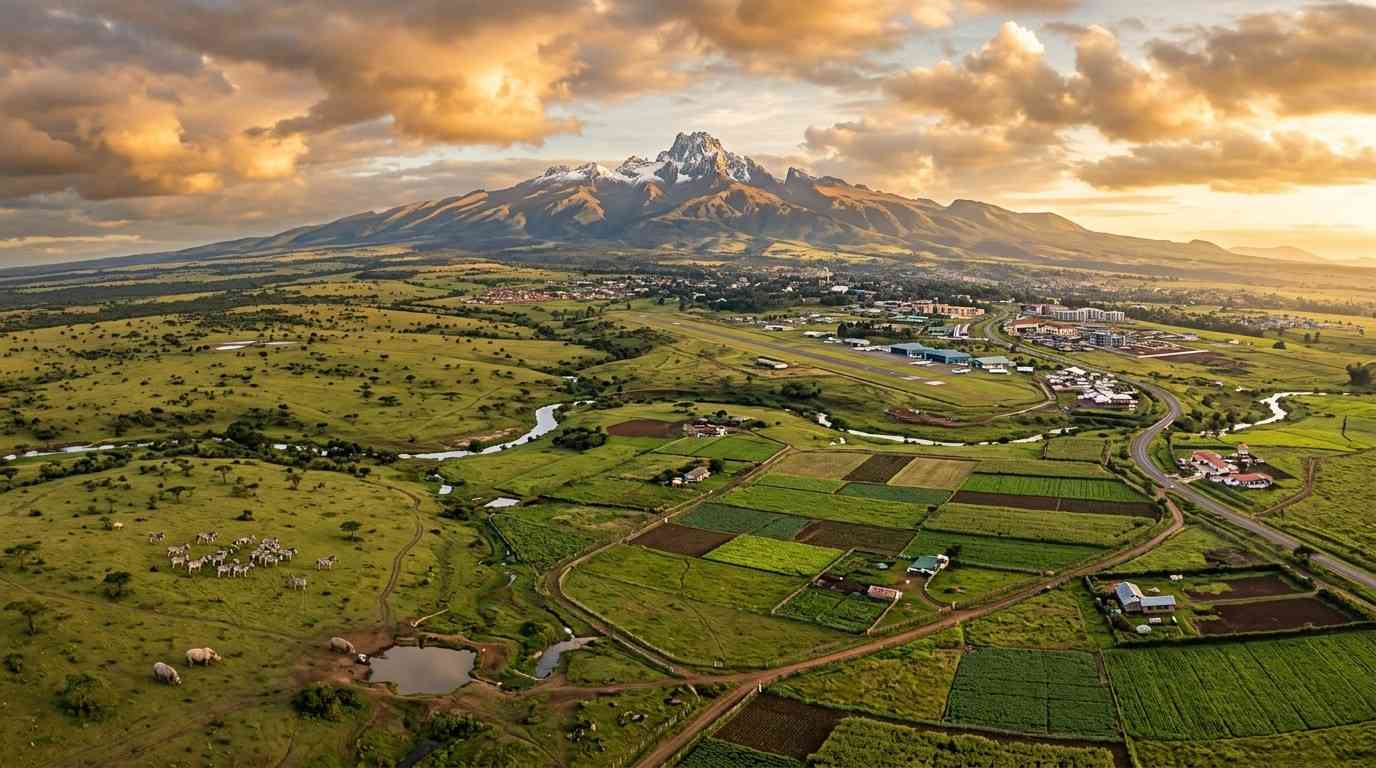
Laikipia County sits on one of East Africa's most productive plateaux — a vast, cool highland north of Mount Kenya that borders agricultural giants Nyeri and Meru to the south, and stretches toward the arid rangelands of Baringo and Isiolo to the north. For decades it was Kenya's best-kept investment secret. That era is ending fast.
Skyrocketing land prices in Nairobi — where prime plots now average over KSh 189 million per acre according to the 2024 HassConsult Land Price Index — have sent capital flooding out of the capital and into counties like Laikipia, where the fundamentals are sound, the scenery is extraordinary, and the growth story is still in its opening chapter.
This guide breaks down the three pillars of the Laikipia investment thesis: agriculture, wildlife tourism, and real estate. We also detail the infrastructure upgrades accelerating returns, the risks you must price in, and the towns where smart money is currently landing.
(Ngobit, Laikipia East)
(2025 market listings)
Laikipia plateau
Understanding Laikipia County
Laikipia is one of Kenya's 47 counties and covers roughly 9,500 km² of the central Kenyan plateau. The county has four key urban centres: Nanyuki (the largest, serving as the de-facto economic capital), Nyahururu, Rumuruti, and Kinamba. Each town offers a different investment proposition and risk-return profile.
The climate is cool and temperate year-round thanks to altitude, making it hospitable to diverse crops, livestock, and high-value tourism lodges. The county borders give it privileged access to multiple markets: Nairobi is roughly three hours south by road, while the Kenol–Sagana–Marua Highway upgrade — one of Kenya's largest current infrastructure projects — is set to slash travel times once completed.
The county's main economic pillars are tourism and agriculture, with ranching and greenhouse horticulture being particularly well-suited to the terrain. But a wave of new infrastructure, rural electrification, and devolved government investment is broadening that economic base considerably.
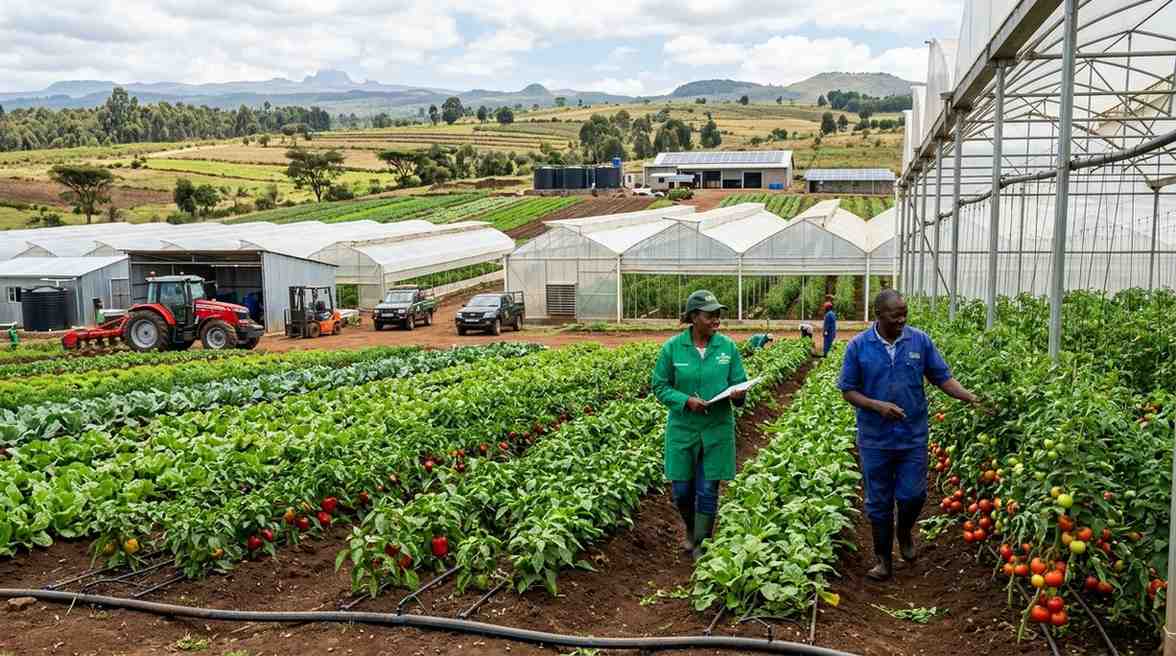
The Laikipia plateau — 9,500 km² of productive highland straddling the equator north of Mount Kenya.
1. Agriculture: Fertile Ground for Investors
Laikipia County's agricultural potential is substantial and still largely unleveraged. The highland zones around Nyahururu and southern Nanyuki receive reliable rainfall, support rich volcanic soils, and enjoy proximity to both Nairobi markets and the produce-hungry Meru–Nyeri corridor.
Key Agricultural Opportunities
Horticulture and floriculture represent the highest-value use of Laikipia's fertile land. The county's cool temperatures and consistent moisture create ideal growing conditions for export-grade flowers, French beans, snow peas, and strawberries. Investors willing to install irrigation infrastructure in dryer northern zones can access land at considerably lower prices than in traditional flower-farming hubs like Naivasha.
Livestock farming dominates Laikipia East, where the main economic activity remains cattle ranching and pastoralism. However, the opening of the Ngobit–Withare–Lamuria tarmac road — launched by President Ruto in January 2024 — has transformed market access for previously isolated ranches, creating a new logic for commercial beef and dairy operations in the region.
Dairy farming is particularly strong around Nyahururu, where investors are establishing milk-processing facilities to capture value beyond the farmgate. The Kenya Dairy Board reports Laikipia as a growing contributor to national milk supply, and cold-chain infrastructure improvements are supporting that growth.
Macadamia and avocado farming are emerging as high-value perennial crops suited to parts of the county. Global demand for both continues to grow, and Laikipia's proximity to export logistics via Nairobi gives local farmers a competitive edge over more remote growing regions.
Target Greenhouse Horticulture in Nyahururu
Nyahururu's climate is among the most suitable in Kenya for greenhouse tomatoes, capsicums, and cucumbers. Greenhouse installations cost KSh 350,000–600,000 per unit and can generate returns of 30–45% annually when linked directly to supermarket or export offtake contracts. The town's cooler altitude also lowers pesticide costs significantly versus lowland farms.
Land Prices: Agriculture Zones
| Zone | Land Type | Price Range (KSh/acre) | Best Use |
|---|---|---|---|
| Ngobit, Laikipia East | Near Wambugu Apple Farm Zone | 950,000 – 1,200,000 | Ranching, mixed farming |
| Nyahururu Environs | Highland agricultural | 1,500,000 – 3,000,000 | Dairy, horticulture, milk processing |
| Nanyuki Peri-urban | Mixed use / irrigation potential | 2,500,000 – 6,000,000 | High-value horticulture, hospitality |
| Rumuruti | Dryland / agropastoral | 400,000 – 800,000 | Ranching, game farming, solar |
2. Tourism: The Conservancy Economy
If there is a single sector that defines Laikipia County's global reputation, it is wildlife tourism. The Laikipia plateau is home to one of Africa's most successful models of private conservation, where farmers, ranchers, and local communities have partnered to transform cattle land into world-class safari destinations.
Conservancies including Ol Pejeta, Lewa Wildlife Conservancy, Borana, Loisaba, and Il Ngwesi now collectively cover an estimated 800,000 hectares of the plateau. The ecosystem holds more endangered mammal species than any other area in East Africa — including the Maasai Mara and Serengeti — and is the only area in Kenya where wildlife numbers have increased over the last 25 years.
Ol Pejeta: The Gold Standard
Ol Pejeta Conservancy, spanning 90,000 acres on the Laikipia plateau near Nanyuki, is the largest Black Rhino sanctuary in East Africa and one of only two African conservancies on the IUCN Green List of Protected and Conserved Areas. Critically, it is also financially extraordinary: the conservancy covers nearly all of its US$ 6 million annual operating budget through commercially generated safari revenues — a model that has attracted global investor and donor attention.
Ol Pejeta is also home to Najin and Fatu, the last two northern white rhinos on Earth, making it a focal point for international conservation science and media attention that feeds directly into premium lodge bookings.
The Economics of Laikipia Safaris
High-end conservancy lodges across Laikipia typically charge USD 600–1,400 per person per night, all-inclusive. Of that, USD 80–150 per night goes directly to conservancy fees, and a further USD 5–30 per night to community development levies. For lodge operators and land-owning partners, the revenue structure is highly favourable — and the international demand for authentic, exclusive, low-density safari experiences shows no signs of softening.
Community-based tourism is also growing rapidly. Il Ngwesi Lodge in northern Laikipia is owned and run entirely by the Il Ngwesi Maasai community, and has become an internationally cited model for community enterprise. The Northern Rangelands Trust, coordinating 43 community conservancies across northern Kenya, channels millions of dollars annually in tourism and grant revenue into anti-poaching, education, and livelihoods.
Tourism Investment Opportunities
| Opportunity | Investment Level | Revenue Model | Risk Level |
|---|---|---|---|
| Luxury tented camp / eco-lodge | KSh 15M–100M+ | Bed night fees, park fees, F&B | Medium–High |
| Community conservancy partnership | KSh 2M–10M | Revenue share from wildlife fees | Medium |
| Mid-range lodge / camp (Nanyuki) | KSh 5M–25M | Room rates, conference facilities | Low–Medium |
| Airstrip / charter aviation | KSh 8M–30M | Charter fees, landing fees | Medium |
| Adventure / agri-tourism farm stays | KSh 1.5M–6M | Nightly rates, experience packages | Low |
3. Real Estate: Nanyuki Leads, Others Follow
Laikipia's real estate market is bifurcated between the developed, liquid market in Nanyuki and the earlier-stage, higher-upside markets in Nyahururu, Rumuruti, and the newly road-accessed zones of Laikipia East.
Nanyuki: The Prime Market
Nanyuki is the economic capital of Laikipia County and the most developed property market. There are currently 69 officially listed plots for sale, with an average price of KSh 5.2 million per plot. Entry-level parcels begin at KSh 225,000 while premium plots near conservancy borders and the town centre reach KSh 85 million — reflecting the full spectrum of the Nanyuki land market.
The town benefits from several institutional anchors that sustain property demand: a significant British Army training base at Nanyuki Show Grounds, Kenya's main Air Force airfield, and a growing private school and healthcare sector serving the expatriate and conservation communities. These institutions create consistent rental demand that underpins residential and commercial property values.
The ongoing KSh 3 billion rehabilitation of the 240km Nairobi–Nanyuki railway line — commenced in January 2025 in three phases — is expected to be a material price catalyst when complete, dramatically improving connectivity to Nairobi.
Nyahururu: The Emerging Hotspot
Nyahururu — a highland town of nearly 50,000 people with a projected annual growth rate of 2.5% — is the county's most interesting emerging real estate play. Post-pandemic, the town has seen a convergence of shifting investment patterns and real estate affordability that is attracting developers and individual buyers priced out of Nairobi.
Nyahururu offers significantly lower land entry costs than Nanyuki, a cooler, healthy climate attractive to remote workers and retirees, and the famous Thomson's Falls as a tourism anchor. The town's hospitality and conference sector is growing alongside its residential market.
Infrastructure Catalysts Driving Appreciation
The following projects are currently the most significant price catalysts in the Laikipia property market:
| Project | Budget | Status (2025) | Impact |
|---|---|---|---|
| Nairobi–Nanyuki railway rehabilitation | KSh 3 billion | Started Jan 2025 | Transforms Nanyuki connectivity |
| Kenol–Sagana–Marua Highway (dual carriageway) | KSh 9.15 billion | Near completion | Opens northern Kenya corridor |
| Laikipia infrastructure bond (10 smart towns) | KSh 1.16 billion | Active — Karuga first recipient | Urban amenity uplift across county |
| Ngobit–Withare–Lamuria tarmac road | Completed | Opened Jan 2024 | Unlocks Laikipia East land market |
| Rural electrification (REREC) | KSh 21 million | Completed Apr 2025 | Enables agri-processing businesses |
Karuga Smart Town: The Blueprint for Laikipia's Urban Future
The county government allocated KSh 96 million to Karuga in Laikipia West as its first Smart Town recipient, funding 1.2km of bitumen-standard roads, street lighting, 4.4km of footpaths, and drainage systems. Nine more towns follow under the same bond programme — early land positions in these towns represent the highest-risk, highest-reward bets in the county.
Overall Investment Verdict: Pros & Cons
✓ Strengths
- Multiple income streams: tourism, agriculture, and rentals can coexist on a single parcel
- Significant infrastructure investment (KSh 13+ billion in active projects)
- Nanyuki land prices still a fraction of Nairobi equivalents
- World-class conservation ecosystem draws premium international visitors
- Cool, temperate climate attractive to retirees and remote workers
- British Army and Air Force presence sustains consistent rental demand
- Entry-level agricultural land from KSh 950,000/acre
△ Risks to Consider
- Laikipia East remains dryland — irrigation investment required for commercial cropping
- Human–wildlife conflict is a real operational risk for farms near conservancy borders
- Northern zones have historically experienced intercommunal tension during drought
- Railway and highway projects face completion delays that could slow price appreciation
- Premium lodge returns depend on international travel demand (FX risk)
- Title deed due diligence is critical — some northern parcels have complex ownership histories
How to Start Investing in Laikipia County
Step 1: Clarify Your Investment Objective
Laikipia works differently depending on your horizon and capital size. A short-term speculator should target the newly tarmacked road corridors in Laikipia East, where land prices have yet to reflect the new connectivity. A long-term income investor should look at smallholder agricultural plots near Nyahururu or residential developments near Nanyuki town. A high-capital investor should model eco-lodge or conservancy partnership opportunities.
Step 2: Conduct Title Due Diligence
Before any land purchase in Laikipia County, engage a licensed advocate to conduct a search at the relevant Land Registry — either at the Nanyuki or Nyahururu offices. Confirm the title type (freehold, leasehold, or community land), check for any caveats or charges, and verify the land's zoning designation under the county's spatial plan. This step is non-negotiable given the complex historical land tenure in parts of the county.
Step 3: Engage Local Real Estate Professionals
The Laikipia market has a number of established agents who can provide current market comparables and negotiate access. For web hosting of your property listings or investment portfolio business, Kenyan investors should consider reliable local providers — KE Offers has reviewed options including HostPinnacle, which offers competitive hosting plans for property and investment websites. For broader options, the KE Offers web hosting guide provides a full market comparison.
Step 4: Visit Before You Buy
Laikipia is a large county and microclimate, soil quality, and road access vary significantly between sub-regions. A site visit — ideally during both a dry and a wet season — is essential to assess the actual condition of a parcel. The best time to visit Laikipia for both wildlife and farm assessment is July to October, the cool dry season.
Step 5: Factor in the Full Cost of Ownership
Land rates in Laikipia County are currently low relative to urban counties, but investors should budget for fencing (security and livestock control are essential near conservancy borders), water access (borehole drilling costs KSh 300,000–800,000 depending on depth), and road access improvement where applicable. Agricultural investors also need to model extension services and off-take arrangements before committing capital.
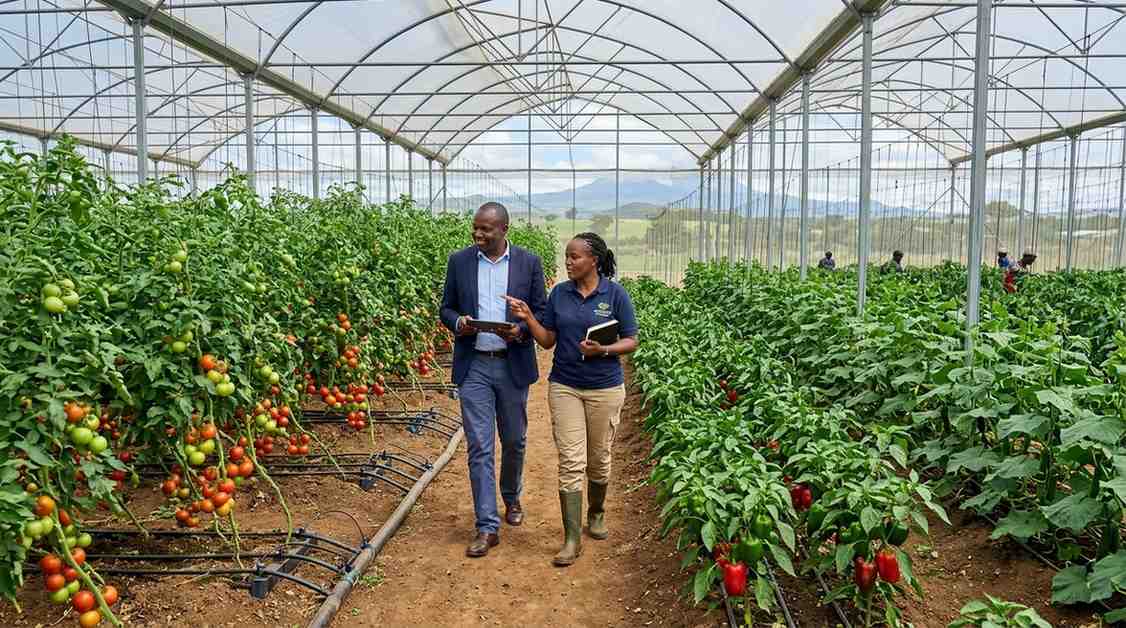
Greenhouse horticulture is a proven high-return use of Laikipia's cool highland soils, particularly around Nyahururu and southern Nanyuki.
Town-by-Town Investment Comparison
| Town | Best For | Entry Land Price | Liquidity | Upside Rating |
|---|---|---|---|---|
| Nanyuki | Residential, commercial, lodge | KSh 225K – 85M/plot | High | ★★★★☆ |
| Nyahururu | Agriculture, emerging residential | From KSh 1.5M/acre | Medium | ★★★★★ |
| Ngobit / Laikipia East | Speculative land, ranching | From KSh 950K/acre | Low–Medium | ★★★★☆ |
| Rumuruti | Dryland ranching, smart town play | From KSh 400K/acre | Low | ★★★☆☆ |
| Kinamba | Early-stage urban positioning | Below market average | Low | ★★★☆☆ |
Related Reading on KE Offers
For investors exploring the broader Kenyan opportunity landscape, the KE Offers editorial team has produced several relevant guides:
- Homa Bay County: Hidden Gems & Everything You Need to Know — a deep dive into another emerging county opportunity.
- 10 Landmarks That Define the Republic of Kenya Beyond Nairobi — context on Kenya's broader tourism geography.
- Best Web Hosting in Kenya — for investors who need to launch a property or agri-business website.
- HostPinnacle Review — our in-depth look at one of Kenya's leading web hosting providers.
Frequently Asked Questions
Is Laikipia County a good place to invest in 2025?
Yes, across multiple asset classes. Agricultural land starts from KSh 950,000 per acre in newly opened zones, Nanyuki real estate is appreciating steadily on the back of major infrastructure investment, and the conservancy tourism economy continues to generate substantial revenues. The key is matching your investment type to the right sub-region and having a clear exit or income strategy.
What is the average land price in Nanyuki?
As of 2025, the average listed plot price in Nanyuki is KSh 5.2 million, with 69 officially listed plots on the market. Entry-level parcels start from KSh 225,000, while premium plots near conservancy borders or the town centre reach KSh 85 million.
Which agricultural crops are most profitable in Laikipia County?
Greenhouse horticulture (tomatoes, capsicums, cucumbers), dairy farming, cut flower production, and macadamia farming all show strong returns in Laikipia's highland zones. Livestock ranching remains the dominant activity in drier northern areas like Laikipia East.
Can foreigners buy land in Laikipia County?
Under Kenya's Constitution 2010, non-citizens cannot own freehold land. Foreigners may hold leasehold title for up to 99 years, and many use locally incorporated companies or trust structures to hold land. Engage a qualified Kenyan advocate before proceeding with any purchase.
What is the best time to visit Laikipia for safari tourism?
The cool, dry season of July to October is considered the best time to visit Laikipia. Wildlife is concentrated near water sources and vegetation is lower, making game viewing easier. Laikipia experiences two dry and two wet seasons annually.
How does Laikipia compare to investing in Nairobi real estate?
Nairobi's prime land now averages over KSh 189 million per acre, versus KSh 2.5–6 million per acre in Nanyuki's peri-urban zones. The capital appreciation runway is much longer in Laikipia, but liquidity is lower and the time horizon should be five years or more for optimal returns.