Kilifi County: Cost of Living, Jobs,
Land & Top Tourist Attractions
Kilifi County is one of Kenya's most captivating coastal destinations — a sun-drenched stretch of the Indian Ocean shoreline where ancient ruins meet turquoise reef systems, and where land is still affordable enough to build a life or a legacy. This is your authoritative 2025 guide to everything Kilifi.
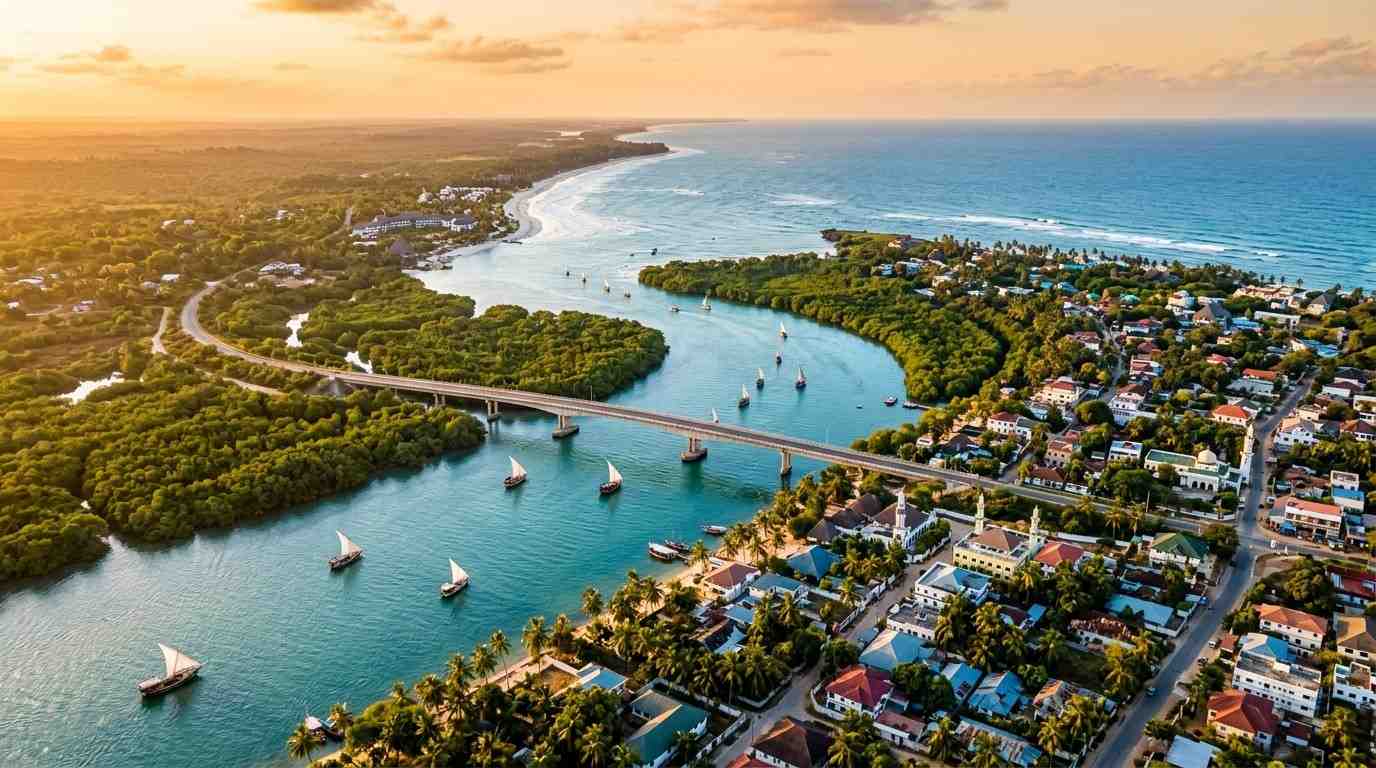
Kilifi County is a coastal county in Kenya bordering the Indian Ocean with a population of roughly 1.5 million. A comfortable single-person monthly budget runs between KSh 30,000 and KSh 55,000. Land prices range from KSh 200,000 per acre in rural hinterlands to KSh 20 million per acre on prime beachfront. Top attractions include the Gede Ruins, Watamu Marine Park, and Arabuko-Sokoke Forest.
Kilifi County at a Glance
Kilifi County occupies a sweeping 3,497 km² of Kenya's eastern coastline, stretching roughly 160 km from the Sabaki River in the north to the border with Mombasa County in the south. The county headquarters is Kilifi Town, bisected dramatically by the 4 km-wide Kilifi Creek — one of the most photographed natural features along the East African coast. The county also encompasses the towns of Malindi, Watamu, Kilifi, Kaloleni, and Mariakani.
With a population of approximately 1.5 million people (2019 Kenya National Census), Kilifi is Kenya's 10th most populous county. The population is predominantly Mijikenda, a group of nine Bantu sub-communities (Giriama, Chonyi, Digo, Duruma, Jibana, Kambe, Kauma, Rabai, and Ribe) whose culture, traditions, and sacred kaya forests shape the county's identity. A significant population of Swahili, Arab, and South Asian heritage lives along the coast, contributing to the county's rich multicultural fabric.
Economically, Kilifi is driven by tourism, agriculture (cashew nuts, coconut, cassava), fishing, livestock, and a growing real estate sector. The county has attracted significant foreign investment, especially in the Malindi and Watamu tourism belts where Italian and European visitors have been coming for decades.
If you're exploring other coastal counties, our guide on 10 Landmarks That Define the Republic of Kenya puts Kilifi's attractions in a broader national context worth reading.
Cost of Living in Kilifi County (2025)
One of the most compelling reasons to consider Kilifi County for relocation or investment is its significantly lower cost of living compared to Nairobi or even Mombasa City. The county offers a quality coastal lifestyle at a fraction of what you'd pay in the capital — if you know where to look.
🏠 Housing & Rent
Rental prices vary widely across the county's sub-counties. Kilifi Town, Malindi Town, and Watamu command the highest rents due to tourism demand, while Kaloleni, Mariakani, and Ganze offer budget-friendly alternatives.
| Property Type | Location | Monthly Rent |
|---|---|---|
| Single room (bedsitter) | Kilifi Town / local estates | KSh 4,000 – 8,000 |
| 1-bedroom apartment | Kilifi Town | KSh 8,000 – 18,000 |
| 2-bedroom apartment | Kilifi Town | KSh 15,000 – 30,000 |
| 2-bedroom furnished (beach area) | Watamu / Malindi | KSh 25,000 – 55,000 |
| 3-bedroom house | Malindi Town | KSh 20,000 – 45,000 |
| Villa / holiday let | Watamu beachfront | KSh 80,000 – 250,000 |
| Room / bedsitter | Kaloleni / Mariakani | KSh 2,500 – 6,000 |
🛒 Food & Groceries
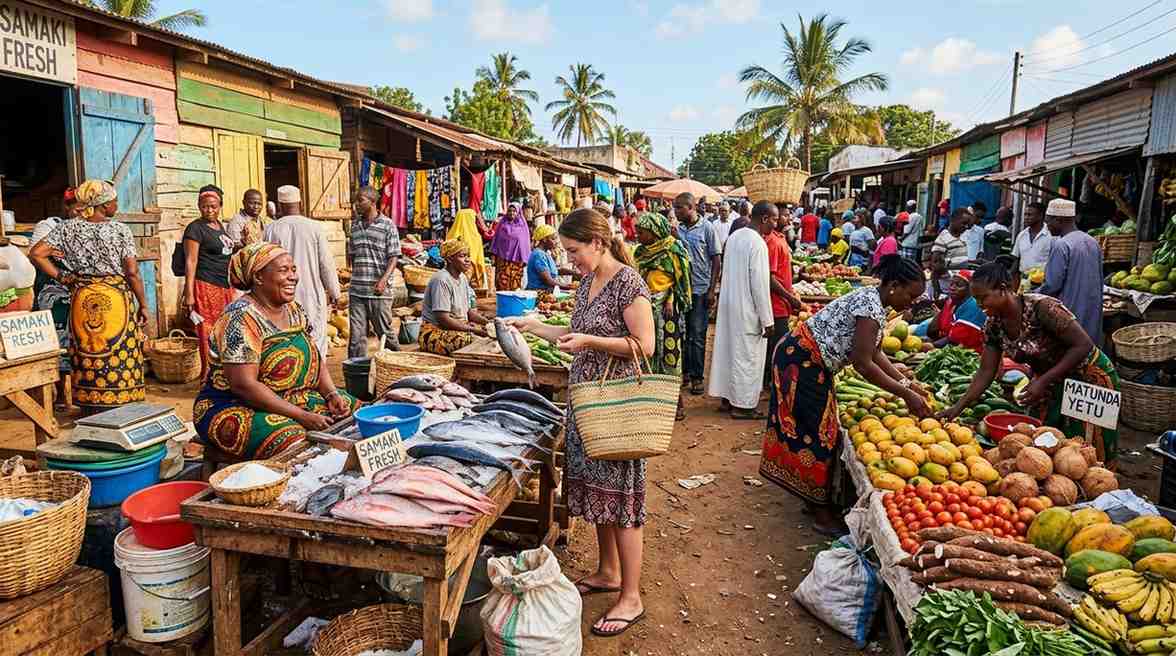
Fresh food in Kilifi is abundant and affordable thanks to local farming and fishing. The county's main markets — Malindi Market, Kilifi Market, and Mtwapa Junction — are well-stocked with fresh produce, fish, and grain.
| Item | Approximate Price |
|---|---|
| 2 kg maize flour (unga) | KSh 130 – 165 |
| 1 kg rice | KSh 110 – 140 |
| 1 kg fresh fish (local) | KSh 150 – 400 |
| 1 kg chicken (live) | KSh 500 – 700 |
| 1 litre fresh milk | KSh 55 – 70 |
| 1 kg tomatoes | KSh 50 – 100 |
| 500 ml cooking oil | KSh 130 – 160 |
| Budget restaurant meal | KSh 150 – 300 |
| Mid-range restaurant (2 people) | KSh 1,200 – 2,800 |
🚌 Transport
Local matatu rides within Kilifi Town cost KSh 30–50. The Kilifi–Mombasa route (approximately 65 km) runs KSh 150–250 by matatu. Boda boda (motorcycle taxi) rides within town average KSh 50–150. The Kilifi Bridge, opened in 1991 and replacing the old ferry, makes north–south transport much faster.
Fuel prices at the pump in Kilifi are broadly in line with the national average — around KSh 185–200 per litre for petrol (subject to ERC pricing cycles). Owning a motorbike for daily commuting is highly cost-effective in the county.
💡 Utilities
| Utility | Monthly Cost |
|---|---|
| Electricity (KPLC, small household) | KSh 800 – 2,500 |
| Water (KIWASCO or communal) | KSh 300 – 1,200 |
| Safaricom Home Fibre (where available) | KSh 2,999 – 5,999 |
| Mobile data (monthly bundle) | KSh 500 – 1,500 |
| LPG cooking gas (6 kg refill) | KSh 950 – 1,100 |
"A single professional earning KSh 45,000/month can live comfortably in Kilifi Town — something near-impossible in Nairobi for the same salary."
📊 Monthly Budget Summary
| Category | Single Person | Couple / Family of 4 |
|---|---|---|
| Rent | KSh 8,000 – 18,000 | KSh 18,000 – 35,000 |
| Food | KSh 7,000 – 12,000 | KSh 18,000 – 30,000 |
| Transport | KSh 3,000 – 6,000 | KSh 5,000 – 10,000 |
| Utilities | KSh 2,500 – 5,000 | KSh 4,000 – 8,000 |
| Miscellaneous | KSh 3,000 – 7,000 | KSh 6,000 – 15,000 |
| Total Estimate | KSh 23,500 – 48,000 | KSh 51,000 – 98,000 |
Jobs & Economic Opportunities in Kilifi County
Kilifi County's economy is multi-layered and evolving. While the county still faces structural unemployment challenges — its poverty rate hovers above the national average — targeted sectors are creating exciting opportunities for skilled workers, entrepreneurs, and investors.
🏨 Tourism & Hospitality
Tourism is the single largest formal employer in Kilifi. The Malindi–Watamu tourism belt hosts hundreds of hotels, lodges, beach resorts, diving schools, boat charter companies, and restaurants. Job roles range from:
- Front office staff & hotel managers — KSh 18,000–60,000/month
- Tour guides (KCTE certified) — KSh 25,000–80,000/month + tips
- Chefs & cooks — KSh 15,000–55,000/month
- PADI dive instructors — KSh 35,000–100,000/month
- Beach boys / excursion sellers — Variable, KSh 10,000–40,000/month
- Resort management — KSh 70,000–200,000/month
🏥 Healthcare
Kilifi County has been expanding its healthcare infrastructure under successive County Integrated Development Plans (CIDPs). Kilifi County Referral Hospital is the anchor facility, while the county also runs dozens of sub-county hospitals and health centres. The KEMRI-Wellcome Trust Research Programme in Kilifi is one of Africa's leading health research centres and employs over 1,500 staff — from laboratory scientists to data managers and field workers.
- Clinical officers & nurses — KSh 25,000–65,000/month
- Medical officers (doctors) — KSh 100,000–170,000/month
- Pharmacy technicians — KSh 20,000–40,000/month
- Research assistants (KEMRI) — KSh 30,000–70,000/month
🎓 Education
Kilifi County operates a network of public and private schools, with the Pwani University (headquartered in Kilifi Town) being a major employer of lecturers, administrators, and support staff. The Teachers Service Commission (TSC) regularly posts teaching vacancies across the county.
- Primary school teachers (TSC) — KSh 20,000–40,000/month
- Secondary school teachers (TSC) — KSh 25,000–65,000/month
- University lecturers (Pwani) — KSh 60,000–150,000/month
🐟 Fishing & Aquaculture
Kilifi's extensive coastline and creeks support a vibrant artisanal and semi-commercial fishing industry. The county government has been investing in fish landing sites, cold storage, and aquaculture ponds. The WorldFish Centre and various NGOs operate aquaculture development programmes here. A skilled fisherman with a well-equipped vessel can earn KSh 15,000–60,000 per month depending on catch volumes and market access.
🌾 Agriculture & Agribusiness
Kilifi County produces cashew nuts, coconuts, cassava, mangoes, citrus, and sisal. Cashew nut processing is a major agribusiness opportunity — Kenya exports raw cashew nuts but value addition at county level remains under-exploited. The National Cereals and Produce Board (NCPB) and the Kenya Cashewnut Council run procurement operations in the county.
🏗️ Real Estate & Construction
Rising land values and growing population are driving a construction boom, especially in Kilifi Town, Malindi, and along the highway corridor. Civil engineers, quantity surveyors, architects, construction foremen, and artisans are in growing demand. Several foreign-owned development companies are building beach resorts and gated communities.
💼 NGOs & Development Sector
Kilifi hosts a significant number of international NGOs focused on health, education, and coastal resource management. Major employers include KEMRI-Wellcome Trust, Save the Children, USAID-funded programmes, Plan International, and various environmental conservation organisations. These organisations often offer some of the best salaries and benefits packages in the county.
Digital Nomad Hub
Watamu and Kilifi Town are fast becoming popular remote-work bases. Fibre internet, low rents, and an international community make them ideal for freelancers earning in USD or EUR.
Eco-Tourism Business
Small eco-lodges, kayaking tours, birdwatching excursions, and kite-surfing schools remain under-supplied relative to demand. Low entry cost, high margins.
Cashew Value Addition
Kenya's cashew sector loses billions by exporting raw nuts. A small processing unit in Kilifi targeting premium local and export markets has compelling economics.
Vacation Rental (Airbnb)
Well-managed holiday lets in Watamu and Malindi generate KSh 80,000–350,000/month during peak season. Occupancy rates are among the highest on the Kenyan coast.
Where to Buy Affordable Land in Kilifi County
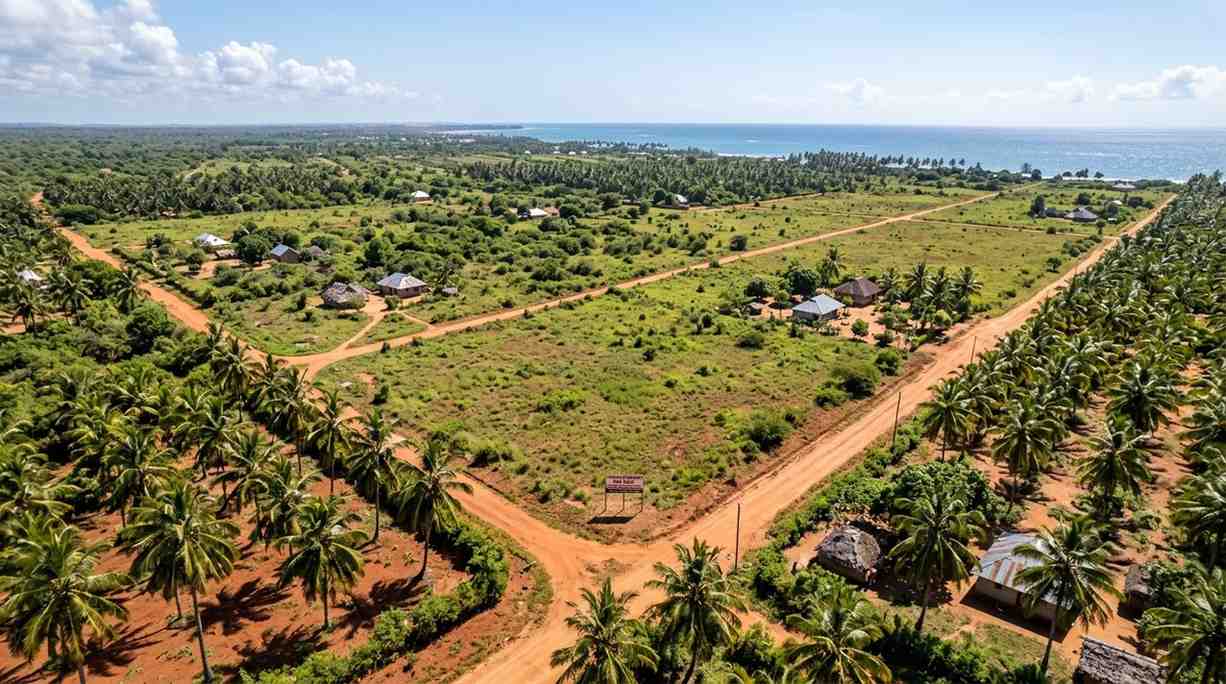
Land buying in Kilifi County is one of the most frequently searched real estate topics in Kenya — and for good reason. The county offers a remarkable spectrum of land prices, from sub-KSh 300,000 per acre in the interior to multi-million shilling beachfront plots. Navigating this market requires knowing the sub-county, the land tenure system, and doing thorough due diligence.
📍 Land Prices by Sub-County (2025 Estimates)
| Sub-County / Area | Price per Acre | Price per Plot (50×100 ft) | Land Use |
|---|---|---|---|
| Kilifi Town (prime) | KSh 5M – 20M | KSh 1.5M – 5M | Commercial, residential |
| Watamu beachfront | KSh 15M – 60M+ | KSh 4M – 15M | Tourism, resort |
| Malindi Town & environs | KSh 4M – 25M | KSh 1.2M – 6M | Mixed use |
| Malindi hinterland (5–15 km out) | KSh 800K – 2.5M | KSh 250K – 800K | Residential, farming |
| Kaloleni Sub-County | KSh 400K – 1.2M | KSh 150K – 400K | Farming, residential |
| Ganze Sub-County | KSh 200K – 600K | KSh 80K – 200K | Farming, pastoral |
| Rabai Sub-County | KSh 350K – 1M | KSh 120K – 350K | Farming, peri-urban |
| Mariakani / Mtwapa corridor | KSh 2M – 8M | KSh 600K – 2.5M | Residential, commercial |
🏆 Best Areas for Affordable Land Investment
Ganze Sub-County
The most affordable land in Kilifi. Suitable for large-scale agriculture (cashew, cassava) or long-term hold as infrastructure improvements push values upward. An acre from KSh 200,000.
Kaloleni Sub-County
Fertile land, good rainfall, and proximity to Mombasa make Kaloleni attractive for farming and residential use. Coconut and cashew farms are popular here.
Malindi Hinterland (10–15 km radius)
Buy outside the town centre and benefit from Malindi's tourism-driven appreciation. Values here have grown 40–60% in five years as urban sprawl expands.
Mtwapa Corridor
One of the fastest-growing peri-urban zones on the Kenyan coast. Proximity to Mombasa, good road access, and expanding residential demand make this a solid mid-range bet.
🔑 Land Tenure Types in Kilifi
Understanding land tenure is critical before buying. In Kilifi County, you will encounter:
- Freehold Title Deed — Absolute ownership, most secure. Common in Malindi and Kilifi Town.
- Leasehold (99 years) — Government land leased for a fixed term, common in urban areas and former government schemes.
- Community Land Act land — Owned communally by Mijikenda communities. Requires community consent processes to convert.
- Trust land — Formerly county council land, being transitioned under the Community Land Act.
- Ancestral/kaya land — Sacred forest land with special legal protections. Cannot be transacted commercially.
Top Tourist Attractions in Kilifi County
Kilifi County is arguably Kenya's most diverse and under-rated tourist destination. While Nairobi grabs the safari headlines, Kilifi quietly offers an extraordinary blend of ancient ruins, pristine reefs, primeval forests, and a laid-back beach culture that keeps visitors returning year after year.
1. Gede Ruins (Gedi)
The Gede Ruins are among East Africa's most important archaeological sites. This ancient Swahili town, dating back to the 13th or 14th century, sits hidden within a magical coastal forest near Watamu. Excavations have revealed a great mosque, a palace, and over 100 stone houses — all mysteriously abandoned. Entry fee: KSh 400 (citizens) / KSh 1,200 (non-citizens). The site is managed by the National Museums of Kenya.
2. Watamu Marine National Park & Reserve
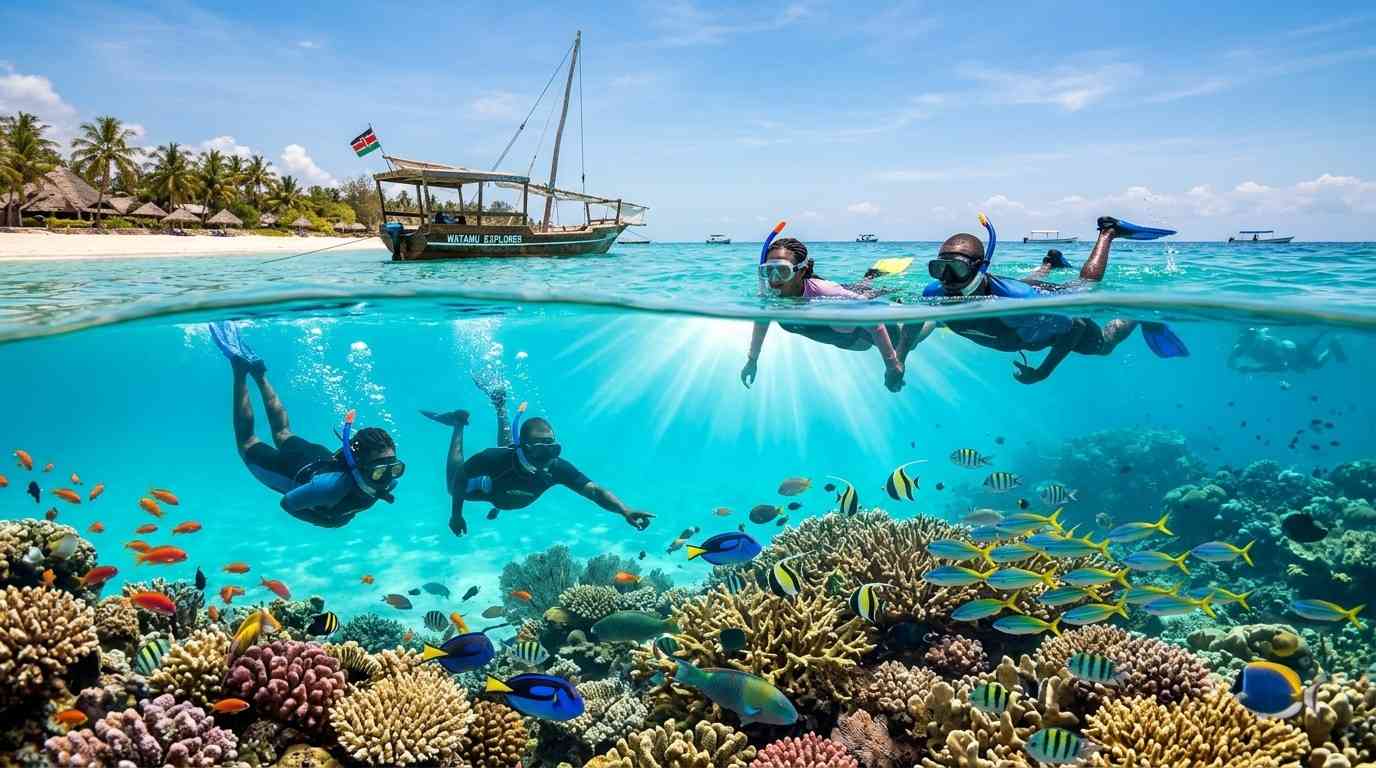
Watamu Marine National Park is one of Africa's oldest marine parks, declared in 1968, and a UNESCO Biosphere Reserve. It protects over 600 species of fish, 110 species of coral, sea turtles (green and hawksbill), dolphins, and whale sharks. Activities include snorkelling, scuba diving, glass-bottom boat rides, and turtle watching. Park entry: KSh 600 (citizens) / KSh 1,500 (non-citizens). See the Kenya Wildlife Service for details.
3. Arabuko-Sokoke Forest Reserve
At roughly 420 km², the Arabuko-Sokoke Forest is the largest remaining coastal forest in East Africa and a globally important biodiversity hotspot. It is home to three globally endangered bird species — the Sokoke Scops Owl, Clarke's Weaver, and Sokoke Pipit — as well as the rare Aders' duiker antelope and golden-rumped elephant shrew. Entry: KSh 250 (citizens) / KSh 600 (non-citizens).
4. Kilifi Creek
The spectacular Kilifi Creek is a deep natural inlet stretching inland from the Indian Ocean. It is lined with mangroves, dhow anchorages, and the upmarket Kilifi waterfront. The creek is famous for sailing, kayaking, cliff jumping, and sunset dhow cruises. The area around the creek — particularly the cliffs at the old ferry site — has become a social media sensation.
5. Vasco da Gama's Pillar, Malindi
Erected by the Portuguese explorer Vasco da Gama in 1498 on his voyage to India, the Malindi Pillar (Padrão de Malindi) is one of the oldest European monuments in Africa still standing in its original location. It stands at the tip of a coral headland overlooking the Indian Ocean. Entry via the surrounding Malindi Marine National Park: KSh 400 (citizens) / KSh 1,200 (non-citizens).
6. Watamu Beach
Consistently rated one of East Africa's finest beaches, Watamu's 3 km arc of powder-white sand and turquoise water is protected within a marine reserve, keeping it relatively pristine. It's excellent for swimming, snorkelling directly off the beach, and kite-surfing (wind conditions are excellent December–March). The village has a vibrant community of Italian expatriates, eco-lodges, and an excellent dining scene.
7. Malindi Marine National Park
Established in 1968 alongside Watamu, Malindi Marine National Park covers 213 km² and is famed for exceptional coral gardens, seasonal whale shark aggregations (October–February), and manta ray encounters. Glass-bottom boat hire: approximately KSh 1,500–3,000 per person. Snorkelling gear rental: KSh 500–800.
8. Mida Creek
A stunning 32 km² tidal creek complex near Watamu, Mida Creek is a designated Important Bird Area (IBA) and Ramsar Wetland site. It supports over 100 bird species including vast flocks of migratory waders. The community-run boardwalk through the mangroves at sunrise is one of the most spectacular wildlife experiences in coastal Kenya. Entry: KSh 500 (citizen) / KSh 1,000 (foreigner).
| Attraction | Type | Citizen Entry | Non-Citizen Entry |
|---|---|---|---|
| Gede Ruins | Archaeology / History | KSh 400 | KSh 1,200 |
| Watamu Marine Park | Marine / Diving | KSh 600 | KSh 1,500 |
| Arabuko-Sokoke Forest | Birding / Nature | KSh 250 | KSh 600 |
| Malindi Marine Park | Marine / Snorkelling | KSh 400 | KSh 1,200 |
| Mida Creek Boardwalk | Birding / Wetland | KSh 500 | KSh 1,000 |
| Kilifi Creek (free access) | Sailing / Leisure | Free | Free |
| Vasco da Gama Pillar | Heritage / History | KSh 400 | KSh 1,200 |
Infrastructure & Connectivity
Kilifi's infrastructure has improved substantially over the past decade, though gaps remain, particularly in rural sub-counties.
🛣️ Roads
The A7 Mombasa–Malindi–Lamu highway is the county's main artery, running its full length. The highway is tarmacked but sections between Malindi and Lamu are in varying condition. The Kilifi Bridge (opened 1991) connects the north and south of the county over the creek. Rural access roads, particularly in Ganze and Magarini sub-counties, can be challenging during the rainy seasons.
✈️ Air Access
Malindi Airport (IATA: MYD) operates regular daily flights to Nairobi Wilson Airport (approximately 50 minutes) via Safarilink, AirKenya Express, and charter operators. Return fares start at around KSh 8,000–15,000 booked in advance. There is no commercial airline serving Kilifi Town directly; the nearest larger airport is Mombasa's Moi International Airport (IATA: MBA), about 65 km south.
🌐 Internet & Telecoms
Safaricom provides the widest 4G LTE coverage across Kilifi, Malindi, and Watamu. Airtel is available in most towns. Safaricom Home Fibre is expanding in Kilifi Town and Malindi. In rural areas, 3G coverage is patchy. For digital nomads, the recommendation is to carry a Safaricom unlimited data SIM as your primary connection.
🏦 Banking & Finance
All major Kenyan banks (Equity, KCB, Cooperative, NCBA, Absa) have branches and ATMs in Kilifi Town and Malindi. M-Pesa agents are ubiquitous throughout the county including rural markets. Mobile money is effectively the financial backbone of the county's informal economy.
Frequently Asked Questions About Kilifi County
Kilifi is generally considered safe for residents and tourists. Petty theft can occur in crowded markets and beach areas, as in any tourist destination. Standard precautions apply: avoid displaying expensive items, use reputable transport at night, and be mindful of beach bag theft. The county has a lower violent crime rate than Nairobi or Mombasa.
Absolutely. Kilifi is popular with Kenyan and foreign retirees. The combination of warm weather year-round, affordable cost of living, proximity to quality healthcare at KEMRI/Kilifi Hospital, a strong expatriate community in Malindi and Watamu, and low-cost land and housing makes it excellent for retirement. Many European retirees (especially Italian and German nationals) have settled here for decades.
Swahili (Kiswahili) is the primary language and spoken universally. Each Mijikenda community also speaks its own dialect (e.g., Kigiriama among the Giriama). English is used in formal settings, schools, and business. In tourism areas, Italian, German, and other European languages are commonly heard.
Watamu Village is the top recommendation for first-time visitors — excellent beach, proximity to all major attractions, good dining, and the friendliest local community. Malindi Town suits those wanting more urban amenities and a longer history of tourism infrastructure. Kilifi Town itself is best for those who prefer authenticity over tourist-focused amenities.
Under Kenyan law, non-citizens can only hold land on leasehold tenure (up to 99 years), not freehold. Many foreign investors structure purchases through registered Kenyan companies or in partnership with Kenyan citizens. Always work with a registered Kenyan advocate familiar with coastal land laws, as the area has unique legal complexities around community land.
Kilifi Town is approximately 65 km north of Mombasa City along the A7 highway. The journey takes 45–75 minutes by road depending on traffic, and around 1.5–2 hours by matatu. Malindi is approximately 120 km from Mombasa, about 1.5–2 hours by road.
Our Verdict: Is Kilifi County Worth It?
Kilifi County is one of Kenya's most compelling propositions — whether you're looking to relocate, invest, retire, or simply visit. It offers what few counties can: an affordable cost of living, a warming climate, genuine economic opportunity, and natural beauty of a calibre that rivals anything in the Indian Ocean basin.
The county is not without challenges — rural poverty, inconsistent infrastructure in the interior, land fraud risks, and seasonal employment in tourism require careful navigation. But for those who do their research and approach the county strategically, the rewards are significant.
Our recommendation: visit first, then decide. Spend two weeks across Kilifi Town, Watamu, and Malindi before committing to any land purchase or relocation. The county tends to sell itself.
For broader context on Kenya's regions, be sure to read our guide on Homa Bay County: Taking Stock, Hidden Gems & Everything You Need to Know — another county with extraordinary hidden potential.
Explore More Kenya County Guides
Stay informed with KE Offers — Kenya's most trusted source for county guides, real estate tips, and lifestyle reviews.
Browse All Guides →