Introduction: A City on the Rise
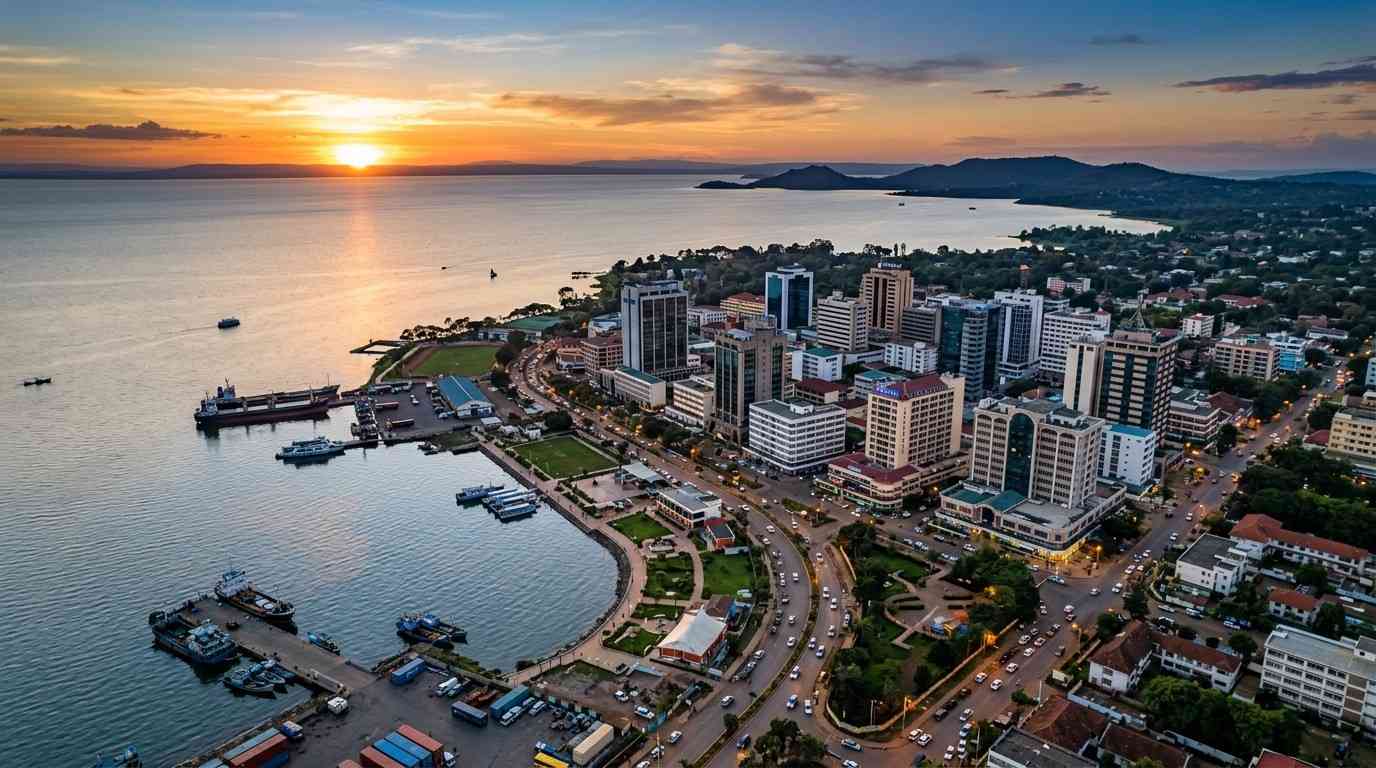
For decades, Kisumu played second fiddle to Nairobi and Mombasa in Kenya's economic conversation. The port that once hummed with East African trade fell silent, investors looked elsewhere, and the city's enormous potential sat largely untapped on the shores of the world's second-largest freshwater lake. That story is changing — and changing fast.
Today, Kisumu is being deliberately repositioned as the economic engine of Western Kenya, backed by government policy, private capital, and a generation of entrepreneurs who see what the numbers are beginning to confirm: this is a city at the beginning of a remarkable commercial arc.
In this in-depth guide, we examine every pillar of Kisumu's business renaissance — from hard infrastructure to the soft power of innovation — to give you a complete picture of why this lakeside city is becoming impossible to overlook.
Strategic Location as a Competitive Advantage
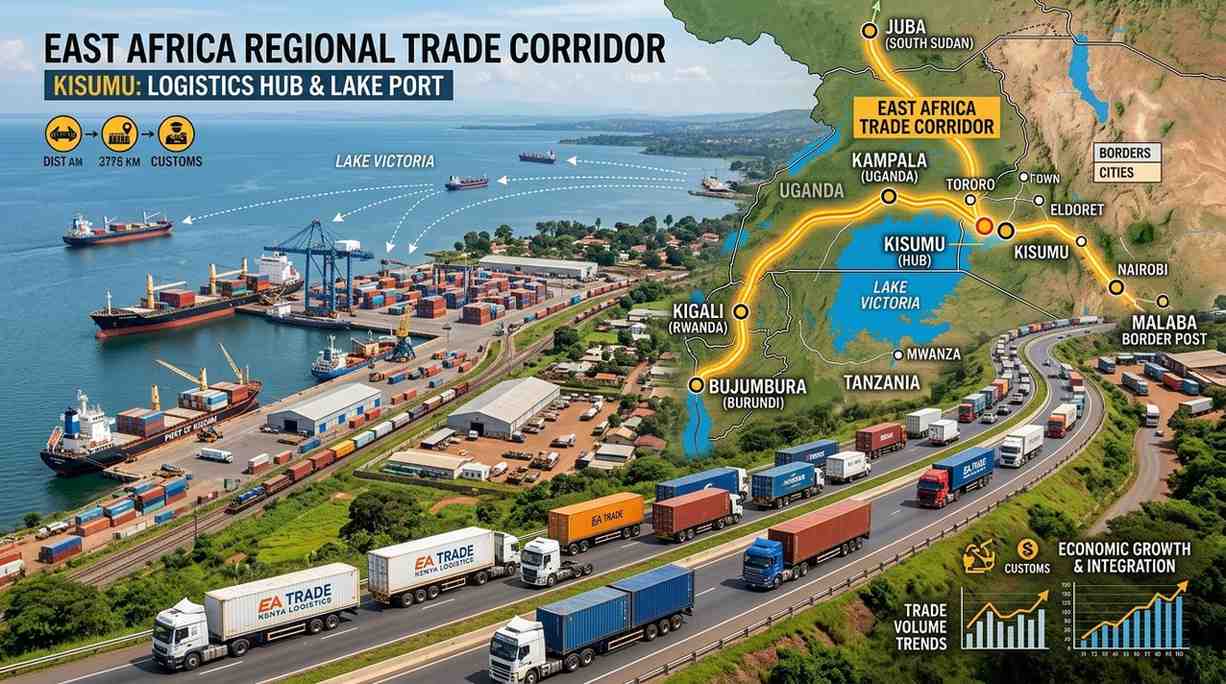
Geography, the old saying goes, is destiny. For Kisumu, that aphorism rings truer now than at any point in its history. Situated approximately 341 km west of Nairobi and positioned directly on the northeastern shores of Lake Victoria, Kisumu occupies a commercial crossroads that connects Kenya to Uganda, Tanzania, Rwanda, Burundi, and the Democratic Republic of Congo through a 30-million-person catchment area within a single day's drive.
"With Lake Victoria as a gateway to East Africa, we are strategically positioned to grow regional trade, attract global investments, and drive innovation across key sectors."— H.E. Dr. Mathew Ochieng Owilo, Deputy Governor, Kisumu County
Kenya's county development documents confirm that Kisumu serves as the main commercial and transport hub for Western Kenya and the broader East African Great Lakes region. This is not marketing language — it is a geographic reality that the private sector is only now fully beginning to monetise.
The Enterprise Singapore Market Guide for Kenya identifies Kisumu as one of Kenya's fastest-growing cities, noting its active development of Special Economic Zones (SEZs), industrial parks, and agro-processing capacity. When Singapore's business development agency flags a Kenyan city as a priority market, experienced investors take notice.
The Kisumu Port Revival: A KSh 3 Billion Gamble Paying Off
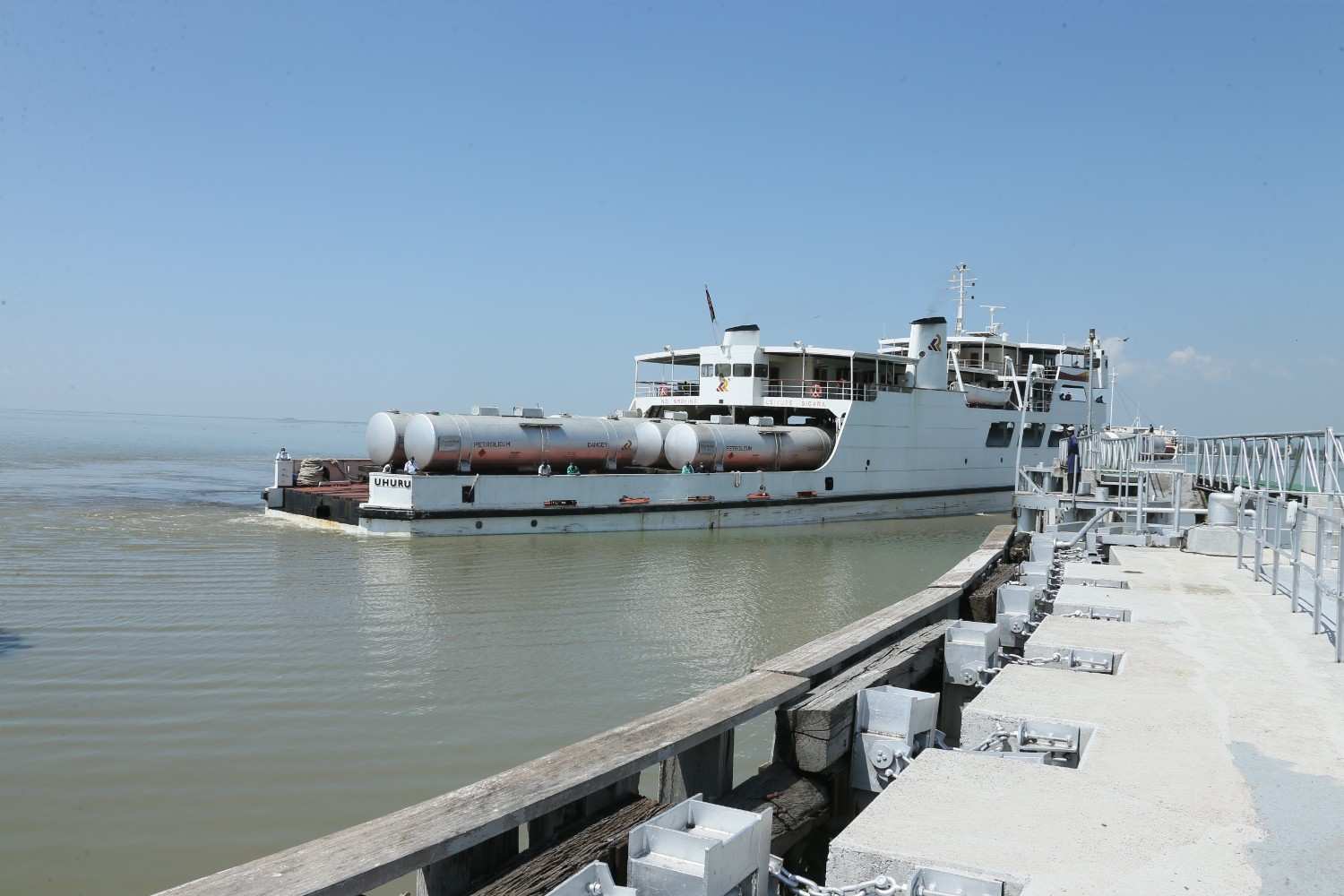
No single project encapsulates Kisumu's business awakening more dramatically than the revival of its port. Established in 1901 and once a thriving link in the East African rail-and-water transportation network, the Kisumu Port served Port Bell and Jinja in Uganda, and Mwanza, Bukoba, and Musoma in Tanzania. It fell into near-total disuse for close to two decades, taking with it a chunk of Western Kenya's economic vitality.
The turnaround began with a KSh 3 billion refurbishment programme. According to Kenya Ports Authority data, cargo exports from Kisumu — which stood at just 28,034 tonnes in 2014 — are projected to grow to approximately 160,000 tonnes by 2025 and reach 230,000 tonnes by 2035.
What the Port Revival Means for Business
- Lower logistics costs: Water freight is significantly cheaper per tonne-kilometre than road transport, reducing the cost of goods moving between Kenya, Uganda, and Tanzania.
- Cold chain potential: The port's facilities are enabling the development of a regional cold chain for fish exports, a critical gap in the current supply system.
- Manufacturing viability: With affordable freight access, manufacturing businesses that were previously uncompetitive can now serve the entire East African Great Lakes market from Kisumu.
- Employment multiplier: Port economies create jobs far beyond the dock — in warehousing, clearing and forwarding, fuel supply, catering, and transport.
Deputy Governor Owili has described the ongoing revitalisation of Kisumu's port and marine infrastructure as a "game-changer for regional trade" — and on current trajectory, it is difficult to dispute that assessment.
Infrastructure Upgrades Fuelling Growth
A port alone does not make a business hub. What makes Kisumu compelling is that its port revival is part of a broader, multi-modal infrastructure upgrade that is genuinely transforming how people and goods move in and out of the city.
Road Network
Kisumu benefits from its position on the A1 highway linking it to Nairobi and the Uganda border. Ongoing upgrades to key arterial roads within the city have reduced transit times and improved last-mile connectivity for businesses operating in and around the CBD.
Rail Connectivity
Kenya News Agency records confirm that Kisumu's multimodal credentials span railway, road, water, and air — a combination that very few cities in the region can claim. Rail connectivity to Nairobi and Mombasa, though requiring further modernisation, provides a backbone for bulk cargo movement.
Kisumu International Airport
The Kisumu International Airport is a growing asset, with an expanding airport logistics corridor that has become a key driver of real estate appreciation in surrounding zones. Direct flights to Nairobi and growing regional connectivity reduce the city's isolation from the national capital and international markets.
Smart City Initiative — 2025
Kisumu County partnered with international agencies in 2025 to implement smart mobility and drainage-monitoring technology, placing it among a small group of Kenyan cities actively deploying urban data systems. The county has also been recognised as a model county for digital innovation and health equity by the Business Ecosystem Summit organisers.
Landmark Investment Deals and the Business Ecosystem Summit
The clearest signal of investor confidence in a city is the deals that get signed there. On this measure, Kisumu is building a track record that commands attention.
Business Ecosystem Summit (BES)
The Business Ecosystem Summit has become the centrepiece of Kisumu's investment story. The inaugural BES 2023 attracted over 9,000 participants and facilitated deals worth more than $400 million. That success laid the foundation for even greater ambition.
The 2024 AfSNET conference — itself a direct result of BES momentum — resulted in KSh 52 billion in funding for a local pharmaceutical plant, one of the largest single industrial investments in Western Kenya's history. The BES 2025 summit, held in Kisumu in late 2025, brought over 1,000 entrepreneurs with a core focus on SME access to markets, financing, and the innovation ecosystem.
Victor Nyagaya, CEO of the Lake Region Economic Bloc (LREB), has been unambiguous about the strategy: "PPPs are key to achieving our development goals. Let us form partnerships that deliver clean energy to homes, fund climate-smart irrigation, build innovation hubs, create circular waste solutions, grow the blue economy, and transform lives in the bloc and beyond."
Lake Region Economic Bloc (LREB)
Kisumu is the headquarters of the LREB, a coalition of 14 counties — including Kisumu, Siaya, Kakamega, Homa Bay, Migori, Kisii, and others — that collectively represent a significant portion of Kenya's western population and economic output. The bloc is working to create harmonised policy frameworks, simplified approval processes, and robust accountability structures to make the entire region more business-friendly. For investors, this means one coordinated entry point into a multi-county market.
Key Sectors Attracting Capital
- Pharmaceuticals and healthcare manufacturing
- Clean and renewable energy
- Agribusiness and food processing
- Logistics, warehousing, and port services
- Tourism and hospitality (MICE destination)
- Digital infrastructure and fintech
Kisumu's Growing Technology and Innovation Scene
Kenya's reputation as Africa's "Silicon Savannah" has long been anchored in Nairobi. But the technology wave is now washing westward, and Kisumu is catching it.
In 2025, Kisumu County partnered with international agencies to implement smart mobility and drainage-monitoring technology, placing the city alongside Nairobi in deploying real urban data infrastructure. This is not a cosmetic exercise — it reflects a genuine county-level commitment to being a "digital county."
Tech Talent and Training
Kisumu National Polytechnic is anchoring a blue economy skills hub backed by a €3.36 million (approximately KSh 560 million) investment, largely funded by the European Union and Germany's Federal Ministry for Economic Cooperation. Over 60 curricula have been developed and more than 600 trainees enrolled since 2024 across specialisations including aquaculture, marine engineering, food processing, and digital technologies.
This skills pipeline matters enormously. Businesses considering establishing operations in Kisumu want to know they can hire locally. The polytechnic investment signals that local government and international partners are building exactly that pipeline.
For businesses interested in the broader digital economy, our guide on choosing the right laptop for different business use cases is a practical companion — because no Kisumu business operates today without a robust digital toolkit.
M-Pesa as Infrastructure
Kenya's mobile money penetration, led by M-Pesa, means that digital financial transactions are already embedded in everyday commerce across Kisumu. This lowers the barrier to entry for businesses that rely on digital payments, and it creates a ready customer base for fintech products targeting the MSME segment — a segment that, according to World Bank data cited at BES 2025, numbers over 7.4 million businesses across Kenya.
Real Estate Boom: Why Smart Money Is Moving to Kisumu
Ask a seasoned property investor where the next opportunity lies, and increasingly they will say Kisumu. The city's real estate market is not merely growing — it is repricing in ways that suggest a structural, not cyclical, shift.
The Numbers
Land values in Kisumu are appreciating at approximately 12% per annum. Analysts at Mhasibu Housing Company project that this pace could turn a KSh 1 million plot into a KSh 1.6–1.8 million asset within five years. From 2025 through 2030, Kisumu's real estate cycle is expected to outperform Nakuru and Eldoret, supported by port expansion, the airport logistics corridor, and enforcement of the Land Rates Act 2024.
Historical data from Cytonn Investment research shows that commercial office space in Kisumu has recorded average rental yields of 7–9%, which compares favourably against many Nairobi suburbs after accounting for entry price differences.
Policy Tailwinds
Governor Anyang' Nyong'o announced in May 2025 that over 40% of land in Kisumu remains under-utilised or undeveloped — and that the county would enforce the Kisumu City Spatial Plan alongside the National Rating Act 2024 with a "use-it-or-lose-it" policy. This is significant because it signals the end of speculative landholding and the beginning of a more productive, built-up urban landscape. For developers, this creates both urgency and opportunity.
"The county has commenced implementation of Kisumu City's Local Physical and Land Use Development Plan... speculative landholding is being replaced by productive, titled development — and that is where the biggest growth window now lies."— Mhasibu Housing Company Ltd analysis, 2025
Rental Yield Snapshot (Kisumu)
- Commercial Office Space: ~7.0% average yield
- Retail: ~9.0% average yield
- Residential: ~5.1% average yield
- Land Appreciation: ~12% p.a.
Source: Cytonn Investments research, updated with 2024–2025 market data.

Blue Economy: Fishing, Aquaculture, and the Lake Dividend
One of the most underappreciated dimensions of Kisumu's business potential is its proximity to Lake Victoria — the world's largest tropical lake and Africa's largest freshwater body by surface area. Kenya's share of the lake is the basis of what economists call the "blue economy," and Kisumu is positioned to be its commercial capital.
The Opportunity
Lake Victoria supports one of the world's largest inland fisheries, with Nile perch, tilapia, and dagaa (silverfish) among its most commercially significant species. The fish processing industry in Kisumu has historically been hampered by inadequate cold chain infrastructure, inconsistent quality standards, and weak export logistics. All three of these bottlenecks are now being actively addressed.
Skills and Investment
The EU and Germany-funded blue economy skills hub at Kisumu National Polytechnic is training workers in aquaculture, marine engineering, welding and fabrication, and food processing. With a budget of KSh 560 million and over 600 trainees already enrolled since 2024, this represents a serious, funded commitment to building a workforce capable of driving the blue economy forward.
LREB's strategic objectives also include growing the "blue economy circular" — linking fish capture to processing to export to waste valorisation — in a way that maximises value at every step of the chain.
Business Opportunities in Kisumu's Blue Economy
- Fish processing and value-added export facilities
- Aquaculture cage farming on Lake Victoria
- Cold chain and refrigeration infrastructure
- Lake transport and ferry services
- Eco-tourism and water sports
- Marine equipment supply and servicing
Challenges to Watch
No credible investment analysis ignores risk. Kisumu's rise is real, but it is not without headwinds that investors must factor into their calculations.
Infrastructure Gaps Still Exist
While the port and road improvements are significant, Kisumu still lags Nairobi and Mombasa in the depth of its logistics ecosystem. Cold storage capacity, last-mile connectivity to rural producer areas, and reliable electricity supply remain areas that require continued investment before the city can reach its full commercial potential.
Bureaucratic and Land Administration Hurdles
Kenya's land administration challenges are well-documented at the national level, and Kisumu is not immune. While the 2024 Land Rates Act and the new spatial plan represent progress, enforcement and administrative efficiency in land registration and approvals need further improvement to match investor expectations.
Competition from Neighbouring Cities
Eldoret, Nakuru, and even Mombasa are not standing still. Each is pursuing its own investment agenda, and businesses will compare options carefully. Kisumu's competitive advantage lies in its lake access and Great Lakes market position — areas where no competitor can match it.
Political Economy Considerations
Kenya's devolution system means that county government leadership and policy continuity matter significantly. The current administration in Kisumu has shown strong pro-investment signals, but investors with long time horizons should monitor governance closely.
Our Verdict: Should You Bet on Kisumu?
Applying the same framework a Forbes Advisor-style analysis would bring to any emerging market opportunity, we assess Kisumu across four dimensions:
- Market Potential — Strong. A 30-million-person catchment area across the East African Great Lakes, backed by an active trade revival through the port and a bloc-wide investment push.
- Infrastructure Trajectory — Improving. KSh 3 billion in port investment, airport corridor development, smart city systems, and multimodal transport — the direction is clearly positive, even if full maturity is years away.
- Return on Investment — Compelling. Land appreciation of ~12% p.a., commercial retail yields of ~9%, and a pharmaceutical plant anchor investment signal a market that is pricing in growth rather than fully pricing it in.
- Risk Profile — Moderate. Infrastructure gaps and governance execution risk exist, but are offset by strong international backing (EU, Germany, World Bank, Singapore) and clear policy signals from both county and national government.
Our assessment: For investors with a 5–10 year horizon in real estate, logistics, agribusiness, or digital services, Kisumu represents one of Kenya's most asymmetric opportunities — relatively low entry prices against a demonstrably improving fundamentals story. For SME operators, the city's growing consumer base, falling logistics costs, and expanding talent pool create favourable conditions for building a Western Kenya-rooted business.
The window to enter before price discovery is complete is narrowing. The KSh 52 billion pharmaceutical deal, the Business Ecosystem Summit traction, and the port revival have collectively put Kisumu on the radar of institutional investors who previously looked only at Nairobi. Once that institutional money flows in at scale, the accessible entry prices that exist today will be a memory.