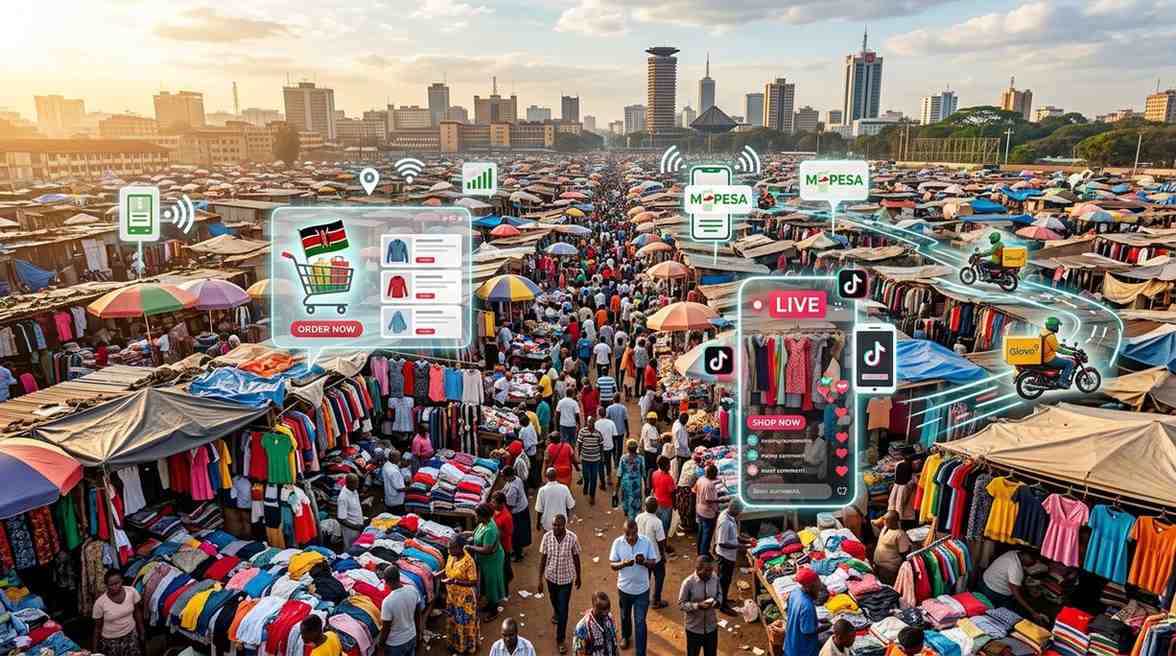
The best mitumba markets in Nairobi—led by Gikomba—offer the cheapest per-item prices (Ksh 50–400), the widest variety, and real-time bargaining. Online TikTok sellers in Kenya add 20–50% for convenience and nationwide delivery. Gikomba wins on price; TikTok wins on ease and access for upcountry shoppers.
Kenya's Thriving Second-Hand Economy
Kenya's love affair with mitumba—Swahili slang for the bundled second-hand clothes imported from Europe, North America, and Asia—is one of the country's most enduring economic stories. In a tough economy where the cost of living has risen sharply, the ability to dress well for a few hundred shillings is not just fashionable—it is survival strategy.
At the centre of it all sits Gikomba Market—a thundering, chaotic, magnificent open-air marketplace just east of Nairobi's CBD. But today, the thrift landscape looks very different from what it did five years ago. Today, a sharp-eyed TikTok seller can livestream a bale opening at 8 am and sell out by 9 am—without a stall, a tent, or a negotiation. So which route is actually better for the Kenyan shopper? Let's break it down.
Gikomba Market: East Africa's Mitumba Capital
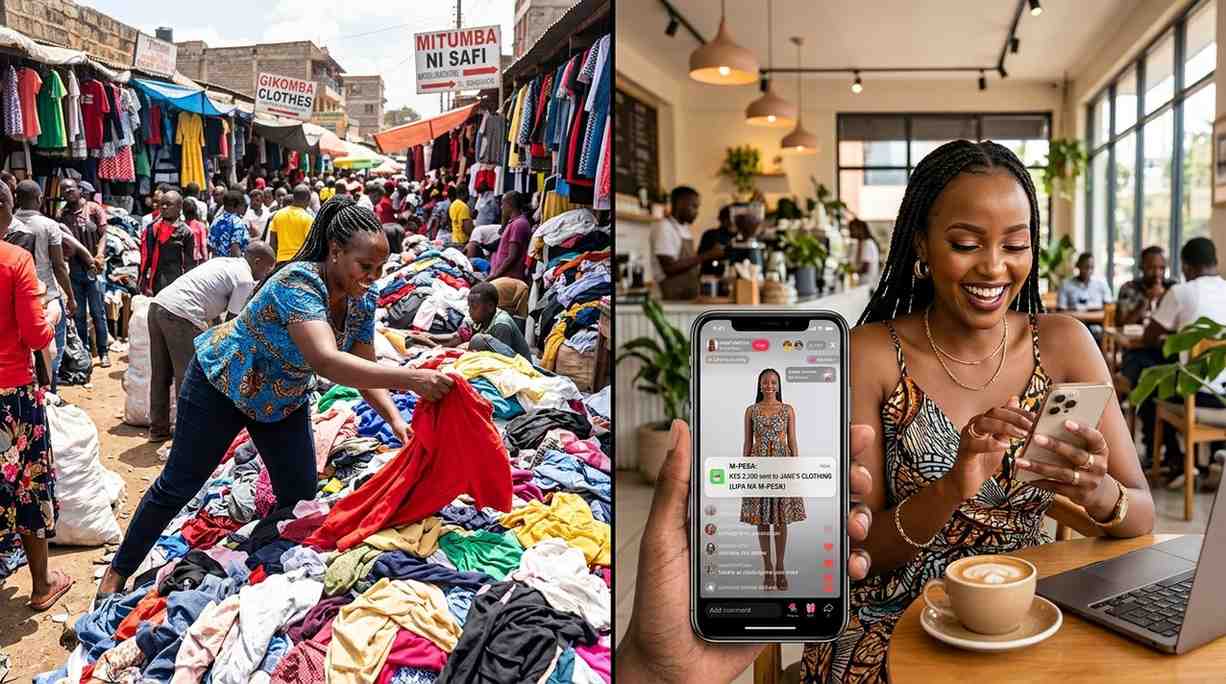
Gikomba is the largest open-air market in East Africa, where over 100,000 people work across an estimated 10,000 shops, stalls, and open pitches. The mitumba industry it anchors employs over 2 million people across Kenya. Its origins trace back to the 1950s when it began as a small informal trading post near the Nairobi River—and it has never really stopped growing.
Every morning, trucks arrive loaded with compressed bales of clothing sourced from countries including the United Kingdom, the United States, Canada, and increasingly China. Those bales are cut open on the market floor, sorted at speed, and sold—sometimes within hours. A skilled shopper who arrives at the right time can walk away with a Levi's jacket, a Zara dress, or Nike trainers for a fraction of what they cost in Westgate or Two Rivers.
Sections of Gikomba You Need to Know
Gikomba is not a single market—it is a city within a city. Navigating it without a plan can leave you walking in circles. Here is how the market breaks down:
- Clothing Section (Heart of Gikomba): The largest section. Bales are cut open from around 7 am. The best branded finds—denim, sportswear, vintage jackets—go within the first two hours. Women's, men's, and children's clothing each occupy distinct sub-zones.
- Shoe Section: Located near the bridge and Kamukunji grounds. Trainers, boots, dress shoes, and casual footwear from the same mitumba supply chains. The shoe section follows different pricing norms from clothing and requires its own bargaining approach.
- Handbags Section: Accessible from the Nairobi stage before turning towards COTU Headquarters. Jamal of Jamaldeen Collection—one of Kenya's most prominent TikTok mitumba sellers—still sources his designer bags here every morning before his online sessions.
- Household Goods & Electronics: Outer market sections covering kitchenware, appliances, and accessories. More varied and less predictable inventory—a true treasure hunt.
- Fresh Produce: Gikomba is also a major fresh-food market. If you arrive early, grab breakfast here before diving into the clothes sections.
Pricing at Gikomba: What to Expect
Prices at Gikomba are dynamic and deliberately opaque. Traders watch how you are dressed, what language you speak, and how you ask questions—all of which influence the price they quote you. A shopper dressed in smart clothes asking questions in English will be quoted a higher price than someone in casual attire bargaining in Sheng. That is simply the reality.
As a general guide, single items can cost as little as Ksh 50–400, while premium or near-new pieces with original tags may go for Ksh 500–2,000. Mitumba bales for resellers typically range from Ksh 10,000–Ksh 35,000 depending on category, grade, and contents.
The Rise of Gikomba "Plugs"
One of the most interesting recent developments at Gikomba is the emergence of what local youth call "plugs"—guided shopping companions who charge between Ksh 1,500 and Ksh 5,000 to navigate the market on your behalf. Many of them, like Annette Wabala (known as "Wabala" on TikTok) and Brian Nyambura ("Nash"), built their clientele by first posting videos on TikTok showing viewers how to navigate Gikomba's labyrinthine paths. Some now serve clients from as far away as Mombasa and South Sudan.
If you are visiting Gikomba for the first time, hiring a plug is worth every shilling—they know which traders have the freshest bales, how to speak the market's coded pricing language, and how to ensure you are not quoted the tourist rate.
✔ Pros of Shopping at Gikomba
- Lowest prices in Kenya—direct from bale openers
- Enormous variety across every clothing category
- Sensory thrill of the hunt; discover unexpected designer pieces
- Physical inspection before purchase—no size surprises
- Supports thousands of informal traders directly
- Unique and vintage pieces unavailable elsewhere
✘ Cons of Shopping at Gikomba
- Crowded, chaotic, and physically demanding
- Risk of theft in busy sections
- Coded pricing language disadvantages newcomers
- Recurring fire risks (though new 7-storey facility underway)
- Not accessible for upcountry shoppers without travel costs
- Early morning start required for best finds
Gikomba: What's New
Gikomba is changing. In November 2025, the Nairobi County Government unveiled a new seven-storey market complex—officially named Gikomba Quarry Road Market Block D—designed to permanently address the recurrent fire disasters that have plagued the market for decades. The modern facility is designed to accommodate over 1,700 traders in a secure, organised environment. Its origins date back to the 1950s near the Nairobi River, and it has survived fires, demolitions, land disputes, and a harsh economy—testament to its indispensability in Kenya's economic fabric.
President Ruto has also publicly declared Gikomba public land, directing the Lands ministry to fast-track a title deed—a move likely to ease the anxiety of hundreds of traders who have suffered devastating losses over the years.
Buying Mitumba Online: The TikTok Revolution
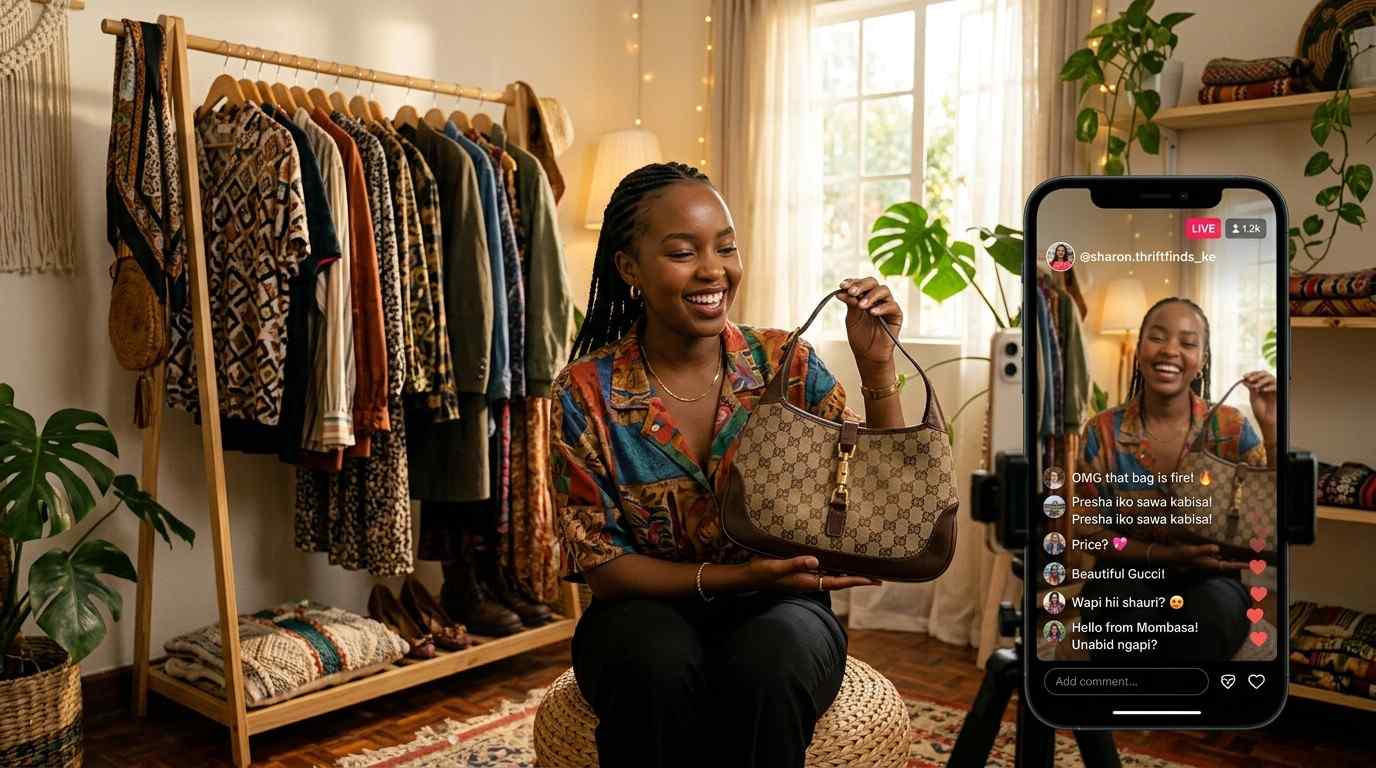
If Gikomba is Kenya's mitumba institution, TikTok is its disruptive challenger. Mitumba, once relegated to open-air markets like Gikomba, is now finding prominence on TikTok live sessions where sellers reach thousands of viewers at once. From carpets to designer handbags and tailored office wear, everything is streamed, sold, and shipped—sometimes internationally—almost all of it sourced from the very same Gikomba bales.
Kenya has approximately 10.6 million TikTok users scrolling their feeds daily, transforming the platform from entertainment to commerce engine almost overnight. The model is elegantly simple: a seller goes live, holds up a piece, and the first person to comment "mine" pays via M-Pesa and receives delivery within 1–3 days.
How TikTok Mitumba Selling Works in Kenya
The mechanics are worth understanding before you buy. Most TikTok mitumba sellers in Kenya operate in one of two ways:
- Live Sessions: The seller goes live at a set time (often mornings or evenings), displays each piece, states the price, and the first buyer to comment secures the item. Payment is via M-Pesa within minutes. Popular sellers attract thousands of concurrent viewers and sell out entire hauls in under an hour.
- Posted Catalogue Videos: Pre-recorded videos showing a curated selection. Buyers DM the seller to order. Better for considered purchases; less urgent than live sessions.
Notable TikTok Mitumba Sellers in Kenya
A number of standout sellers have built genuine brands through TikTok. Here are some of the most prominent:
- Jamaldeen Collection (Alex/Jamal Kimani): Kilimani-based, specialising in high-end designer handbags sourced from Gikomba. A single bag can fetch Ksh 50,000–100,000. Jamal's TikTok account is what built him as a brand—he now reaches buyers internationally from his shop.
- Nash (Brian Nyambura): A 22-year-old who started by posting Gikomba navigation tips on TikTok and evolved into a full-time plug and reseller, helping clients across Kenya source items remotely.
- Deborah: Cited in Business Daily coverage as emblematic of the new model—she sells more via TikTok Live than any other channel because "people stay, watch, and buy multiple items."
- Beauty Mitumba KE: A multi-branch operation with locations across Nairobi, Mombasa, Kisumu, Kericho, Eldoret, and Malindi—coordinating countrywide delivery through TikTok presence.
Prices Online: The Convenience Premium
It is important to be clear-eyed about online mitumba pricing. Some TikTok thrift prices now rival or exceed retail—a fact that has sparked public debate in Kenya. Sellers who invest in sorting, cleaning, photographing, packaging, and delivery pass those costs on to buyers. The result is a 20–50% markup over Gikomba street prices for equivalent pieces.
Where online sellers provide clear value is in curation and accessibility. A shopper in Kisumu, Meru, or Mombasa who cannot afford a bus trip to Nairobi can still access Gikomba-quality finds via a TikTok seller with countrywide delivery. That is a genuine game-changer for millions of Kenyans outside the capital.
✔ Pros of TikTok Mitumba Shopping
- Shop from anywhere in Kenya—no travel costs
- Curated, cleaned, and organised pieces
- No bargaining stress or coded pricing
- Live sessions are interactive and entertaining
- M-Pesa payment is secure and traceable
- Countrywide delivery in 1–3 days
✘ Cons of TikTok Mitumba Shopping
- 20–50% markup over Gikomba street prices
- Cannot inspect fabric, fit, or condition in person
- Risk of scam sellers (fake accounts, no delivery)
- Returns are difficult or impossible with most sellers
- Premium pieces often sell within seconds on live sessions
- Some sellers overprice basic items as "curated finds"
How to Stay Safe Buying Mitumba on TikTok
🔒 Safe Buying Tips for TikTok Mitumba
- Check the seller's account age and follower count. Established accounts with 5,000+ followers and months of consistent posting are safer bets.
- Look for visible customer testimonials or review videos pinned to the profile.
- Use M-Pesa's "Request Money" feature rather than sending a lump sum upfront if the seller allows it.
- Never pay for items not shown live or photographed clearly in good lighting.
- Ask for a WhatsApp contact before ordering so you have a separate communication channel.
- Start with a small order to test delivery reliability before committing to larger purchases.
- Be wary of accounts with no comment history or only generic praise in comments—these can be fake engagement.
Head-to-Head Comparison: Gikomba vs. TikTok Online Sellers
Here is the full breakdown across every factor that matters to a mitumba shopper in Kenya today.
| Factor | Gikomba Market | TikTok Online Sellers |
|---|---|---|
| Price Per Item | Ksh 50–2,000 (lowest available) | Ksh 150–4,000+ (includes convenience markup) |
| Variety | Enormous—10,000+ traders, every category | Curated—sellers specialise in niches |
| Accessibility | Nairobi only; travel costs apply | Nationwide delivery; shop from anywhere |
| Convenience | Requires early rising, physical effort, navigation | Shop from your phone in minutes |
| Inspect Before Buying | Yes—touch, try, examine in person | No—video only; lighting can be misleading |
| Bargaining | Yes—can negotiate significant discounts | Fixed prices; occasional bundle deals |
| Designer Finds | Yes—at the source, best prices on premium bales | Yes—some sellers specialise in designer curation |
| Safety | Pickpocketing risk in crowded sections | M-Pesa creates payment trail; safer transaction |
| Risk of Scam | Low—you pay only after seeing the item | Moderate—fake sellers do exist; vetting required |
| Best For | Serious bargain hunters & bulk buyers | Upcountry shoppers & busy urban professionals |
For the best price on the widest variety, Gikomba Market remains Kenya's undisputed mitumba champion. Nothing online comes close to the prices you can negotiate standing next to an open bale at 6:30 am on a Tuesday. However, if you live outside Nairobi, have a demanding schedule, or want curated, ready-to-wear pieces delivered to your door, Kenya's TikTok mitumba sellers offer a genuinely compelling and increasingly mainstream alternative. The smartest shoppers use both: source their staples at Gikomba and follow one or two trusted TikTok sellers for curated finds.
Other Mitumba Markets Worth Knowing in Nairobi
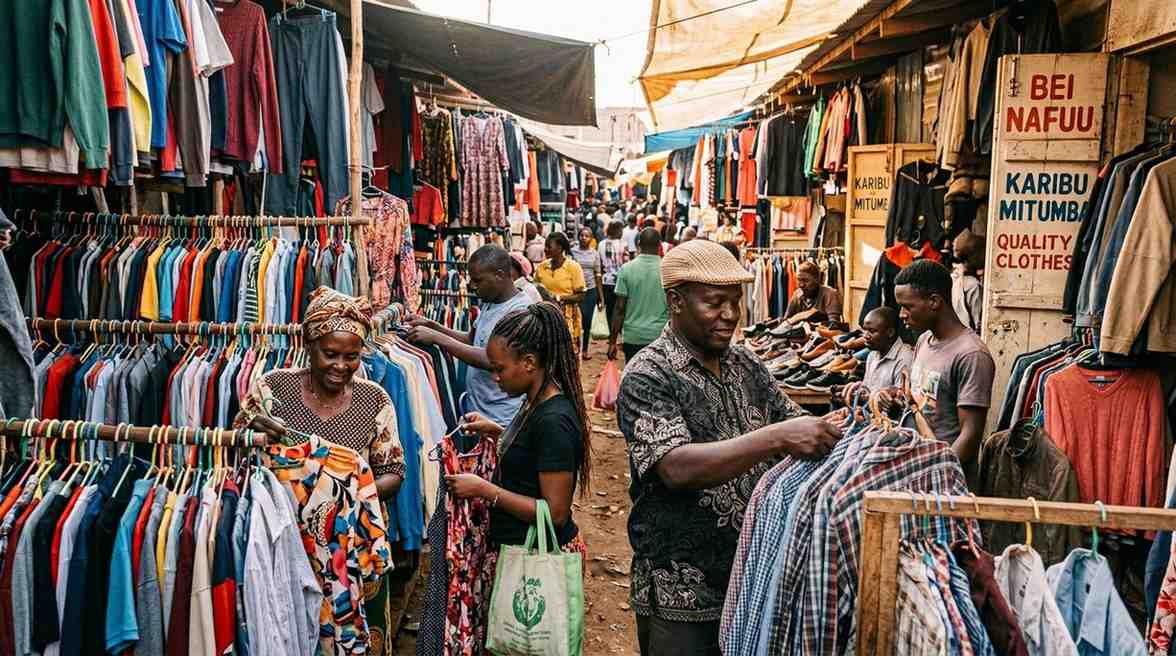
While Gikomba dominates the conversation, several other Nairobi markets are worth a visit depending on your location and what you are looking for:
- Toi Market (Kibera): Smaller than Gikomba but well-organised and particularly strong for women's fashion. Popular with university students and young professionals.
- Eastleigh Market: While famous for wholesale and new fashion, Eastleigh also has pockets of quality mitumba, especially near the big malls. See our guide to the best malls in Eastleigh for wholesale prices for a full breakdown.
- Kangemi Market: A strong neighbourhood option for Westlands-side residents. Less chaotic than Gikomba with a loyal regular clientele.
- Ngara Mtumba Stalls: Conveniently located near the city centre for office workers who can pop in during lunch.
If you are hunting specifically for shoes, our dedicated guides to the best women's shoe shops in Nairobi and the best men's shoe shops in Nairobi cover both mitumba and new-stock options across the city.
Pro Tips for Gikomba First-Timers
🛍 Gikomba Survival Guide
- Arrive before 7 am, Monday to Thursday. Bales are cut open from around 7 am and the best branded pieces are gone within two hours. Resellers with market connections pick first—your window is narrow.
- Dress down deliberately. Casual attire and Sheng or Kiswahili will get you closer to the local price. Smart office wear signals money and will inflate your quotes instantly.
- Hire a plug for your first visit. Pay Ksh 1,500–5,000 for a guided session. You will save far more than the fee in avoided overpricing and wasted time.
- Carry cash in small denominations. Traders may not have change for large notes. Keep your phone and wallet in a front pocket or money belt.
- Negotiate always, but respectfully. Starting at 40–50% of the quoted price is acceptable. Aggressive rudeness will get you refused service.
- Learn the coded language. Prices like "fifteen" do not always mean Ksh 15,000. Context and section matter. Ask your plug to explain before you start shopping.
- Go on a weekday. The market is most active Monday to Thursday when new bales arrive. Saturday still has activity but the freshest stock is gone.
Frequently Asked Questions
Which is cheaper: Gikomba market or buying mitumba online?
Gikomba market offers the lowest per-item prices—as little as Ksh 50–400—because you are buying directly from bale openers. Online TikTok sellers add a convenience markup of 20–50% to cover packaging and delivery, but some specialty or designer pieces are exclusively available online.
What time should I go to Gikomba market?
Arrive between 6 am and 8 am, Monday to Thursday, when traders open fresh bales and bulk buyers have not yet picked the best items. The earlier you arrive, the more designer and premium pieces you will find.
Is it safe to buy mitumba from TikTok sellers in Kenya?
Yes, if you vet the seller carefully. Look for established accounts with many followers, consistent posting history, visible reviews or testimonials, and M-Pesa payment records. Avoid sellers who demand full upfront payment without showing live stock, or accounts with no real comment engagement history.
What sections does Gikomba market have?
Gikomba is divided into sections for women's clothes, men's clothes, children's clothing, shoes, handbags, household goods, electronics, and fresh produce. Each section has its own trading rhythm and pricing norms, and the layout can change after fires or renovations.
Do TikTok mitumba sellers deliver countrywide in Kenya?
Most established TikTok mitumba sellers in Kenya offer countrywide delivery via courier services such as G4S, Wells Fargo, or bus parcels. Delivery typically takes 1–3 days depending on your location. Always confirm delivery terms before paying.
How do mitumba bales work?
Mitumba bales are tightly compressed bundles of second-hand clothes imported from Europe, North America, and Asia. They are sold by weight—typically 45–55 kg per bale—and graded by quality (Cream, Grade 1, Grade 2). A bale costs between Ksh 10,000 and Ksh 35,000 depending on category. Retailers buy bales wholesale at Gikomba and sell individual items on stalls or online.
Final Word: Which Should You Choose?
The honest answer is: it depends on who you are and where you are. Kenya's mitumba economy has never been more dynamic, and both channels have genuine merit.
If you are a Nairobi resident who loves the hunt, speaks a bit of Sheng, and can spare a weekday morning—there is genuinely no better thrift experience in East Africa than Gikomba at dawn. The variety, the energy, the prices, and the occasional designer find still justify every shilling and every bead of sweat.
If you are upcountry, time-poor, or new to thrifting, Kenya's TikTok mitumba sellers have built a remarkably accessible and increasingly trustworthy alternative. The best of them—like Jamaldeen Collection, Beauty Mitumba KE, and Nash—are not just selling clothes; they are building brands with genuine accountability to their audiences.
Whatever you choose, do not overpay. The whole point of mitumba is value—and Kenya has never had more options for finding it.