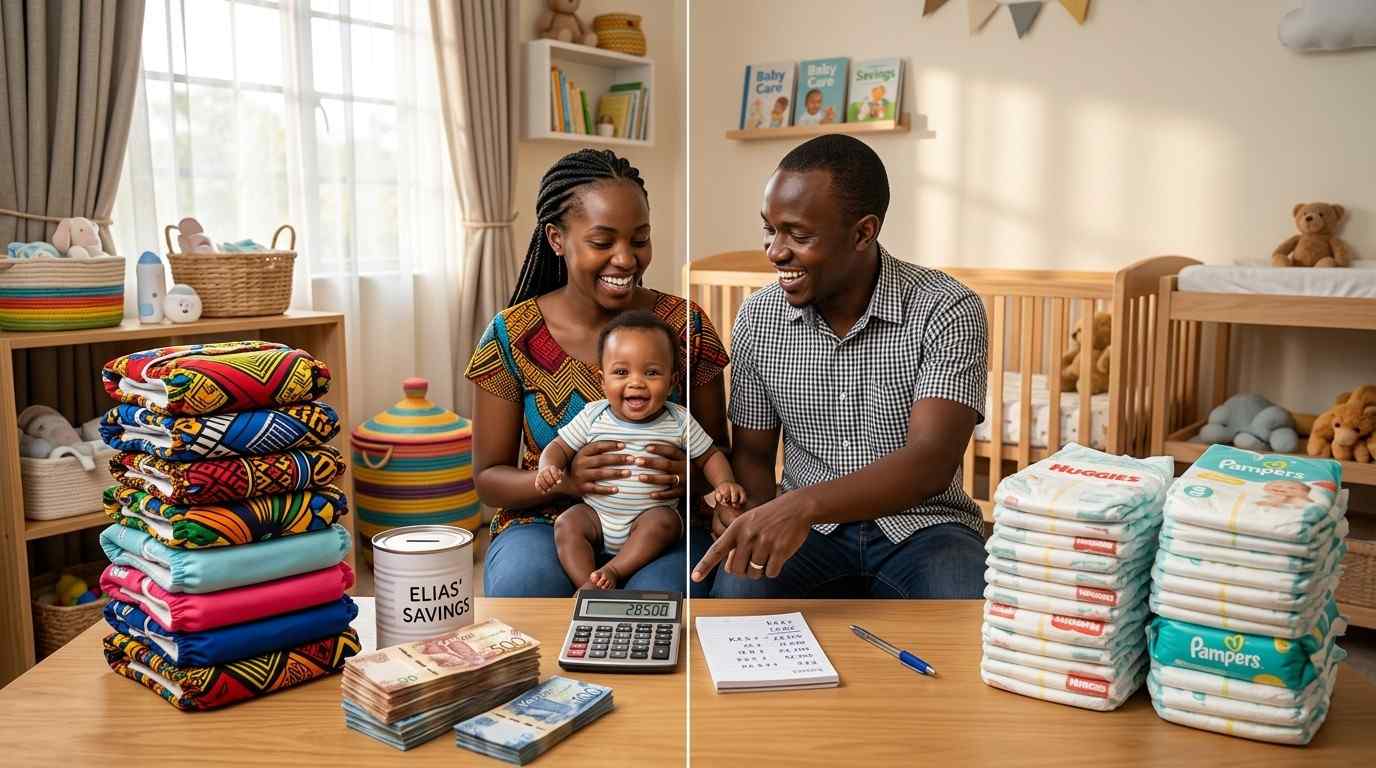
Over 6 months in Kenya, washable cloth diapers cost roughly KSh 9,000–13,000 in total (including laundry), while disposable diapers cost KSh 18,000–32,400. Cloth diapers save the average Kenyan family at least KSh 10,000 in the first six months, and even more over the full 2–3 years of diapering. The upfront investment pays back within 4–6 weeks.
Why This Comparison Matters for Kenyan Parents
Washable vs. disposable diapers is one of the most financially consequential decisions a new Kenyan parent will make — not because any single diaper is expensive, but because babies go through 6–10 diapers every single day for up to three years. That relentless frequency transforms a small per-unit cost into a substantial monthly budget line.
In a country where the cost of living continues to rise and household budgets are carefully managed, choosing the right diapering system can mean the difference between financial comfort and quietly draining your savings on landfill-bound plastic. We've researched current Kenyan market prices, spoken to Nairobi and Mombasa-based parents, and built a comprehensive 6-month cost model so you can make a fully informed decision.
This guide covers hard KSh numbers, hidden costs most blogs ignore, environmental impact, hygiene realities in the Kenyan climate, and our honest verdict on which option wins for different types of households.
Understanding Your Options
What Are Washable (Cloth) Diapers?
Washable diapers — also called cloth diapers or reusable nappies — are made from absorbent fabric layers (typically cotton, bamboo, or microfibre) that are washed and reused. They come in several styles commonly found in Kenya:
- Flat-fold / muslin squares: The cheapest option; a single layer of absorbent cloth you fold and fasten with pins or a Snappi clip, then cover with a waterproof wrap.
- Prefold diapers: Pre-sewn flat diapers with extra absorbency in the centre; popular in Kenyan maternity wards.
- Pocket diapers: An outer waterproof shell with a pocket you stuff with an absorbent insert. Very convenient; widely available on Jumia Kenya.
- All-in-one (AIO) diapers: The most convenient cloth option — no stuffing, no cover. Also the priciest.
What Are Disposable Diapers?
Disposable diapers are single-use nappies made from a combination of wood pulp, super-absorbent polymer (SAP), and plastic layers. You use them once and bin them. Brands commonly available in Kenya include Pampers, Huggies, Molfix, Softcare, Canbebe, and locally-distributed private-label nappies from supermarkets like Carrefour and Naivas.

How Many Diapers Does a Baby Actually Use?
Before we can calculate costs, we need to understand usage volumes. According to the American Academy of Pediatrics, newborns typically use 8–10 diapers per day, tapering to 5–7 by 6 months. In Kenya's warmer climate, babies may need slightly fewer changes due to higher evaporation, but hygiene-conscious parents typically average:
- Newborns (0–2 months): 8–10 changes/day
- Babies (2–4 months): 7–8 changes/day
- Babies (4–6 months): 6–7 changes/day
For our cost model, we use a conservative average of 7 diapers per day across the 6-month period, giving us ~1,260 diaper changes over 180 days.
Disposable Diapers: Full 6-Month Cost Breakdown
Disposable diaper pricing in Kenya varies widely by brand tier. We surveyed prices at Naivas, Carrefour, Jumia Kenya, and local kiosks in Nairobi, Mombasa, and Kisumu in May 2026. Here's what we found:
Disposable Diaper Prices in Kenya (Per Piece, KSh)
| Brand | Tier | Size NB–S (KSh/pc) | Size M (KSh/pc) | Where to Buy |
|---|---|---|---|---|
| Pampers Active Baby | Premium | 30–38 | 35–45 | Carrefour, Naivas, Jumia |
| Huggies Dry Comfort | Premium | 28–36 | 32–42 | Carrefour, Naivas, Jumia |
| Molfix | Mid-range | 22–28 | 25–32 | Naivas, Quickmart, Jumia |
| Softcare | Budget | 18–25 | 20–27 | Supermarkets, kiosks |
| Canbebe | Budget | 16–22 | 18–25 | Supermarkets, kiosks |
6-Month Disposable Diaper Cost Model (1,260 changes)
| Brand Tier | Avg. Cost/Piece | 1,260 Changes | Plastic bag waste | Total 6 Months |
|---|---|---|---|---|
| Premium (Pampers/Huggies) | KSh 37 | KSh 46,620 | ~KSh 600 | KSh 47,220 |
| Mid-range (Molfix) | KSh 26 | KSh 32,760 | ~KSh 500 | KSh 33,260 |
| Budget (Softcare/Canbebe) | KSh 21 | KSh 26,460 | ~KSh 400 | KSh 26,860 |
| 💡 Budget brand 6-month spend | ~KSh 26,860 | |||
Washable Diapers: Full 6-Month Cost Breakdown
The economics of cloth diapers are fundamentally different: you pay a higher upfront cost and then low ongoing costs. Here's a realistic starter kit budget for a Kenyan parent:
Washable Diaper Starter Kit — What You Need
| Item | Qty Recommended | Price Range (KSh) | Typical Total (KSh) |
|---|---|---|---|
| Pocket diapers (one-size) | 20–24 | 250–600 each | 5,000–14,400 |
| — Budget: flat-fold muslin squares | 24 pieces | 80–150 each | 1,920–3,600 |
| Waterproof diaper covers | 4–6 | 300–700 each | 1,200–4,200 |
| Wet bag / dry pail | 2 | 350–800 each | 700–1,600 |
| Snappi clips / diaper pins | 4 | 80–150 each | 320–600 |
| Cloth-safe laundry detergent (6 months) | — | — | 800–1,500 |
| Total Starter Investment (Mid-range pocket diapers) | KSh 8,720–22,300 | ||
Ongoing Monthly Costs — Washable Diapers (KSh)
| Cost Item | Monthly Cost | Notes |
|---|---|---|
| Water (extra for laundry) | KSh 150–300 | Increases slightly in water-metered areas |
| Detergent (cloth-safe) | KSh 130–250 | Avoid fabric softener; use gentle powders |
| Electricity (if machine washing) | KSh 200–400 | Hand-washing = zero electricity cost |
| Diaper rash cream (cloth-compatible) | KSh 100–200 | Less needed than with disposables |
| Total monthly ongoing | KSh 580–1,150 | Average ~KSh 800/month |
Total 6-Month Cloth Diaper Cost (Mid-range scenario)
| Component | Cost (KSh) |
|---|---|
| Starter kit (20 pocket diapers + accessories) | KSh 8,000 |
| 6 months of ongoing costs (@ KSh 800/month) | KSh 4,800 |
| Grand Total — 6 Months | KSh 12,800 |
Head-to-Head: 6-Month Cost Summary

| Scenario | 6-Month Total (KSh) | Monthly Average |
|---|---|---|
| 🗑️ Disposable — Premium (Pampers/Huggies) | KSh 47,220 | KSh 7,870/mo |
| 🗑️ Disposable — Mid-range (Molfix) | KSh 33,260 | KSh 5,543/mo |
| 🗑️ Disposable — Budget (Softcare/Canbebe) | KSh 26,860 | KSh 4,477/mo |
| ♻️ Washable — Pocket diapers (mid-range) | KSh 12,800 | KSh 2,133/mo |
| ♻️ Washable — Flat-fold muslin (budget) | KSh 9,300 | KSh 1,550/mo |
| 💰 Savings vs. Budget Disposables (pocket diaper scenario) | KSh 14,060 saved | |
Pros & Cons: Washable vs. Disposable in the Kenyan Context
Washable (Cloth) Diapers
✅ Pros
- Dramatically cheaper over time
- Reusable across multiple children
- Eco-friendly; no plastic in landfill
- Softer against baby's skin
- Lower rate of diaper rash in studies
- Sunlight drying disinfects naturally
- Resale value when done
❌ Cons
- Higher upfront investment
- Requires regular washing (daily/every 2 days)
- Less convenient when out & about
- Learning curve for folding/fastening
- Can be bulkier under clothing
- Some daycares may refuse cloth diapers
Disposable Diapers
✅ Pros
- Extremely convenient
- No laundry required
- Slim, low-bulk fit
- Universally accepted at daycares
- Excellent for travel
- Modern SAP technology highly absorbent
❌ Cons
- Extremely expensive over the diapering years
- Generates enormous plastic waste
- Higher risk of diaper rash (chemicals/moisture)
- Can cause allergic reactions in sensitive babies
- Ongoing, never-ending expense
- Contributes to Kenya's plastic waste crisis
Environmental Impact: The Hidden Cost Kenya Pays
The financial comparison alone is compelling enough, but the environmental picture adds another dimension. According to the Nappy Alliance's environmental research, a single baby in disposables generates approximately 500kg of nappy waste before being toilet trained — roughly equivalent to throwing away a small motorcycle. In Kenya, where plastic waste management infrastructure is limited, the majority of this waste ends up in landfill, rivers, or informal dumps.
One baby using cloth diapers generates an estimated 98% less solid waste than a baby in disposables. Kenya's government has progressively tightened plastic regulations (the landmark 2017 plastic bag ban being a landmark moment), and a growing number of environmentally conscious Kenyan parents are choosing cloth partly on ecological grounds.
Importantly, Kenya's climate actually makes cloth diapering more sustainable than in colder countries. The abundant sunshine eliminates the need for a tumble dryer — a significant energy cost in UK or European cloth diapering analyses — and acts as a natural bleach and disinfectant.
Are Cloth Diapers Hygienic in Kenya's Climate?
This is the most common concern we hear from Kenyan parents, particularly in hot coastal regions like Mombasa. The short answer is yes — when washed and dried properly.
- Wash at 60°C or above to kill bacteria and pathogens. A basic machine wash or a hot hand-wash works.
- Dry in direct sunlight. UV radiation is a highly effective natural disinfectant. In most Kenyan regions, sunlight drying takes 2–3 hours.
- Store dry diapers in a clean, sealed bag to prevent dust contamination.
- Use a cloth-safe detergent (avoid fabric softeners which reduce absorbency). Omo or Ariel powder work well.
The World Health Organization's guidelines on infant hygiene confirm that properly laundered cloth diapers pose no greater infection risk than disposables, provided they are washed at appropriate temperatures.
Where to Buy Washable Diapers in Kenya
The Kenyan market for cloth diapers has grown significantly since 2020. Here are the best places to find them:
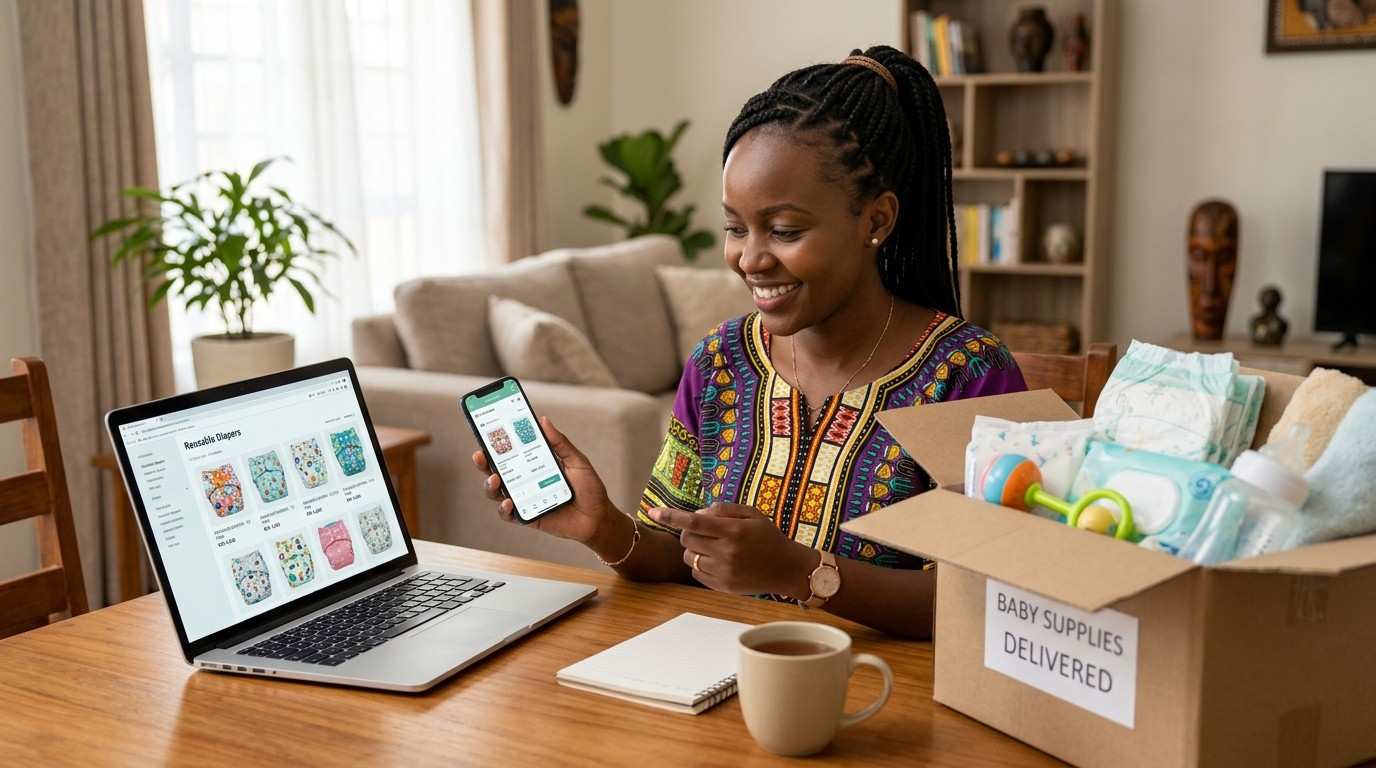
🛒 Online Platforms
- Jumia Kenya — widest selection of pocket & AIO diapers
- Kilimall — budget import options
- Facebook Marketplace — secondhand cloth diapers
- Instagram baby boutiques (search #KenyaBabyShop)
🏪 Physical Stores
- Mothercare (Westgate, Two Rivers)
- Baby Plus stores in Nairobi
- Selected Naivas & Carrefour branches
- Specialty baby boutiques in Mombasa
For online shopping reliability, Jumia Kenya offers buyer protection and a growing range of both local and imported cloth diaper brands. Always check seller ratings and look for "Jumia Fulfilled" listings for faster delivery. You can also explore more on KE Offers' comprehensive buying guides for the latest deals on baby products in Kenya.
Which Should You Choose? Honest Verdict
Our Verdict
For most Kenyan families: Cloth diapers win on cost, ecology, and skin health.
If you can manage the upfront investment and are willing to do regular laundry, cloth diapers will save the average Kenyan family KSh 14,000–35,000+ over the diapering years compared to any brand of disposables. That's a meaningful sum in any household budget.
That said, the "best" choice depends on your personal circumstances. Here's our quick recommendation guide:
Choose Washable Diapers If:
- You have a reliable water supply and laundry routine
- You have access to sunlight drying space (most Kenyan homes do)
- Budget is a priority (especially if you plan more than one child)
- Your baby has sensitive skin prone to rashes
- You're environmentally motivated
Choose Disposables If:
- Water supply is unreliable or restricted (some parts of northern Kenya)
- You travel frequently or your baby is in full-time daycare that doesn't accept cloth
- You are a single parent with very limited time for laundry
- Convenience is a non-negotiable priority during a difficult postpartum period
The Smart Hybrid Approach
Many experienced Kenyan parents use a hybrid system — cloth diapers at home (especially during the day), and a small pack of disposables kept for nights, travel, and daycare. This approach can cut your disposable spend by 60–70% while minimising the inconvenience of cloth diapering in demanding situations. Hybrid families typically spend KSh 15,000–20,000 total over 6 months — still substantially less than full disposable use.
The Long-Term Financial Picture
Our 6-month window only tells part of the story. Most children are not fully toilet trained until around 2.5–3 years old — meaning you're looking at roughly 30 months of diapering beyond the newborn phase. When you project costs over the full diapering journey:
| Method | Est. Total Cost (30 months) | Per Child |
|---|---|---|
| Premium disposables | KSh 192,000–240,000 | Full ongoing cost |
| Budget disposables | KSh 120,000–145,000 | Full ongoing cost |
| Cloth diapers (pocket) | KSh 18,000–28,000 | Mostly upfront; reusable 2nd child |
| 💰 Total savings (cloth vs. budget disposables) | KSh 90,000–120,000+ | |
The savings multiply further if you have a second child: your cloth diapers are already paid for. A good set of pocket diapers can last 2–3 children with proper care, making the per-child cost of cloth diapering negligible by child number two.
For more smart money guides for Kenyan households, explore all our guides on KE Offers — from buying electronics to navigating Kenya's best bargains.
Frequently Asked Questions
Are washable diapers cheaper than disposable diapers in Kenya?
Yes. Over 6 months, washable cloth diapers cost a Kenyan parent approximately KSh 9,000–13,000 in total (including laundry costs), while disposable diapers cost KSh 26,860–47,220 depending on brand. Washable diapers save the average Kenyan family at least KSh 14,000 in the first six months, and KSh 90,000–120,000 over the full 2.5 years of diapering.
How many washable diapers do I need for a newborn in Kenya?
Most parents need 20–25 cloth diapers to maintain a comfortable rotation, allowing washing every 2–3 days without running out. If you plan to wash daily (easy in Kenya's sunny climate), 15–18 is workable. For flat-fold muslin squares, buy 24–30 as they are thinner and wear faster.
Which disposable diaper brand is cheapest in Kenya?
Among disposables, Canbebe and Softcare are currently the most affordable brands in Kenya, priced at roughly KSh 16–25 per piece depending on size and where you buy. Buying in bulk packs from Naivas or Carrefour typically gives a 10–15% cost saving over buying packs of 10.
Are cloth diapers hygienic in Kenya's hot climate?
Yes, when handled correctly. Wash at 60°C or higher, dry in direct sunlight (Kenya's sun is intense enough to fully disinfect in 1.5–3 hours), and store clean diapers in a sealed bag. The WHO confirms that properly laundered cloth diapers carry no greater infection risk than disposables.
Can I use cloth diapers at night?
Yes, with the right boosting. Add an extra hemp or bamboo insert for overnight absorbency. Many parents combine a microfibre pocket insert with a hemp booster for a reliable 8–10 hour overnight solution. Some parents prefer a single disposable at night and cloth during the day as a compromise.
Where can I buy cloth diapers in Mombasa?
In Mombasa, try baby boutiques along Moi Avenue and in the Nyali area. Online via Jumia Kenya is often the most convenient option with 2–4 day delivery to Mombasa. Kilimall and Facebook Marketplace also have listings from Mombasa-based sellers.
The Bottom Line
When it comes to washable vs. disposable diapers, the numbers for Kenyan parents are unambiguous: cloth diapers are dramatically cheaper, better for the environment, and — with Kenya's year-round sunshine — more practical than their reputation suggests. The roughly KSh 8,000–15,000 upfront investment pays itself back within 6–8 weeks, and the savings compound beautifully over time.
If you're currently expecting or have a newborn, the smartest financial move is to start building a cloth diaper stash immediately. Even a modest 15-diaper starter kit used alongside a small pack of disposables will cut your monthly diaper spend significantly. Over 30 months of diapering, you could redirect over KSh 100,000 toward your child's education, healthcare, or a family savings fund.
The softness, cost savings, and environmental benefits all point in the same direction. Your baby's bottom — and your budget — will thank you.
For more buying guides, cost comparisons, and best bargains across Kenya, visit KE Offers — Kenya's trusted review and deals platform.