The Toyota Raize price in Kenya ranges from KSh 1.9 million to KSh 3.5 million depending on year, trim, and condition. It is a 5-seat compact SUV with a 1.0L turbocharged engine, 185–200 mm ground clearance, and returns 12–20 km/L fuel economy. Top alternatives include the Kia Sonet, Hyundai Venue, and Nissan Magnite.
The Toyota Raize price in Kenya is one of the most searched car topics right now — and for good reason. Kenyans love compact SUVs that can handle city traffic, rough roads, and still save on fuel costs. The Toyota Raize checks all three boxes, and it does so while looking stylish and modern. Whether you are a first-time SUV buyer, a young professional, or a parent with a growing family, this guide will tell you everything you need to know before you spend your hard-earned money.
We will look at the current prices, the different trims available, what the car feels like to drive on Kenyan roads, its strengths and weaknesses, and the best alternatives you can consider. By the end of this review, you will know exactly whether the Toyota Raize is the right car for you.
🚗 Toyota Raize — Quick Facts
What Is the Toyota Raize?
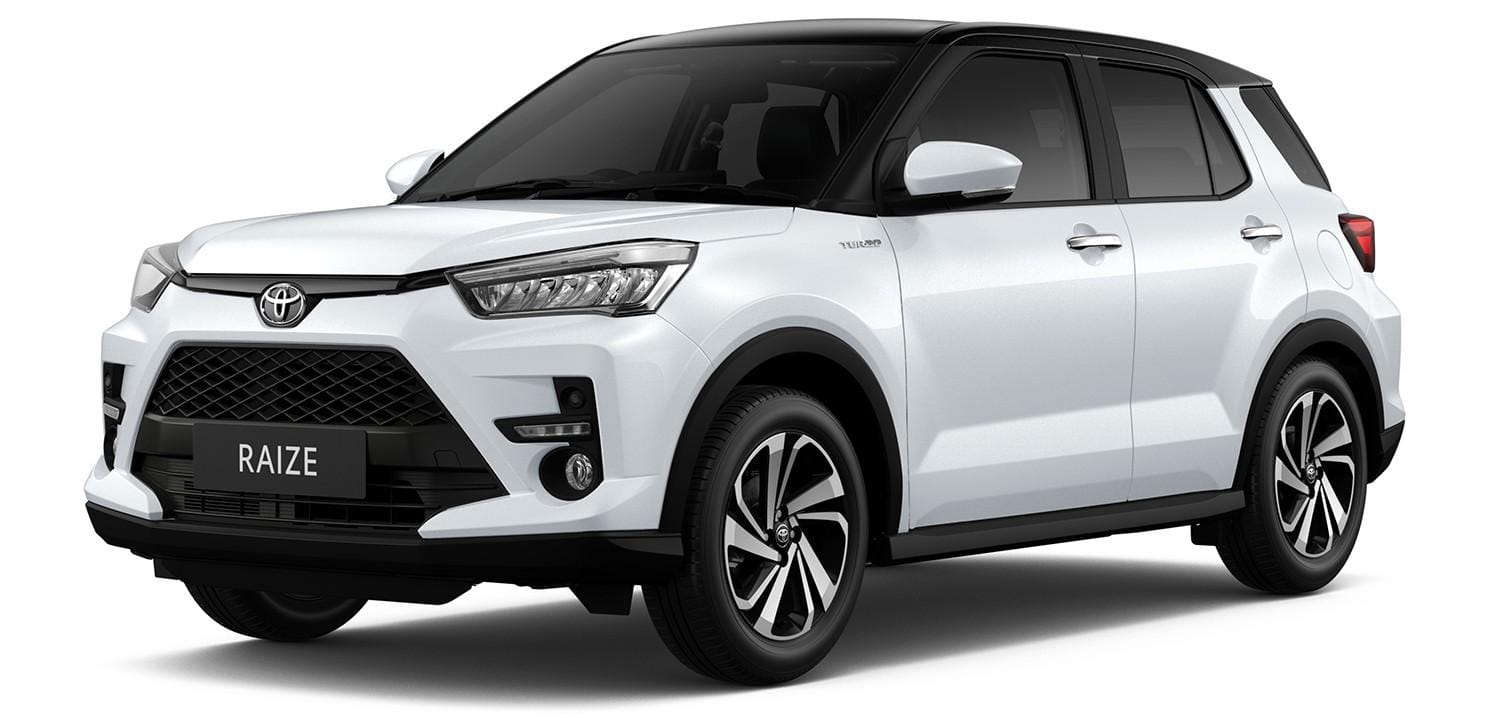
The Toyota Raize is a small SUV that Toyota launched in Japan in November 2019. It is built on a platform called the DNGA (Daihatsu New Global Architecture), which is a partnership between Toyota and Daihatsu. In simple terms, the Raize is the Toyota version of the Daihatsu Rocky — they are almost the same car, just wearing different badges.
The name "Raize" is a mix of the English words rise and raise. Toyota chose this name to show the car is meant to lift your driving experience and raise your lifestyle. It was designed for buyers who want a true SUV look and feel but do not want a big, heavy car that is hard to park or expensive to fuel.
The Raize looks like a shrunken version of the bigger Toyota RAV4. The front has a large hexagonal grille, thin LED headlights, and LED daytime running lights. The side profile has a raised roofline that gives passengers more headroom. Overall, it is a handsome little car that stands out in traffic.
Toyota Raize Price in Kenya
Prices can change depending on where you buy, the age of the car, and the trim level. The table below shows what you can expect to pay in the Kenyan market right now.
| Model Year | Trim / Grade | Drivetrain | Condition | Price (KSh) |
|---|---|---|---|---|
| 2019 | X Grade | FWD | Used (imported) | 1.9M – 2.2M Budget Pick |
| 2019 | G Grade | FWD / AWD | Used (imported) | 2.2M – 2.5M |
| 2020 | G Grade | FWD / AWD | Used (imported) | 2.3M – 2.6M |
| 2020–2021 | Z Grade | FWD / AWD | Used (imported) | 2.5M – 3.0M Best Value |
| 2022–2023 | Z Grade / Hybrid | FWD | Fresh import / New | 3.0M – 3.5M |
Direct Import vs. Buying Locally
You have two main ways to buy a Toyota Raize in Kenya:
- Import directly from Japan: This can save you KSh 250,000 to KSh 400,000 compared to buying from a local dealer. However, the process takes 45–60 days, and you must handle the clearing, NTSA registration, and inspection yourself.
- Buy from a local dealer or marketplace: You pay more, but you can physically inspect the car before paying. You also get the car much faster. Trusted Kenyan platforms like Jiji.co.ke and Cars45 list hundreds of verified units.
Toyota Raize Trim Grades Explained
The Toyota Raize comes in three main grades in the Japanese domestic market (which is where most Kenyan imports come from): X, G, and Z. Here is what each one gets you:
| Grade | Key Features | Best For |
|---|---|---|
| X Grade | Basic safety features, fabric seats, 7-inch touchscreen, keyless entry | Budget buyers, first-time SUV owners |
| G Grade | Alloy wheels, LED headlights, Apple CarPlay/Android Auto, rear camera, Toyota Safety Sense (lane keep assist, auto brake) | Families, daily commuters |
| Z Grade | 9-inch touchscreen, digital speedometer, panoramic view monitor, adaptive cruise control, ISOFIX child anchors, sequential turn signals | Buyers who want full tech and safety |
Engine & Performance in Kenya
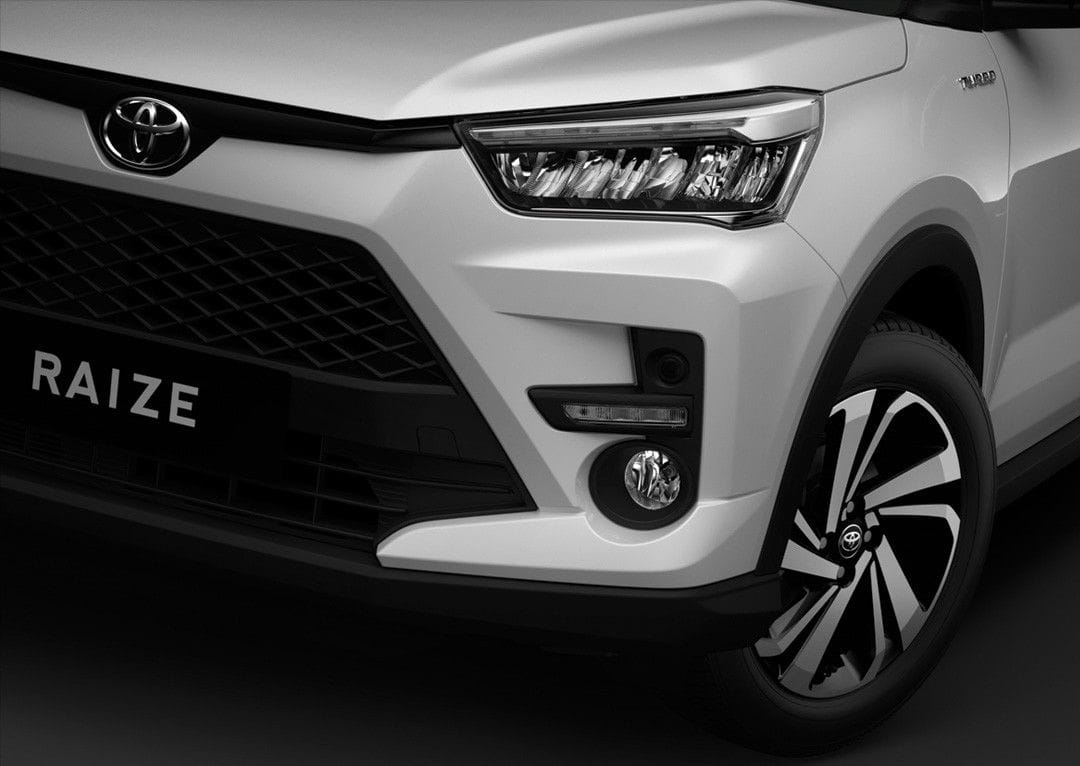
The Toyota Raize uses a 1.0-litre, 3-cylinder turbocharged petrol engine (code: 1KR-VET). It makes about 100 horsepower and 140 Nm of torque. Those numbers might sound small, but because the Raize is a very light car (under 1,000 kg), the engine feels surprisingly peppy in everyday driving.
The engine is connected to a D-CVT (Direct-Shift CVT) gearbox, which is smoother and more fuel-efficient than a regular automatic. In Nairobi's stop-and-go traffic, the Raize does very well. It does not overheat, and the engine is responsive when you need to move quickly from a standstill.
On the highway, the Raize can cruise comfortably at 100–120 km/h. However, if you try to overtake at high speeds, you may notice the engine working hard. For confident, fast overtaking on a busy dual carriageway like Thika Road or Mombasa–Nairobi Highway, the small turbo engine is not its strongest point.
Fuel Economy — Real World Kenya Numbers
| Driving Condition | Fuel Economy |
|---|---|
| Nairobi / Mombasa city traffic | 12–14 km/L |
| Mixed driving (city + highway) | 15–17 km/L |
| Highway (cruise control) | 18–20 km/L |
| Hybrid variant (urban) | Up to 26 km/L |
With petrol in Nairobi typically around KSh 190 per litre, a daily commute of 30 km could cost you as little as KSh 400–500 per day in fuel. That is very competitive compared to most other SUVs in this price class.
Interior, Comfort & Features
Inside, the Toyota Raize is neatly designed and practical. The cabin is driver-focused, with controls placed logically within easy reach. The seats are comfortable for city driving, and the front occupants get decent legroom, shoulder space, and headroom.
The rear seats are reasonably comfortable for two adults. However, taller passengers (above 6 feet) will find rear headroom a little tight. This is expected for a sub-4-metre SUV, and the Raize is not alone in this regard — all compact SUVs in this category have similar limitations.
Key Interior Features by Grade
- X Grade: 7-inch touchscreen, fabric seats, air conditioning, push-start button, rear camera
- G Grade: Apple CarPlay & Android Auto, alloy wheels, auto air-con, LED interior lighting
- Z Grade: 9-inch touchscreen, digital speedometer cluster, panoramic view monitor, heated seats (some variants), ISOFIX anchors for child seats
Safety Features
Safety is one of the best things about the Toyota Raize, especially on the G and Z grades. Higher trims come with Toyota Safety Sense, which is a bundle of active safety technologies. These include:
- Pre-Collision System — detects cars and pedestrians ahead and can auto-brake
- Lane Departure Alert — warns you if you drift out of your lane
- Adaptive Cruise Control — keeps a safe gap from the car in front on the highway
- Automatic High Beam — switches between full and dipped beams automatically
- Hill Start Assist — stops the car rolling back on steep hills
- 7 Airbags (on top trims) — front, side, curtain, and knee airbag for the driver
- ISOFIX Child Seat Anchors — for safe installation of baby and child car seats
- Tyre Pressure Monitoring System (TPMS)
For a car priced between KSh 2M and KSh 3M, this safety suite is genuinely impressive. Most Kenyan buyers at this price point would only get basic ABS and a couple of airbags elsewhere.
Pros & Cons of the Toyota Raize in Kenya
✅ Pros
- Excellent fuel economy (12–20 km/L)
- Strong Toyota resale value in Kenya
- Spare parts widely available and affordable
- Impressive safety tech on upper grades
- Easy to park in tight city spaces
- Stylish, modern design
- 5-star safety rating (JNCAP, Japan)
- AWD option for upcountry buyers
❌ Cons
- Engine struggles at high-speed overtaking
- Hard plastic interior surfaces
- Rear headroom tight for tall adults
- Not suitable for serious off-road driving
- Lower grades (X) feel basic inside
- Turbo engine needs premium-quality fuel
How Does It Perform on Kenyan Roads?
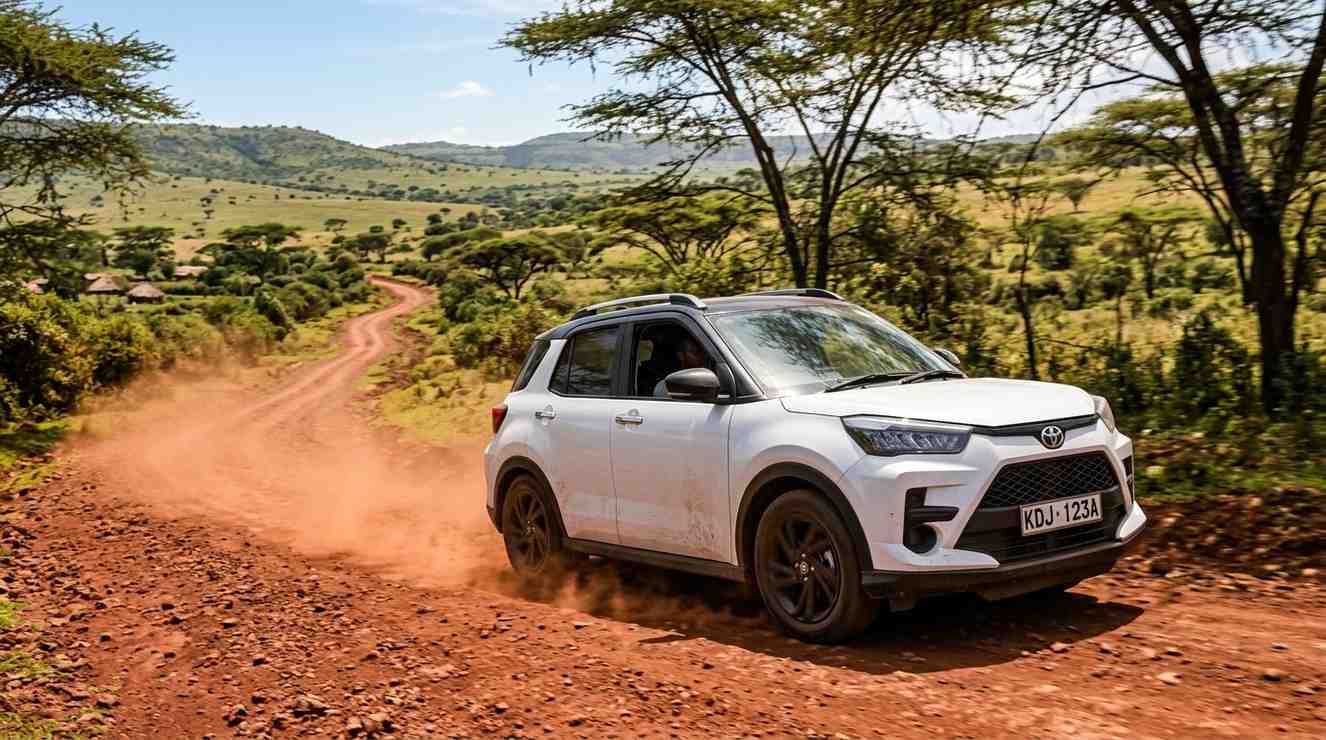
Kenyan roads test cars every single day — from the potholed side streets of Nairobi's estates to the bumpy murram roads in rural counties. Here is how the Raize handles different situations:
City Driving (Nairobi, Mombasa, Kisumu)
The Raize is an excellent city car. Its compact size makes lane changes and U-turns easy. The suspension handles most urban bumps and speed bumps comfortably without throwing passengers around. The turbo engine gives quick bursts of acceleration needed when joining fast-moving traffic.
Highway Driving
On smooth highways like the Nairobi Expressway or Nairobi–Mombasa SGR Road, the Raize is stable and comfortable. Wind and road noise are controlled well up to around 110 km/h. Above that, wind noise increases and the small engine needs to work harder.
Rural Roads & Light Gravel
The Raize's 185–200 mm ground clearance is enough for most light gravel roads and slightly rough terrain in places like Nakuru, Meru, or Kiambu. However, do not expect it to perform like a proper 4x4. Deep sand, heavy mud, or flooded crossings will be too much for this car.
Maintenance & Running Costs in Kenya
One of the strongest reasons Kenyans choose the Toyota Raize is its low running costs. Because the Raize shares many parts with other popular Toyota models sold in Kenya, spare parts are widely available at garages and spare parts shops across the country — from Nairobi's Industrial Area to Mombasa and Kisumu.
| Service / Part | Estimated Cost (KSh) |
|---|---|
| Engine oil change (every 5,000 km) | KSh 3,000 – 4,500 |
| Air filter replacement | KSh 800 – 1,500 |
| Brake pads (front axle) | KSh 3,500 – 6,000 |
| Tyre replacement (per tyre, 175/65 R15) | KSh 7,000 – 11,000 |
| Full service (at Toyota Kenya dealer) | KSh 12,000 – 18,000 |
| Comprehensive insurance (annual, est.) | KSh 55,000 – 90,000 |
Compare this to running a larger SUV like a Land Cruiser or RAV4, and you will see the Raize saves you a significant amount every year. Also check our guide on car oil change costs in Kenya to budget your maintenance properly.
Best Alternatives to the Toyota Raize in Kenya
The Toyota Raize is a great car, but it may not be the perfect choice for everyone. Here are the four most popular alternatives, with honest comparisons to help you decide.
| Model | Engine | Ground Clearance | Fuel Economy (city) | Spare Parts (Kenya) | Price (KSh, used) |
|---|---|---|---|---|---|
| Toyota Raize Top Pick | 1.0L Turbo | 185–200 mm | 12–14 km/L | ⭐⭐⭐⭐⭐ Excellent | 2.5M – 3.5M |
| Kia Sonet | 1.0L Turbo / 1.5L NA | 190 mm | 11–14 km/L | ⭐⭐⭐ Moderate | 2.0M – 3.2M |
| Hyundai Venue | 1.0L Turbo | 188 mm | 12–13 km/L | ⭐⭐⭐ Moderate | 2.2M – 3.0M |
| Nissan Magnite | 1.0L Turbo | 205 mm | 13–16 km/L | ⭐⭐⭐ Moderate | 1.8M – 2.8M |
| Suzuki Vitara | 1.4L / 1.5L Mild Hybrid | 170 mm | 12–15 km/L | ⭐⭐⭐⭐ Good | 2.5M – 3.8M |
1. Kia Sonet — Best for Budget Buyers
The Kia Sonet is often KSh 200,000–500,000 cheaper than an equivalent Raize, making it appealing for buyers watching every shilling. It has a similar turbocharged engine and a slightly higher ground clearance of 190 mm. However, spare parts for Kia vehicles are not as easy to find in smaller Kenyan towns, which can be a problem if you break down outside Nairobi or Mombasa. If you mostly drive in the big cities, the Sonet is worth considering seriously.
2. Hyundai Venue — Best for Interior Quality
The Hyundai Venue feels a little more premium inside than the Raize, with softer touch points and a more modern-looking dashboard. It also uses a 1.0L turbocharged engine and returns similar fuel economy. Like the Sonet, its spare parts availability outside major cities is not as strong as Toyota's. The Venue is priced similarly to the Raize, so the decision often comes down to brand loyalty and where you plan to drive.
3. Nissan Magnite — Best Ground Clearance
If you live in a rural county or frequently drive on rough roads, the Nissan Magnite's 205 mm ground clearance gives it a real advantage over the Raize. It is also typically the most affordable option in this group. The downside is that Nissan's after-sales network in Kenya is thinner than Toyota's, and resale values are generally lower. Also check our comparison of the Nissan Note vs Toyota Aqua vs Honda Fit Hybrid if you are also considering hybrid options.
4. Suzuki Vitara — Best for Mildly Hilly Roads
The Suzuki Vitara is a step up in size and engine from the Raize. It now comes with a mild hybrid system that improves fuel economy. However, its ground clearance of just 170 mm is actually lower than the Raize, which may surprise some buyers. It costs more on average, but the Suzuki brand has decent parts availability in Kenya. If you want a slightly larger SUV at the lower end of the medium-SUV market, the Vitara is worth a look. You can also check our full Suzuki Escudo vs Toyota RAV4 comparison to see how Suzuki's SUVs compare at a higher level.
Who Should Buy the Toyota Raize?
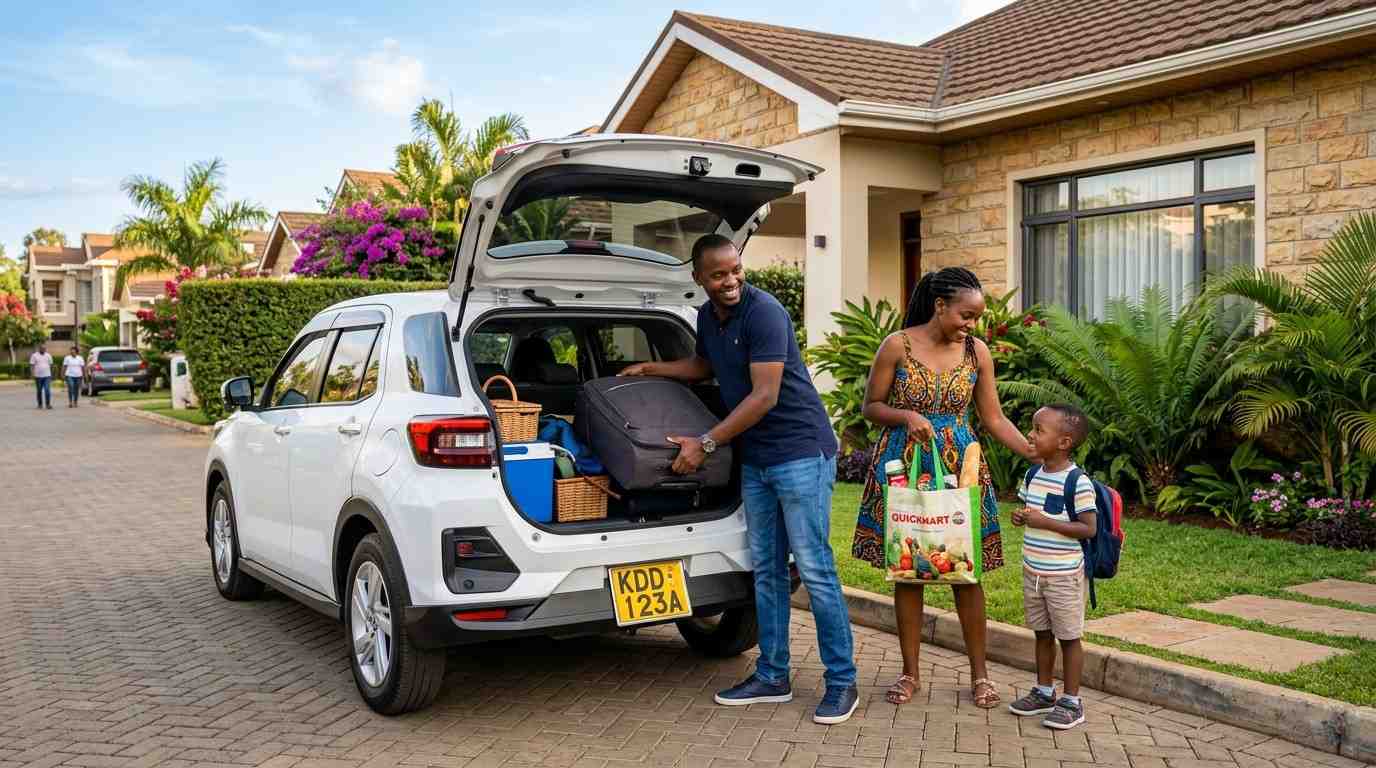
The Toyota Raize is a very good car, but it is not for everyone. Here is a simple guide to help you decide:
✅ Buy the Raize If You:
- Mostly drive in Nairobi, Mombasa, or other big cities
- Want excellent fuel economy on a daily commute
- Have a budget of KSh 2M–3.5M
- Value strong Toyota resale value
- Have a young family (with small children — ISOFIX anchors are a bonus)
- Want a stylish, modern-looking car
- Use it for ride-hailing (low running costs help profitability)
❌ Look Elsewhere If You:
- Frequently drive on very rough rural roads or rivers
- Need to carry more than 5 people regularly (look at a 7-seater)
- Want a powerful engine for confident highway overtaking
- Need a large boot for regular cargo
- Have very tall passengers (6'2" and above) who sit in the rear
Our Verdict
Toyota Raize — Highly Recommended for Urban Kenya
The Toyota Raize earns its popularity in Kenya. It delivers excellent fuel economy, strong safety features on upper grades, affordable maintenance costs, and the legendary Toyota resale value — all wrapped in a stylish, compact SUV body. It is not perfect: the interior plastics feel cheap, rear space is limited for tall adults, and it does not like serious off-road adventures. But for city commuters, young families, and budget-conscious buyers who refuse to sacrifice style or reliability, the Raize is one of the smartest choices in its price range right now.
Frequently Asked Questions
Related Reading
- Suzuki Escudo vs Toyota RAV4 in Kenya: Showdown
- Nissan Note e-Power vs Toyota Aqua vs Honda Fit Hybrid
- Mitsubishi Pajero vs Toyota Land Cruiser vs Nissan Patrol
- SUV vs Sedan in Kenya: Which Makes More Sense?
- Turbo vs Non-Turbo Engines in Kenya: Which Tops?
- Car Oil Change Cost in Kenya: What to Expect
- New KRA Vehicle Tax Calculator (Latest CRSP)
- How to Increase Car Ground Clearance: 5 Effective Ways