The Town That Milk Built
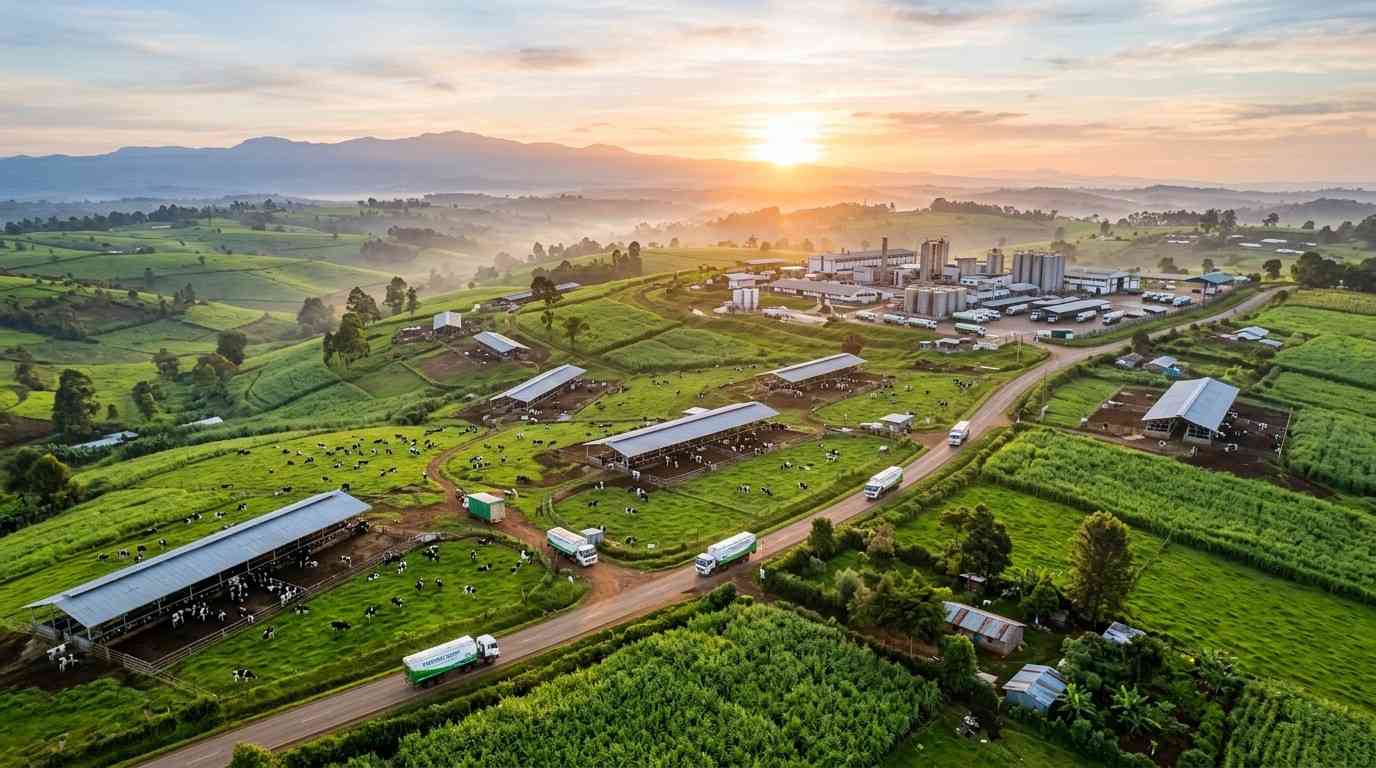
Githunguri — a quiet agricultural town tucked into the rolling hills of Kiambu County, roughly 40 kilometres north of Nairobi — is not a name you will find on many tourist maps. Yet, for anyone who has ever poured a cold glass of Fresha milk on a Nairobi morning, they have already tasted what makes this place remarkable. In Kenya's dairy sector, Githunguri occupies a singular position: it is the heartland of a cooperative model that turned smallholder subsistence into a KSh 6 billion enterprise.
Kiambu County, where Githunguri sits, produces over 1.13 billion litres of milk annually — the highest of any county in Kenya for five consecutive years, according to local industry data. That extraordinary output does not happen by geographic luck alone. It is the product of decades of deliberate organisation, collective investment, and a willingness to fail, rebuild, and try again. The story of Githunguri's dairy success is ultimately the story of Kenyan farmers refusing to be middlemen in their own industry.
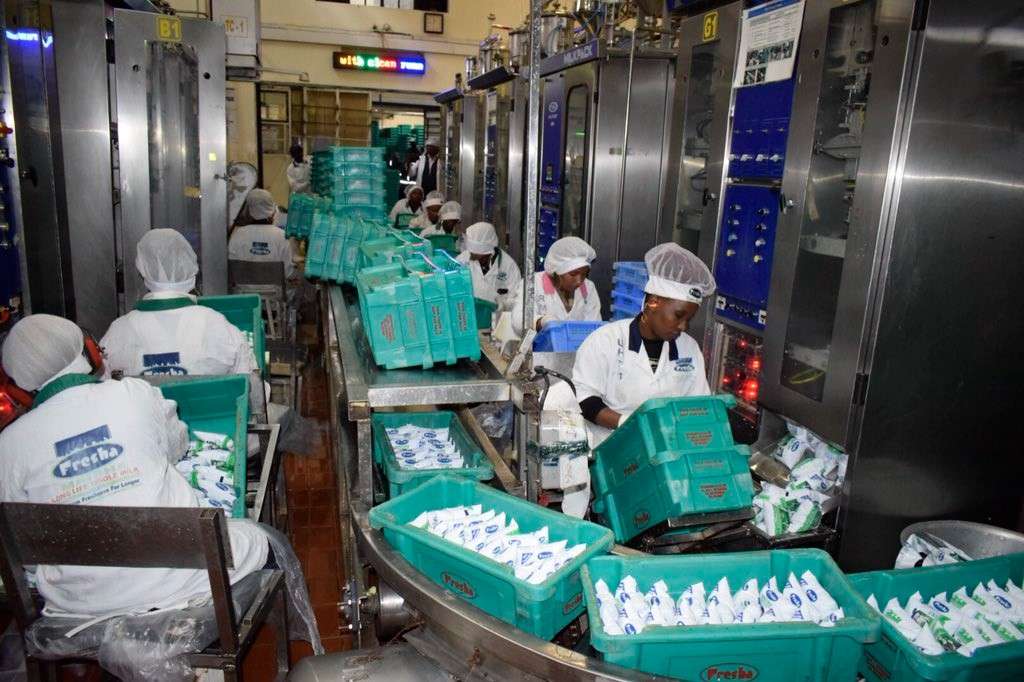
The Fresha processing plant in Githunguri — one of East Africa's largest dairy facilities. Photo by: @rodgers_kirwa
From 31 Farmers to a KSh 6 Billion Cooperative
The Githunguri Dairy Farmers Co-operative Society Ltd (GDFCS) was formally registered in August 1961 with an initial membership of just 31 small-scale dairy farmers who were determined to improve how they produced and marketed milk. In those early days, the collective churned out fewer than 200 litres per day — barely enough to supply a single neighbourhood, let alone a county.
The Kenya Cooperative Creameries Era
The society's first marketing strategy was pragmatic: supply raw milk to the Kenya Cooperative Creameries (KCC), then the dominant national processor, and to a local hotel. It was a fragile arrangement. KCC's collapse in the early 1990s sent GDFCS back to the drawing board in one of its most difficult moments. "This was our lowest point and we decided to raise capital and set up our own milk plant," recounted one of the society's long-standing members, as reported by Business Daily Africa.
A Pivotal Decision: Building Their Own Plant
Rather than dissolve or pivot to another commodity, GDFCS members made a collectively bold call: they would each contribute KSh 2 for every kilogramme of milk sold until they had accumulated enough capital to commission their own processing facility. It was a remarkable act of deferred gratification — farmers accepting reduced short-term returns in exchange for long-term ownership of the entire value chain.
In July 2004, that vision materialised: the cooperative launched its own milk processing plant, and with it, the Fresha brand entered the market. By then, the society was already receiving over 80,000 litres per day from members, up from just 25,000 litres in 1999 — a more than threefold surge in five years. The trajectory since has been unrelenting.
How Fresha Became a Household Name
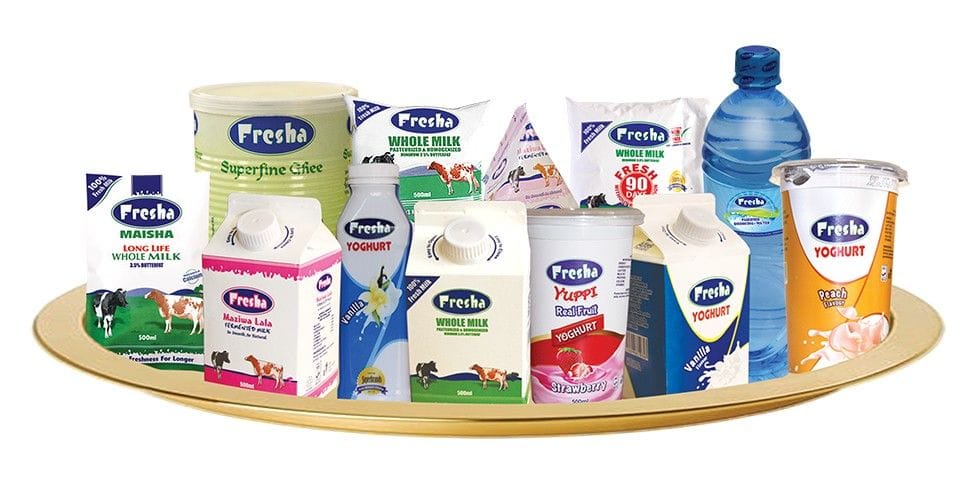
Fresha products — fresh milk, yoghurt, ghee, and more — are now staples in Nairobi supermarkets. Photo by: Fresha
Today, the Fresha brand is the leading fresh milk brand in and around Nairobi — no small achievement in a market crowded with multinational-backed competitors. What gives Fresha its edge? Speed, authenticity, and farmer alignment.
According to the Fresha brand website, its milk reaches the market in under ten hours from milking, with no additives or reconstituted powder milk — 100% real farm-fresh product. That value proposition resonates deeply with a Kenyan consumer who has grown increasingly sceptical of processed and adulterated dairy.
"Fresha milk reaches the market in less than ten hours from milking — no additives, no powder milk. It is 100% real farm-fresh milk."
The Product Range
The cooperative has expanded well beyond basic milk. Today's Fresha portfolio spans eight product categories — from the highest-value item (ghee) down the ladder through butter, long-life milk, yoghurt, Maziwa Lala (fermented milk), fresh milk, and even bottled purified drinking water. This deliberate move up the value chain is exactly how the cooperative protects farmer earnings even when raw milk prices face pressure. GDFCS is also Kenya's third-largest dairy processing company.
Fresha Product Line at a Glance
- Fresh Milk (flagship; reaches market within 10 hours of milking)
- Long-Life (UHT) Milk
- Yoghurt & Maziwa Lala (fermented milk)
- Butter & Ghee (highest-margin products)
- Bottled Purified Drinking Water
- Distribution depots in Eldoret, Kisumu, Embu, Nakuru, Mwingi, Emali & Mombasa
Export Ambitions
Githunguri Dairy is not content with the Kenyan market. As reported by the Kenya National Chamber of Commerce and Industry, GDFCS is actively exploring export expansion into Somalia, Saudi Arabia, and other East African markets via the KNCCI iSoko platform. The cooperative already has a track record of exporting to the Gulf, signalling an ambition to compete on the continental and international stage.
The Zero-Grazing Model That Changed Everything
One of the most consequential decisions in Githunguri's dairy history was the wholesale adoption of the zero-grazing farming method by its members. Zero grazing — sometimes called cut-and-carry — involves keeping dairy cattle in a confined housing unit and bringing feed to the animals, rather than allowing them to roam open pasture.
In a densely populated county like Kiambu, where land parcels are small, this model unlocks productivity that open-grazing systems simply cannot match. Farmers can maintain a higher stocking density, control feed quality precisely, and reduce the energy cattle expend walking — calories that instead go towards milk production. All 23,000+ registered GDFCS members practice this method, creating a standardised and predictable supply chain for the processing plant.
The scale dividend is visible in the numbers. At the time of the society's 60th anniversary in 2021, the average active member was delivering 22 litres of milk per day — compared to just five litres per day per member sixty years earlier. That is a more than fourfold productivity improvement, achieved not through industrial farms but through smallholder discipline and cooperative support services.
This mirrors best practices documented globally. The Food and Agriculture Organization of the United Nations (FAO) consistently finds that intensified smallholder systems, combined with cooperative marketing, deliver the best productivity and income outcomes for rural dairy farmers in Sub-Saharan Africa.
Infrastructure: The Backbone of Success
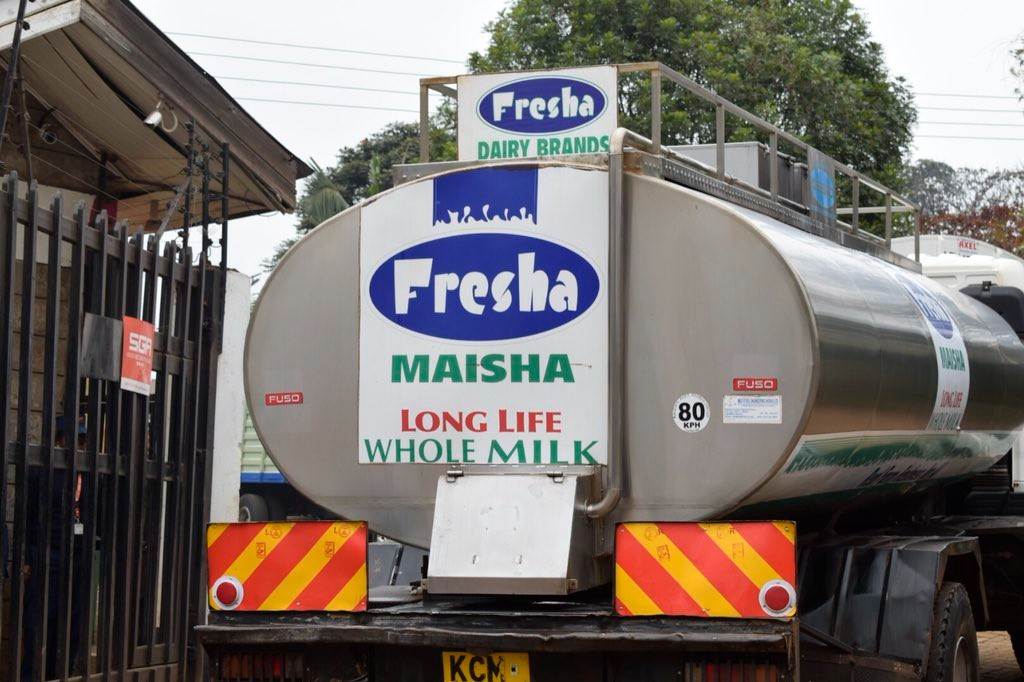
A GDFCS member transports fresh milk to a nearby collection point — part of a network spanning over 76 centres. Photo by: @rodgers_kirwa
A co-operative can have the best farming practices in the world and still fail without robust logistics. GDFCS has invested relentlessly in physical infrastructure.
What began as a single milk collection centre in Githunguri town has grown into a network of over 76 collection centres and more than 6 cooling centres spread across the cooperative's catchment area. Cold chain integrity — the ability to keep raw milk chilled from farm to plant — is the critical differentiator between high-quality Fresha product and spoiled milk.
The cooperative also operates over 58 agro-vet store outlets across the catchment area, supplying dairy farm inputs and household consumables to members on credit. This is a significant welfare innovation: farmers do not need to raise cash upfront for essentials like veterinary drugs, feeds, or artificial insemination services. The costs are deducted from milk proceeds at the end of the month — a model that effectively functions as a low-cost agricultural credit line.
The GDFCS Sacco: A Full Financial Ecosystem
In a further sign of institutional maturity, the cooperative has established the Githunguri Dairy Cooperative Sacco, now an independent financial institution dedicated to supporting local farmers with savings products, loans, and investment opportunities. Financial inclusion for rural farmers is one of the most persistent challenges in Kenyan agriculture — GDFCS has addressed it internally, without waiting for outside intervention.
Innovation, Partnerships & the Maziwa Faida Project
Githunguri Dairy's willingness to embrace external partnerships sets it apart from many cooperatives that remain insular. The most ambitious recent example is the Maziwa Faida (meaning "milk for profit") project — a KSh 451.5 million (approximately US$3.5 million) public-private development partnership launched in September 2025.
The initiative brings together Tetra Pak, the United Nations Industrial Development Organisation (UNIDO), GDFCS, and the Kenya Dairy Board, with funding from the Swedish International Development Cooperation Agency (Sida) through the Embassy of Sweden in Nairobi.
The project builds on a Dairy Hub pilot Tetra Pak ran with GDFCS between September 2022 and December 2024, with results that are striking in their scale. According to data shared at the Maziwa Faida launch:
These are not marginal gains — they represent transformational shifts in farmer economics achieved within a 27-month pilot. The Dairy Hub model works by linking smallholder farmers to a stable market via a committed dairy processor, while giving farmers access to technical training delivered by farm advisors employed directly by the cooperative.
Digital and Marketing Innovation
GDFCS has also embraced digital marketing and technology-driven solutions at the cooperative level. Research by the United States International University (USIU) Africa found that the cooperative has adopted digital and collaborative marketing strategies that have contributed meaningfully to its competitive advantage — a correlation coefficient of 0.503 between innovation and competitive advantage in the study's findings.
What Farmers Actually Earn
Any agribusiness story must ultimately answer one question: does the farmer benefit? In Githunguri, the answer is a qualified yes — and the structure of the cooperative is precisely what makes the difference.
Because GDFCS owns its own processing plant, the margin that would otherwise go to a third-party processor is retained within the cooperative and eventually returned to members through better milk prices, input subsidies, and year-end dividends. The cooperative's farm-gate milk price is consistently among the most competitive in Kenya's central region.
The average active member delivers 22 litres per day. Assuming a conservative farm-gate price of around KSh 40–45 per litre (in line with current Kenyan market benchmarks for formal cooperative buyers), a member with a small herd of 3–5 cows can earn between KSh 26,400 and KSh 29,700 per month from milk alone — before factoring in dividends, input credit savings, or access to the SACCO's financial products.
Critically, the 103% improvement in margin above feed cost documented during the Dairy Hub pilot means that cost management — not just production volume — is now a core competency that Githunguri farmers are actively developing.
"The average active GDFCS member now delivers 22 litres of milk per day — more than four times the output of a member in 1961."
Challenges and How Githunguri Overcomes Them
No success story is complete without a frank assessment of ongoing pressures. Githunguri's dairy sector faces several structural challenges that it manages — but has not fully resolved.
Climate Variability and Drought
Kenya's increasingly erratic rainfall patterns affect both pasture quality and water availability for livestock. The Fresha plant weathered a significant drought in 2022 yet still posted a KSh 1.1 billion profit, as reported by The Star Kenya — a testament to operational resilience. Zero-grazing reduces (though does not eliminate) weather dependency, since farmers can supplement with purchased feed.
Milk Quality and Rejection Rates
Milk rejection — where batches fail quality tests at the processing plant — directly reduces farmer incomes and strains the supply chain. The 71% reduction in milk rejections achieved during the Dairy Hub pilot is significant, but it also reveals how pervasive the problem had been. Training in hygiene, proper milking technique, and equipment maintenance remains an ongoing priority.
Competition from Large Processors
GDFCS competes with well-capitalised rivals such as Brookside Dairy (backed by the Kenyatta family and Danone) and New KCC. These processors have national reach and deep marketing budgets. GDFCS's competitive response has been brand quality, farmer loyalty, and vertical integration — advantages that are harder to replicate than capital.
Succession and Governance
The cooperative's governance structures — democratic but sometimes slow — can be a friction point in fast-moving markets. Professionalising management while retaining member oversight is a challenge every maturing cooperative faces. GDFCS has navigated it by separating operational management from board oversight, appointing experienced professionals like General Manager Mr. Fredrick Muriithi to run day-to-day operations.
Lessons for Kenyan Smallholder Farmers
The Githunguri model offers a practical roadmap that is replicable, not merely admirable. Here are the core principles that have driven its success.
The Githunguri Playbook
- Own the full value chain. Don't just produce — process and market. Every step you outsource is a margin you surrender.
- Collective capital formation works. The KSh 2-per-kg levy that funded the processing plant is a powerful model of patient, voluntary cooperative saving.
- Zero-grazing unlocks small-land productivity. You do not need large acreage to be commercially viable. Intensification beats extensification in densely populated regions.
- Inputs on credit remove the cash-flow trap. Deducting agro-vet costs from milk proceeds keeps farmers capitalised without requiring formal bank loans.
- Partner with institutions that share your goals. Tetra Pak, UNIDO, and Sida brought capital and technical expertise — GDFCS brought the supply chain. Both sides won.
- Speed and freshness are marketing assets. Fresha milk's sub-10-hour farm-to-shelf journey is not just logistics — it's a brand proposition.
For farmers across Kenya looking to understand the broader landscape of rural enterprise and economic opportunity, our guides on best deals and value in Kenya provide useful context on sectors where cooperatives and small enterprises continue to thrive.
Stay Ahead on Kenya's Best Business Stories
From agribusiness insights to the best deals on tech and automotive, KE Offers keeps you informed.
Browse All Guides →Frequently Asked Questions
Why is Githunguri famous for dairy farming?
Githunguri is famous for dairy farming because it is home to the Githunguri Dairy Farmers Co-operative Society (GDFCS), founded in 1961. The cooperative now has over 23,000 members, collects 260,000+ litres of milk daily, processes it under the Fresha brand, and generates a KSh 6 billion annual turnover — making it one of the most successful farmer-owned dairy enterprises in Africa.
Who owns Fresha milk in Kenya?
Fresha milk is owned by the Githunguri Dairy Farmers Co-operative Society Ltd (GDFCS), a farmer-owned cooperative based in Githunguri, Kiambu County. The cooperative's members — over 23,000 registered dairy farmers — are the collective shareholders of the brand and the processing plant.
How many members does Githunguri Dairy Co-operative have?
GDFCS has over 23,000 registered members. Of these, approximately 11,000 are active members supplying milk on a daily basis, each delivering an average of 22 litres per day.
How much milk does Githunguri Dairy process per day?
The cooperative collects and processes over 260,000 litres of milk per day from member farmers across Kiambu County and surrounding areas. This compares to fewer than 200 litres per day when the cooperative was founded in 1961.
What farming method do Githunguri dairy farmers use?
All GDFCS members practice zero-grazing (also called cut-and-carry farming), in which dairy cattle are kept in confined housing and feed is brought to them. This method maximises milk yield per cow, suits small land parcels, and allows precise control of diet and health — all essential for consistent milk quality.
What is the Maziwa Faida project?
Maziwa Faida (meaning "milk for profit") is a KSh 451.5 million public-private partnership launched in September 2025, involving GDFCS, Tetra Pak, UNIDO, the Kenya Dairy Board, and Swedish development agency Sida. It builds on a Dairy Hub pilot that increased farm profitability by 26%, milk yield by 17%, and milk collection per farm by 92% between 2022 and 2024.
Is Githunguri Dairy the biggest dairy cooperative in Kenya?
GDFCS is Kenya's third-largest dairy processing company by volume and is widely regarded as one of the most successful farmer-owned cooperatives in the country. It is the largest fresh milk brand in Nairobi and its environs.