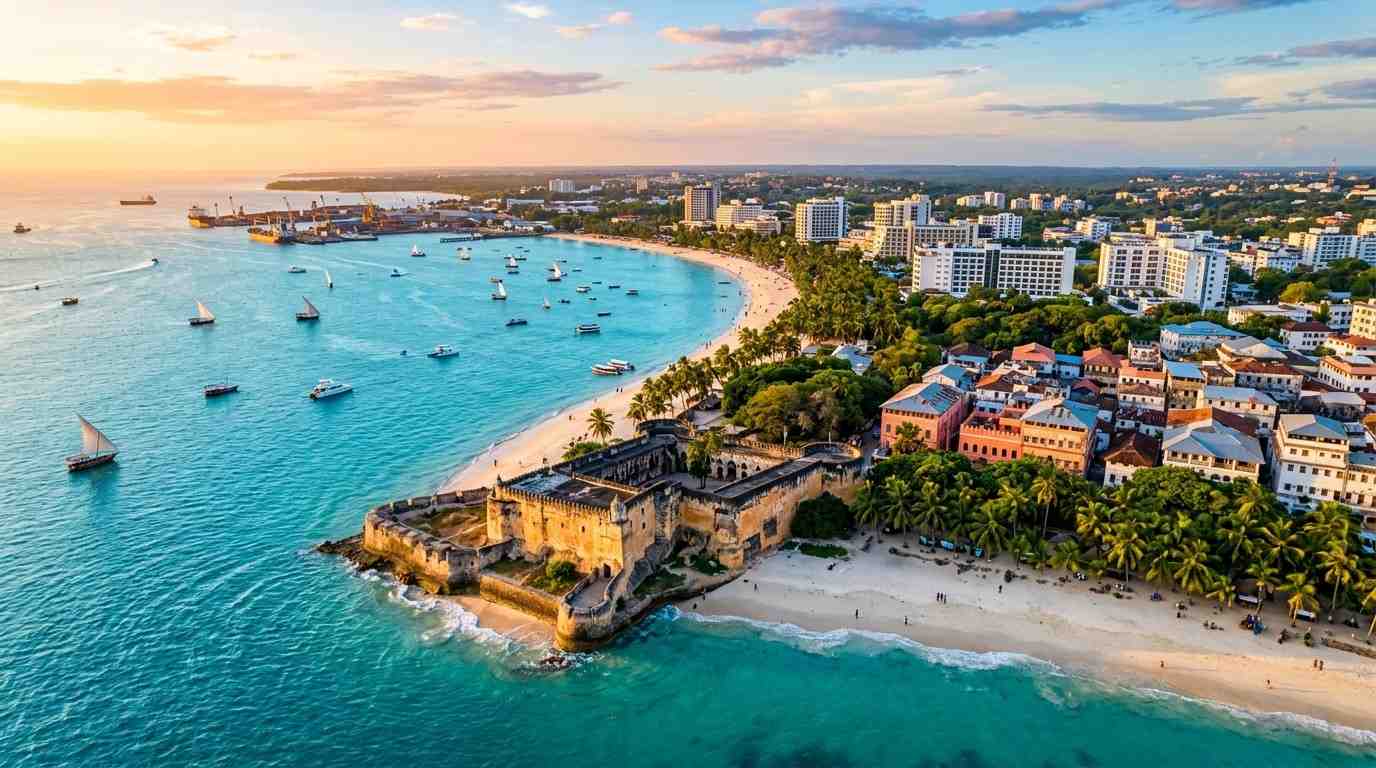
Mombasa County is Kenya's second-largest city and principal seaport, located on the Indian Ocean coast. It covers 294 km², hosts a population of over 1.5 million, and serves as the commercial, tourism, and logistics hub of East Africa's coast — famous for Fort Jesus, Diani Beach, and the Port of Mombasa.
1. Mombasa County at a Glance
Mombasa County is Kenya's gateway to the Indian Ocean and the country's most strategically important coastal county. Situated at approximately 4°S latitude on Kenya's southeastern coast, it occupies a unique geographic position — the city centre sits on Mombasa Island, connected to the mainland via bridges and a ferryboat service that has become iconic in its own right.
As Kenya's second-largest urban centre after Nairobi, Mombasa County is simultaneously an ancient trading post dating back over a millennium and a fast-modernising economic zone driving the East African regional economy.
Sub-Counties of Mombasa
Mombasa County is divided into six sub-counties, each with a distinct personality:
- Mvita — The historic island core; Fort Jesus, Old Town, CBD
- Nyali — Upmarket residential area; hotels, malls, and beaches
- Kisauni — Densely populated mainland residential hub
- Likoni — South Coast gateway; ferry terminal, working-class neighbourhood
- Changamwe — Industrial zone; Port of Mombasa, airport environs
- Jomvu — Emerging logistics corridor; SGR terminus, industrial parks
2. History & Culture
Few cities in Africa can match Mombasa County's depth of recorded history. Archaeological evidence places settlement on Mombasa Island as far back as the 9th century AD, when Arab, Persian, and Indian merchants made it a pivotal node on the ancient Indian Ocean trade network.
Key Historical Milestones
- c. 900 AD: Arab traders establish a permanent settlement on the island
- 1498: Vasco da Gama arrives, marking the beginning of Portuguese influence
- 1593: Portuguese construct Fort Jesus — now a UNESCO World Heritage Site
- 1698: Omani Arabs capture Fort Jesus; Mombasa becomes part of the Omani Sultanate
- 1895: British East Africa Protectorate established; Mombasa becomes capital
- 1901: Uganda Railway (Lunatic Express) completed, linking Mombasa to Lake Victoria
- 1963: Kenya achieves independence; Nairobi replaces Mombasa as capital
- 2010: Mombasa County created under Kenya's new devolved governance constitution
- 2017: Standard Gauge Railway (SGR) Mombasa–Nairobi launched
Swahili Culture
Mombasa is the spiritual home of Swahili civilisation — a unique blend of Bantu, Arab, Persian, Indian, and Portuguese influences that produced a distinct language, architecture, cuisine, and worldview. Kiswahili, now spoken by over 200 million people across East Africa, evolved here as a trade lingua franca. Walking through the Old Town, you encounter carved wooden doors that tell stories of Arab merchant wealth, narrow lanes perfumed with incense, and the call to prayer echoing from mosques centuries old.
The county's cultural calendar is rich: Mombasa Carnival (November), the Lamu Cultural Festival (reachable by air), the Mombasa Marathon, and colourful Eid celebrations draw visitors from across the world.
3. Top Tourist Attractions in Mombasa County
Fort Jesus
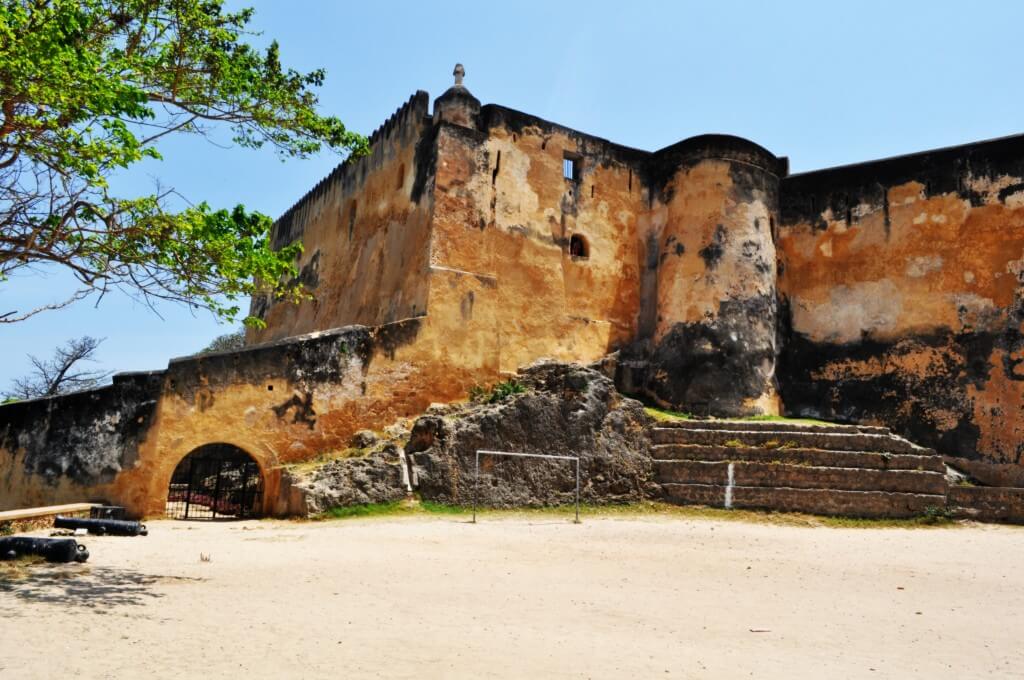
Declared a UNESCO World Heritage Site in 2011, Fort Jesus is arguably Kenya's most historically significant monument. Built by the Portuguese between 1593 and 1596 to a design by Italian architect João Batista Cairato, the fort changed hands nine times over three centuries. Today it houses the Mombasa Museum, featuring Omani, Portuguese, and Chinese artefacts. Entry fee: KSh 1,200 (residents) / USD 20 (non-residents).
Old Town Mombasa
Wander the labyrinthine lanes of Old Town and discover carved Zanzibari doors, centuries-old mosques (Mandhry Mosque, built 1570, is the oldest on the Kenyan mainland), bustling spice markets, and the arresting Burhani Bohra Mosque. This is living history — people still reside in these ornate homes whose architecture mirrors Muscat and Shiraz more than Nairobi.
Haller Park (Bamburi Nature Trail)
A remarkable ecological reclamation story: Haller Park was once a barren quarry turned into a lush wildlife sanctuary by Swiss agronomist René Haller. Today it shelters hippos, giraffes, crocodiles, and various bird species. It's an ideal family-friendly attraction just north of the city.
Mombasa Marine National Park & Reserve
Established in 1986, this protected marine area stretches along Mombasa's North Coast and is part of the Kenya Wildlife Service network. Snorkelling and glass-bottom boat tours reveal vibrant coral reefs, sea turtles, dolphins, and over 200 species of fish. Book through KWS directly for the most competitive rates.
Nyali Cinemax & City Mall
For urban entertainment, Nyali's City Mall and North Coast's Mtwapa's nightlife strip cater to locals and tourists alike, with cinemas, restaurants, bowling alleys, and waterfront dining.
Shimba Hills National Reserve
Just 33 km south of Mombasa, Shimba Hills is one of Kenya's most underrated reserves — home to the rare sable antelope (found almost nowhere else in Kenya), elephants, leopards, and an extraordinary rainforest waterfall (Sheldrick Falls). A half-day trip from Mombasa.
💡 Visitor Tip: Combine Coast & Safari
Mombasa is an excellent base for combining beach holidays with wildlife safaris. Tsavo East & West National Parks are roughly 2 hours by road, making a 3-night beach + 2-night safari itinerary very achievable without flying.
4. Best Beaches in Mombasa County & Surroundings
No guide to Mombasa County is complete without an honest breakdown of the beaches. The coastline is divided into North Coast and South Coast, each with a different atmosphere.
| Beach | Location | Best For | Vibe |
|---|---|---|---|
| Diani Beach | South Coast, ~30 km | Water sports, luxury resorts | Lively, international |
| Nyali Beach | North Coast, 5 km | Families, restaurants | Busy, accessible |
| Bamburi Beach | North Coast, 9 km | Budget travellers | Lively, local flavour |
| Shanzu Beach | North Coast, 15 km | Snorkelling, resort clusters | Quieter, scenic |
| Tiwi Beach | South Coast, ~25 km | Budget backpackers, seclusion | Quiet, rustic |
| Galu Beach | South Coast, ~35 km | Kite-surfing, boutique stays | Sophisticated, breezy |
5. Living in Mombasa County
Mombasa County has long attracted internal migrants from across Kenya and expats from across the world — diplomats, NGO workers, hospitality professionals, and retirees drawn by the climate, pace of life, and relative affordability compared to Nairobi.
Best Neighbourhoods to Live In
Nyali — The Upmarket Choice
The most sought-after residential neighbourhood for middle and upper-income residents. Home to City Mall, international schools, and some of the finest restaurants on the coast. 1-bedroom apartments: KSh 25,000–65,000/month. 3-bedroom houses: KSh 80,000–250,000/month.
Bamburi & Shanzu — Family-Friendly & Beachy
Great for families who want proximity to the beach without the CBD congestion. Well-served by international and local schools. Mix of stand-alone homes and apartment complexes. 2-bedroom apartments: KSh 20,000–50,000/month.
Mtwapa — Value for Money
Located just north of Mombasa's Kilifi County border, Mtwapa offers more space per shilling, particularly for families. Good road links to both Mombasa CBD and the tourism corridor. 3-bedroom houses: KSh 35,000–80,000/month.
Old Town / Mvita — Urban Character
For those who love urban density, proximity to the port, and a cosmopolitan atmosphere, Mvita's residential pockets offer older housing stock at lower rents but excellent connectivity.
Likoni — Budget Mainland Option
The most affordable option among Mombasa's residential areas. Growing infrastructure but commuting across the ferry can add 30–60 minutes to CBD trips at peak times.
✅ Why People Love Living Here
- Warm climate year-round
- Slower, more relaxed pace of life
- Beautiful natural environment
- Diverse, cosmopolitan community
- Lower rents than Nairobi
- Strong sense of community
- Access to fresh seafood & produce
⚠️ Challenges to Consider
- Heat & humidity (especially Apr–May)
- Traffic congestion on key corridors
- Likoni Ferry wait times
- Fewer corporate job opportunities vs Nairobi
- Flooding in low-lying areas
- Water supply inconsistency
6. Cost of Living in Mombasa County (2026)
Mombasa County is typically 10–20% cheaper than Nairobi for accommodation and some consumer goods, though imported items and fuel can be comparably priced. Here is a realistic breakdown for a middle-income household of 2–4 people:
| Expense Category | Budget (KSh/mo) | Mid-Range (KSh/mo) | Comfortable (KSh/mo) |
|---|---|---|---|
| Rent (1–2 BR apartment) | 10,000–22,000 | 25,000–50,000 | 60,000–150,000 |
| Food & Groceries | 8,000–12,000 | 15,000–25,000 | 30,000–50,000 |
| Transport | 2,500–4,000 | 5,000–10,000 | 15,000–30,000 |
| Utilities (water, electricity) | 2,000–4,000 | 5,000–9,000 | 10,000–18,000 |
| Internet (fibre) | 2,500 | 3,500–5,000 | 5,000–8,000 |
| Entertainment & Dining Out | 2,000–4,000 | 6,000–12,000 | 20,000–50,000 |
| Total Estimate | ~KSh 27,000 | ~KSh 60,000 | ~KSh 160,000+ |
Typical Salary Ranges
- Entry-level (hospitality, admin): KSh 18,000–35,000/month
- Mid-level (teacher, engineer, accountant): KSh 40,000–90,000/month
- Senior management / specialist: KSh 100,000–300,000/month
- Expat / senior hospitality GM: KSh 300,000–700,000+/month
7. Economy & Key Industries
Mombasa County's economy is one of the most diversified of any Kenyan county, anchored by three pillars: the Port of Mombasa, Tourism, and Manufacturing/Logistics. The county contributes approximately 8–10% of Kenya's GDP, making it the second-largest contributor after Nairobi.
The Port of Mombasa
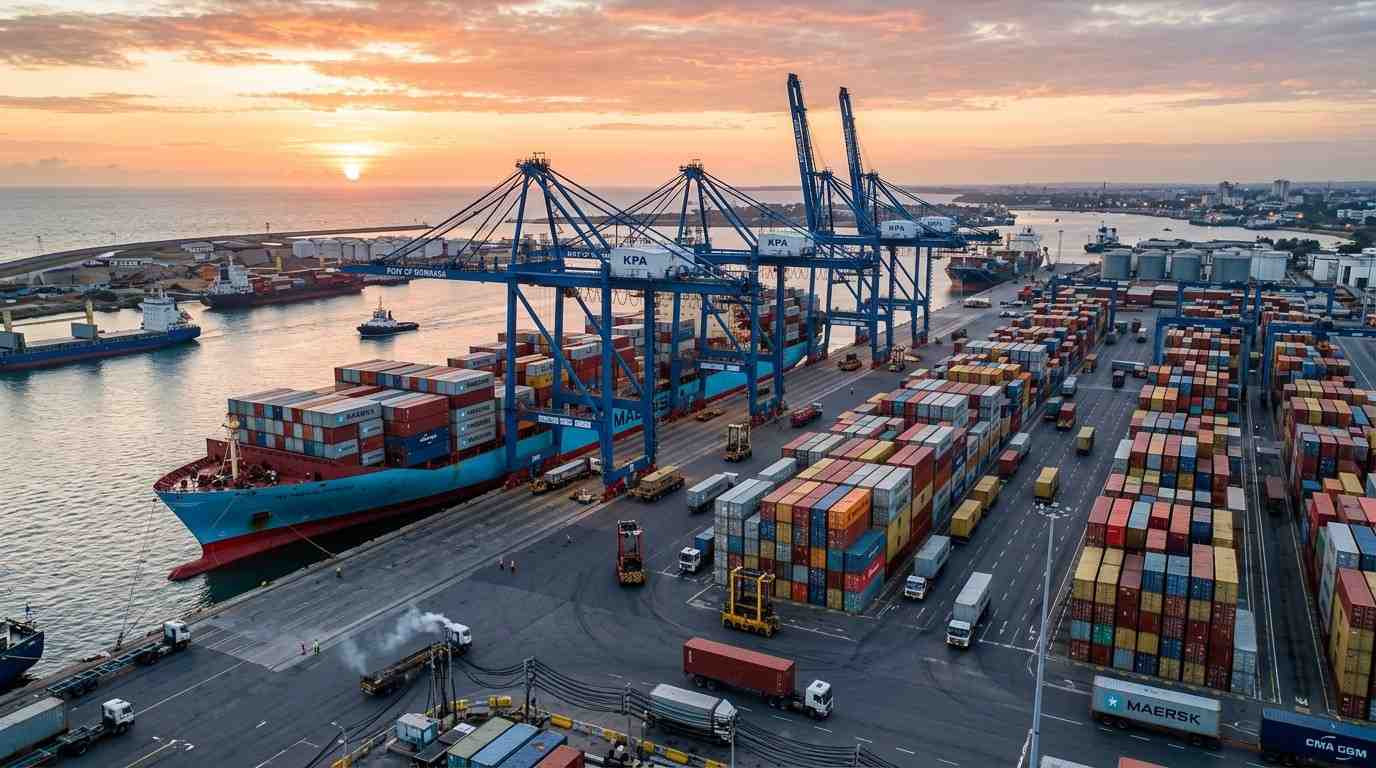
The Kenya Ports Authority (KPA)-run Port of Mombasa is East Africa's largest seaport, serving Uganda, South Sudan, DRC, Rwanda, Burundi, and Ethiopia in addition to Kenya. It handles over 35 million tonnes of cargo annually and processed over 1.6 million Twenty-foot Equivalent Units (TEUs) of containers in recent years. The port's expansion — including the new Kipevu Oil Terminal and the Dongo Kundu SEZ — is set to dramatically increase capacity.
Tourism
Tourism is the county's second-largest employer. The sector supports hotels, restaurants, tour operators, transport firms, crafts markets, and a vast informal economy. Beach resorts along the North and South Coasts collectively host over 35,000 hotel beds. Tourism earnings fluctuate with global travel trends but have recovered strongly post-pandemic.
Manufacturing & Logistics
The Changamwe industrial area hosts oil refineries (Kenya Petroleum Refineries), cement plants, steel fabricators, and food processors. The SGR Inland Container Depot at Embakasi and the SGR Mombasa terminus at Miritini have reshaped logistics flows significantly.
Blue Economy
Kenya's Blue Economy strategy, guided by the State Department for Blue Economy, positions Mombasa County as the epicentre of maritime industries including fisheries, aquaculture, offshore energy exploration, and ocean research through institutions like Kenya Marine and Fisheries Research Institute (KMFRI).
8. Investment Opportunities in Mombasa County
For investors — local or foreign — Mombasa County presents a compelling, multi-sector opportunity. The county government has actively worked to improve the business environment, and national infrastructure investments (SGR, Dongo Kundu, port expansion) are creating a structural tailwind for private investment.
1. Real Estate & Hospitality
With a chronic housing deficit and growing middle class, demand for quality residential units outstrips supply. Beachfront and near-beach properties command premiums, and boutique hotel / Airbnb-model properties have shown strong returns. Nyali and Bamburi are the most liquid sub-markets. See the real estate section below for detailed data.
2. Dongo Kundu Special Economic Zone (SEZ)
The Dongo Kundu SEZ, located on reclaimed land in the Kilindini Channel, is Kenya's flagship coastal SEZ. Gazetted under the Special Economic Zones Authority (SEZA), it offers investors preferential tax rates, streamlined licensing, and direct port access. Target industries include light manufacturing, agro-processing, logistics, and petrochemicals. This is arguably the single most significant investment catalyst in the county's recent history.
3. Tourism & Hospitality Infrastructure
Despite having 35,000+ hotel beds, Mombasa County is under-served in the mid-market and eco-tourism segments. Boutique eco-lodges, wellness retreats, and authentic cultural tourism experiences represent genuine gaps in the market. The rise of domestic tourism — Kenyans holidaying at the coast — is a structural trend that makes mid-market hospitality particularly attractive.
4. ICT & Digital Services
Mombasa County's government has invested in the Mombasa Techno City concept. With improving internet infrastructure (fibre rollout, undersea cable landings at Mtongwe), the county is positioning itself as a digital hub for the coast region. Opportunities exist in fintech, e-commerce, and digital health services targeting coastal communities.
5. Logistics & Warehousing
The combination of port traffic, the SGR, and regional transit trade creates strong demand for modern warehousing and cold-chain logistics. Industrial parks in Jomvu and Miritini are emerging as logistics clusters. Given East Africa's expanding retail and e-commerce sectors, this is a long-cycle but reliable opportunity.
6. Fisheries & Aquaculture
Kenya produces only a fraction of its potential seafood yield. The Mombasa coastline and offshore Exclusive Economic Zone (EEZ) offer significant potential for both artisanal and commercial fisheries, plus aquaculture (tilapia, shrimp, seaweed). The Kenya Fisheries Act provides a regulatory framework for private investment with government support available through KRA export incentives.
9. Mombasa County Real Estate Market
Mombasa County's real estate market occupies a unique niche in Kenya's property landscape. It is not as liquid or deep as Nairobi's, but it offers specific segments with compelling risk-adjusted returns — particularly beachfront and near-beach residential, and logistics-oriented commercial land.
Residential Property Prices (2026 Estimates)
| Area | Land (per 1/8 acre) | 2-BR Apartment (Sale) | 3-BR House (Sale) |
|---|---|---|---|
| Nyali (beachfront) | KSh 18M–45M | KSh 10M–18M | KSh 22M–60M |
| Nyali (off-beach) | KSh 8M–18M | KSh 6M–12M | KSh 12M–28M |
| Bamburi / Shanzu | KSh 5M–12M | KSh 4M–8M | KSh 8M–18M |
| Mtwapa | KSh 3M–7M | KSh 3M–6M | KSh 6M–12M |
| Likoni / Mainland | KSh 1.5M–5M | KSh 2M–5M | KSh 4M–9M |
| Changamwe / Jomvu | KSh 2M–6M | KSh 2.5M–5M | KSh 5M–10M |
Rental Yield Estimates
Beachfront apartments and holiday villas let on short-term platforms (Airbnb, Booking.com) in Nyali and Bamburi can achieve gross yields of 8–14% per annum at high occupancy, substantially above Nairobi's long-term residential yields of 5–7%. However, occupancy is seasonal — high season (December–March, July–August) versus low season (April–June) creates significant cash-flow variability that investors must model carefully.
10. Getting Around Mombasa County
Standard Gauge Railway (SGR)
The Madaraka Express connects Mombasa (Miritini station) to Nairobi in approximately 4.5 hours — a revolution compared to the 8–10 hours by road. Economy class fares start at KSh 1,000; first class at KSh 3,000. The SGR has dramatically reduced the travel burden for business commuters and weekend tourists. Book on the Kenya Railways website.
Moi International Airport
Moi International Airport (MBA) offers multiple daily flights to Nairobi (Wilson and JKIA), Malindi, Lamu, and Kisumu. International connections include direct routes to Dubai, Ethiopia (Addis Ababa), and seasonal European charter flights. Planned expansion is ongoing to accommodate increased traffic.
Likoni Ferry
The iconic Likoni Ferry connects Mombasa Island to the South Coast, ferrying thousands of commuters, matatus, and vehicles daily. Free for pedestrians. Vehicle fares: KSh 70–130 depending on vehicle class. Queue times can be 20–45 minutes at peak hours.
Road Network
Key arteries include the A14 (Nairobi–Mombasa Highway), the Mombasa–Malindi Road (B8), and the Mombasa Southern Bypass. Internal matatu (minibus) routes cover most neighbourhoods at fares typically between KSh 20–80 per trip. Bodaboda (motorcycle taxis) are ubiquitous for last-mile connectivity.
Upcoming Dongo Kundu Bypass
The Dongo Kundu Bypass — a ring road and bridge network being developed at enormous cost — will, when complete, relieve Mombasa Island of transit traffic and unlock the Dongo Kundu SEZ, providing a direct road link between the port and the South Coast without traversing the city.
11. Education & Healthcare in Mombasa County
Education
Mombasa County hosts over 700 primary schools, 200+ secondary schools, and a growing number of tertiary institutions. Highlights include:
- Technical University of Mombasa (TUM) — Public university; strong engineering, maritime, and business programmes
- Pwani University — Located in Kilifi but serving the coast region
- Kenya Medical Training College (KMTC) Mombasa
- Private International Schools: Aga Khan Academy, Mombasa Academy, Braeburn Mombasa, Links International School
Healthcare
The county's flagship facility is Mombasa County Referral Hospital (Coast General), a 500-bed facility providing specialist services. Private options include:
- Aga Khan Hospital, Mombasa — Premier private facility, ISO certified
- MP Shah Hospital — Multi-specialty private care
- Mombasa Hospital — Well-established private facility
- Pandya Memorial Hospital
For complex neurosurgical or cardiac cases, most residents travel to Nairobi's Nairobi Hospital or Aga Khan University Hospital. Medical insurance is highly recommended; expatriate cover from providers such as Cigna or AXA is advisable for foreign nationals.
12. Food, Nightlife & Shopping
Swahili Cuisine
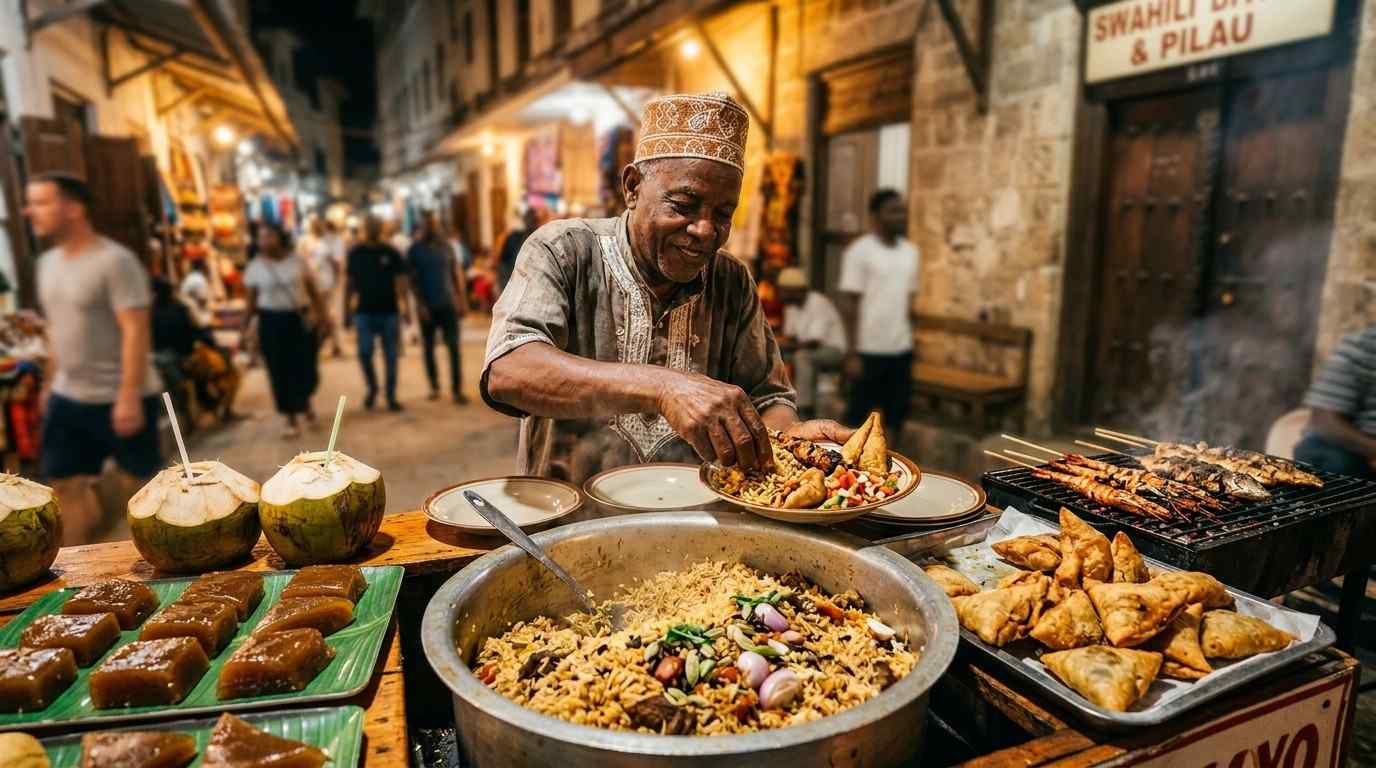
Food is one of Mombasa County's greatest gifts. The Swahili cuisine tradition blends Bantu, Arab, and Indian influences into something entirely its own. Must-try dishes:
- Biryani — Aromatic spiced rice with goat, chicken, or prawns
- Pilau — Kenya's answer to a one-pot spiced rice dish
- Maharagwe na Wali — Coconut kidney bean stew with rice
- Coconut Fish Curry — Local reef fish in a coconut milk sauce
- Mkate wa Ufuta — Sesame flatbread, perfect with chai
- Halwa — Rose-water and cardamom sweet, sold at the Old Town market
- Fried Cassava (Muhogo) — Classic street food from roadside stalls
Best Restaurants
From budget to upmarket, Mombasa's dining scene includes: Tamarind Restaurant (iconic seafood on the harbour), Monsoon Restaurant (Old Town rooftop), Swahili Pot, Samaki Samaki (grilled seafood), and dozens of beachside restaurants along Nyali and Bamburi.
Shopping
Major malls include City Mall Nyali, Mombasa City Centre (Nakumatt building), Nyali Centre, and the revamped Mombasa Twin Towers area. For crafts and souvenirs, the Akamba Handicraft Cooperative on Moi Avenue is Kenya's largest craft market — a must for souvenir hunters.
Nightlife
Mombasa County has a vibrant, if polarised, nightlife scene. Tourists tend to concentrate around Bamburi's Tembo Village area, Nyali's Silver Springs Hotel, and the Mtwapa strip. The city respects a predominantly Muslim population, so nightlife is more muted in residential areas; hotels and tourist zones carry the load.
13. Climate & Best Time to Visit
Mombasa County has a tropical monsoon climate — warm and humid year-round, with two distinct rainy seasons governed by the Indian Ocean monsoon system.
| Season | Months | Weather | Verdict |
|---|---|---|---|
| High Season | Jul–Sep, Dec–Mar | Sunny, dry, 25–32°C, SE trade winds | ⭐ Best time to visit |
| Long Rains (Masika) | Apr–Jun | Heavy afternoon showers, humid, 25–30°C | ⚠️ Fewer crowds, lower rates |
| Short Rains (Vuli) | Oct–Nov | Shorter, less intense showers, 26–32°C | ✅ Good shoulder season |
14. Frequently Asked Questions (FAQs)
These are the questions Google users ask most about Mombasa County — answered directly.
What is Mombasa County known for?
Is Mombasa County safe for tourists?
What is the best time to visit Mombasa County?
How do I get from Nairobi to Mombasa County?
Is Mombasa County a good place to invest in real estate?
What language is spoken in Mombasa County?
What is the main religion in Mombasa County?
How is internet connectivity in Mombasa County?
🌊 Your Move to Mombasa County Starts Here
Whether you're planning a holiday, evaluating a business investment, or considering a permanent move, Mombasa County offers a quality of life and economic opportunity that is genuinely rare on the African continent. The combination of natural beauty, strategic location, cultural depth, and improving infrastructure makes it one of Kenya's most exciting places to be in 2026. Bookmark this guide and check back — we update it regularly with new data and insights.