

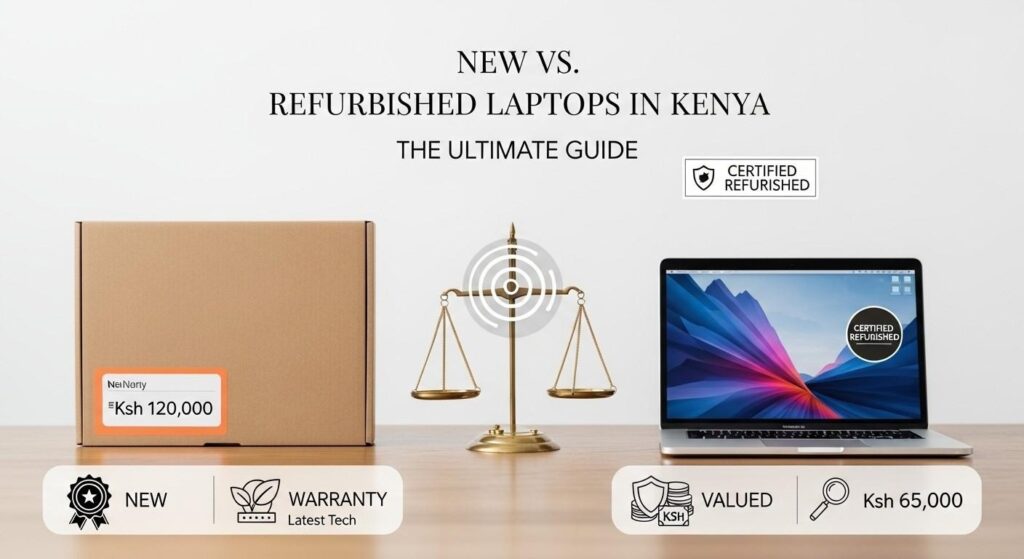
The new vs refurbished laptops decision affects thousands of Kenyan buyers every year. Choosing between these options can significantly impact your wallet and computing experience.
Many shoppers assume new always means better. However, refurbished laptops offer compelling benefits that deserve serious consideration. Understanding both options helps you spend wisely in Kenya’s market.
Your budget, needs, and priorities determine the best choice. Some situations clearly favor new laptops, while others make refurbished the smarter pick. Let’s explore what each option truly offers Kenyan consumers.

New vs Refurbished Laptops: Quick Comparison
- New laptops cost Ksh 40,000 – 200,000+ but offer the latest features and full warranties
- Refurbished laptops provide 40 – 70% savings with professionally restored quality
- New devices have zero previous usage; refurbished ones have been tested and certified
- Both options can deliver excellent value depending on your budget and requirements
What Makes a Laptop “New”?
New laptops come straight from manufacturers in sealed boxes. Nobody has used them before you open the packaging. Every component is factory-fresh and untouched.
These devices include the latest technology available at the time of purchase. Manufacturers design them with current operating systems and modern specifications. You get cutting-edge features right out of the box.
New laptops typically carry full manufacturer warranties—these guarantees usually last one to three years. You receive complete customer support and replacement options if problems arise.
The buying experience feels premium and reassuring. You know exactly what you’re getting with no surprises. This peace of mind has real value for many Kenyan consumers.
What Does “Refurbished” Really Mean?
Refurbished laptops are previously owned or returned devices professionally restored to working condition. Certified technicians inspect, repair, and test each unit thoroughly. The process ensures devices meet quality standards.
These laptops might come from several sources. Some are customer returns within return windows. Others are off-lease corporate machines from international companies or local businesses.
Professional refurbishers replace defective parts with new or refurbished components. They clean the devices inside and out. Software gets wiped and reinstalled to factory settings.
Quality refurbished laptops undergo rigorous testing before resale. Reputable sellers grade them based on cosmetic condition. Most offer warranties ranging from 90 days to one year.
Related: How to check the quality of a used laptop
New vs Refurbished Laptops Prices
Price differences between new and refurbished laptops can be dramatic in Kenya. Refurbished models typically cost 40-70% less than new equivalents. A Ksh 100,000 new laptop might sell for Ksh 30,000-60,000 refurbished.
These savings let you afford better specifications for the same money. You could get more RAM, storage, or processing power. Alternatively, you simply pocket the difference for other expenses.
New laptop prices in Kenya remain high due to import duties and taxes. Retailers rarely discount current-generation devices significantly. You pay premium prices for the latest releases.
Refurbished pricing varies based on age, condition, and availability. Older models drop in price faster than newer ones. Excellent deals appear when corporations upgrade their equipment fleets.
Budget-conscious Kenyans often stretch further with refurbished options. Students, freelancers, SMEs, and startups benefit most from these savings. The money saved can fund internet bundles, software, or business operations.
Performance Comparison: Do Refurbished Laptops Work Well?
Quality refurbished laptops perform identically to new ones with matching specifications. The hardware capabilities remain unchanged after professional refurbishment. A Core i7 processor works the same regardless of device history.
However, refurbished models typically feature older-generation technology. A refurbished laptop from two years ago won’t match today’s newest releases. This matters more for demanding tasks like video editing or graphic design.
For everyday computing, older technology often exceeds actual needs. Web browsing, documents, streaming, and email don’t require cutting-edge specs. Most Kenyan users won’t notice performance differences in typical usage.
Battery life sometimes differs between new and refurbished laptops. Batteries degrade with use and age. Reputable sellers replace batteries showing significant wear, but some degradation may exist.
Testing confirms refurbished devices meet functional standards before sale. They boot properly, connect to networks, and run software smoothly. Performance issues would prevent certification and resale.
Warranty and Support Considerations
New laptops include comprehensive manufacturer warranties as standard. These typically cover one year minimum, with options to extend. However, claiming warranty in Kenya can be challenging with some brands.
International brands like HP, Dell, and Lenovo offer support in Kenya. Some provide walk-in service centers in Nairobi and major towns. This support adds significant value to new purchases.
Refurbished laptop warranties vary widely by seller. International refurbishers offer 90-day to one-year warranties. Local Kenyan sellers might provide 30-day to six-month coverage.
These warranties usually cover defects and malfunctions. They may exclude accidental damage or cosmetic issues. Read warranty terms carefully before purchasing any refurbished device.
Some sellers in Nairobi’s Computer Market or online platforms offer repair services. Building relationships with trusted technicians provides backup support. This is crucial when official warranty service is limited.
Reliability: How Long Will Each Option Last?
New laptops should last 3-5 years with proper care in Kenyan conditions. High-quality models from reputable brands often exceed this timeframe. Hardware failures typically occur less frequently with unused devices.
Refurbished laptops have already survived initial use periods. They’ve passed the early failure window when defects typically appear. This “burn-in” period actually indicates durability.
The expected lifespan for refurbished units depends on age and usage. A one-year-old refurbished laptop might last another 3-4 years. A four-year-old model might give 1-2 more years.
Build quality matters more than new vs refurbished status. Business-class laptops like ThinkPads, Latitudes, and EliteBooks last longer. These models handle Kenya’s dust and power fluctuations better.
Proper maintenance extends the life of both options equally. Regular cleaning, using stabilizers, and careful handling prevent premature failures. Nairobi’s dust requires more frequent cleaning than cooler climates.
Cosmetic Condition Differences
New laptops arrive in pristine, perfect condition. The screen shows no marks, and the keyboard is unblemished. Every surface looks flawless and untouched.
Refurbished laptops vary significantly in cosmetic condition. Sellers grade them from “Like New” to “Acceptable” based on appearance. Higher grades cost more but look nearly perfect.
Minor scratches, scuffs, or worn keys characterize lower cosmetic grades. These imperfections don’t affect functionality or performance. Many Kenyan buyers don’t mind cosmetic wear for better prices.
Understanding grading systems helps set realistic expectations. “Like New” means minimal to no visible wear. “Good” might show light scratches. “Acceptable” includes noticeable cosmetic issues.
Photos and detailed descriptions from reputable sellers show the actual condition. Avoid listings without clear condition information. Know what you’re getting before making a payment.
Environmental Impact: The Sustainability Factor
Buying refurbished laptops significantly reduces electronic waste in Kenya. Electronics contain harmful materials that damage environments when improperly disposed of. Extending device lifespans keeps toxins from Dandora and other dumpsites.
Manufacturing new laptops consumes substantial energy and resources. Mining rare earth minerals, processing components, and assembly all impact the planet. Each new device adds to this environmental cost.
Refurbished purchases avoid creating new manufacturing demand. You’re giving existing devices a second life instead of contributing to production. This choice supports circular economy principles that Kenya is embracing.
Electronic waste represents one of the fastest-growing waste streams globally. Kenya receives significant e-waste imports annually. Choosing refurbished helps combat this growing problem locally.
Environmentally conscious Kenyan consumers increasingly consider sustainability in purchasing decisions. Buying refurbished aligns personal technology needs with environmental values. It’s a practical way to reduce your carbon footprint.
Best Situations for Buying New Laptops
Gaming enthusiasts should generally buy new laptops. Games demand cutting-edge graphics cards and processors. Latest-generation components provide better gaming experiences and handle modern titles.
Creative professionals working with video editing or graphic design benefit from new technology. Content creators, YouTubers, and digital marketers need reliable power. New laptops deliver the performance these workflows demand.
Buyers needing specific, just-released features should purchase new. New ports, screen technologies, or processor architectures require current models. Refurbished options won’t have brand-new innovations yet.
Those preferring maximum warranty protection and support favor new purchases. Full manufacturer backing provides peace of mind. Some Kenyan users simply value this reassurance highly.
Businesses requiring warranty uniformity across device fleets often buy new ones. Standardized support simplifies IT management. Companies in Nairobi’s Westlands or Upper Hill prefer matching warranties.
Best Situations for Buying Refurbished Laptops
Students on tight budgets gain tremendous value from refurbished laptops. University assignments, research, and online classes don’t require cutting-edge specs. Savings can fund internet bundles, printing, or textbooks.
Home users performing basic tasks should seriously consider refurbished options. Email, web browsing, and document work don’t need the latest technology. Refurbished devices handle these activities perfectly.
Small business owners equipping multiple employees save significantly by buying refurbished. Those savings compound across several units in Nairobi, Mombasa, or Kisumu. The money saved can fund other business priorities.
Freelancers and hustlers starting online businesses benefit from refurbished savings. Writers, virtual assistants, and digital entrepreneurs need functional machines. Refurbished laptops provide what’s needed without breaking the bank.
Environmentally motivated Kenyans prefer refurbished products for sustainability reasons. Reducing waste and resource consumption aligns with their values. They appreciate doing good while saving money.
Where to Buy Laptops in Kenya: Trusted Sources Matter
The best laptop shops in Nairobi include Laptop Clinic, Nairobi Computer, Saruk, Bluearc Computer, and Avechi, which offer some refurbished options. These retailers have physical locations you can visit. Their reputation provides some buyer protection.
Online platforms like Jumia and Jiji list refurbished laptops. Filter carefully and check seller ratings thoroughly. Meet sellers in public places if buying from individuals.
Nairobi’s CBD has numerous vendors selling refurbished devices. Negotiate prices and test laptops before paying. Bring someone knowledgeable if you’re not tech-savvy.
International sites like Amazon, eBay, and Newegg ship refurbished laptops to Kenya. Factor in shipping costs, taxes, and customs duties. Total costs might eliminate savings compared to local options.
Specialized Kenyan tech resellers focus on corporate off-lease equipment. Companies like Laptop Clinic and various Computer Market vendors specialize in refurbished devices. They often offer better selections than general retailers.
Red Flags to Avoid
Suspiciously low prices often indicate problems or scams in Kenya’s market. A current-generation laptop priced 80% below retail deserves skepticism. If deals seem too good, they probably are.
Missing or vague warranty information suggests unreliable sellers. Reputable refurbishers clearly state coverage terms. Absence of warranty details is a warning sign.
Poor or no return policies create risky situations. You need options if the device arrives defective or misrepresented. Avoid sellers who won’t accept returns.
Sellers insisting on M-Pesa payment before viewing the laptop raises concerns. Never send money before inspecting the device physically. Meet in public, test thoroughly, then pay.
Listings without clear condition descriptions hide potential issues. You should know exactly what cosmetic grade you’re buying. Vague descriptions suggest the seller isn’t confident in the product.
Power and Connectivity Considerations
Kenya’s inconsistent power supply affects laptop longevity. Invest in a good-quality surge protector or UPS. Power fluctuations damage both new and refurbished laptops equally.
Battery life matters more in Kenya due to frequent power outages. Check battery health carefully when buying refurbished. A laptop with a poor battery becomes useless during blackouts.
Internet connectivity varies across Kenya’s regions. Ensure your laptop has good Wi-Fi capabilities. Some refurbished models might have older Wi-Fi standards.
USB ports and charging options matter for Kenyan conditions. More ports mean charging phones during outages. Check that all ports work properly on refurbished devices.
Consider laptops with longer battery life if you’re in areas with unreliable power. Upcountry locations need 6+ hour batteries. Nairobi users might manage with 4-5 hours.
Import Duties and Taxes on Laptops
Importing laptops to Kenya attracts 25% import duty plus 16% VAT. These taxes significantly increase the costs of new laptops. Calculate total landed costs before ordering internationally.
Refurbished laptops imported face the same duty and tax structure. However, lower base prices mean lower total taxes. A KSh 50,000 refurbished laptop costs less in duties than a KSh 150,000 new one.
Buying locally eliminates customs clearance headaches. You avoid KRA processes and potential delays at the port. Local purchases provide immediate possession. Alternatively, you can delegate the hassle to international shippers like Aquantuo.
Some travelers bring laptops from abroad for personal use. This avoids some taxes but limits selection. Only practical if traveling anyway.
Factor all costs when comparing new vs refurbished laptops from abroad. Sometimes local refurbished beats imported new after taxes. Do the math before deciding.
Deciding Between New and Refurbished Laptop
Assess your actual computing needs honestly before deciding. Don’t pay for capabilities you won’t use. Match specifications to your real workflows and tasks.
Calculate your true budget, including accessories and internet costs. Factor in laptop bags, mice, dongles, and monthly data bundles. Total costs might influence new vs refurbished choices.
Consider how long you expect to use the laptop. Longer intended use periods might justify investing in new. Short-term needs favor refurbished savings.
Research specific models and their refurbished availability in Kenya. Sometimes excellent refurbished options exist; other times, new makes more sense. Availability affects decision-making.
Weigh all factors together: cost, performance needs, warranty preferences, and environmental values. No single answer works for everyone. Your unique Kenyan situation determines the best choice.
Final Thoughts on New vs Refurbished Laptops
The new vs refurbished laptops debate doesn’t have one correct answer for Kenyan buyers. Both options serve different buyers and situations effectively. Understanding each option’s strengths helps you decide wisely.
Refurbished laptops deliver exceptional value for budget-conscious, environmentally aware Kenyans. They provide reliable performance at a fraction of the cost of new laptops. Quality refurbished devices meet most users’ needs perfectly.
New laptops offer the latest technology, full warranties, and pristine condition. They suit buyers needing cutting-edge performance or maximum support. The premium pricing reflects these benefits.
Smart shopping in Kenya’s market matters more than new vs refurbished status alone. Research thoroughly, buy from reputable sources, and match specifications to needs. These practices ensure satisfaction with either choice.
Your budget and requirements should drive your decision, not assumptions. Evaluate both options fairly based on facts. Many Kenyan buyers discover that refurbished laptops exceed their expectations completely.
Whether you choose new or refurbished, informed decisions lead to better outcomes. Use this guide’s insights to shop confidently in Nairobi, Mombasa, Kisumu, or anywhere in Kenya.